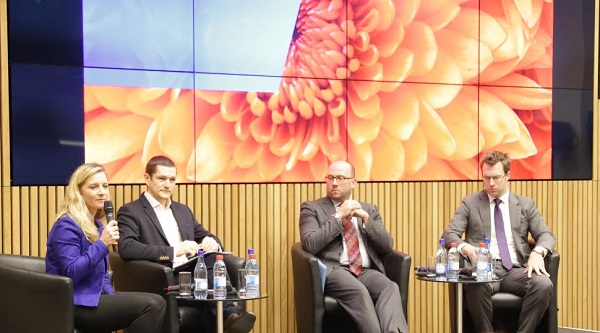
Do not delay when it comes to preparing for the post-MiFID 2 world; that was the take-home message for the participants at KPMG Luxembourg's 'MiFID 2: Start Your Engines' conference held on 21 October 2015.
Panelists were unanimous in this message, with Partner at KPMG Luxembourg and chair of the event, Anne-Sophie Minaldo, even suggesting that implementation time for MiFID 2 may be twice that of MiFID 1, which was released in 2007. Her view that MiFID 2 will bring significant changes to the business landscape was similarly echoed by panelists Benoit Sauvage, Senior Adviser ABBL; Nicolas Moser, Partner, KPMG Switzerland; and Stéphane Salabert, Partner at KPMG France.
Nicolas Moser presented a perspective from Switzerland, where the big question concerns the difficulties in conducting business in the EU after the MiFID 2 is implemented on 3 January 2017.
Brief presentations from each of the panelists were followed by discussions on the three key issues of bans on inducement, transaction reporting, and record-keeping.
“The hurdles before us are high," commented Anne-Sophie Minaldo. "In the realm of transaction reporting alone, a new regulatory form contains a whopping 65 fields to be filled out. This poses many challenges, even basic ones like finding all the information needed, ensuring that it is accurate, and publishing it on a daily basis. And on the other side, of course, something must be done with this information by the regulators. It will be a major undertaking on the CSSF’s side: they will have barrels of data and will have to put systems online to analyse it."
According to the panelists, MiFID 2 will necessitate strategic decisions and a review of investment service offerings. It also implies huge IT development needs and, last but not least, an involvement of all business partners to ensure an efficient change management process.
Benoit Sauvage was of the opinion that existing solutions may not be able to extend far enough in their response to the MiFID challenge, commenting: “Authorised reporting systems, or ARMs, already exist as a place for assistance with reporting. ARMs are services that can compile and submit information on your behalf to the appropriate regulators. However, as these ARMs are often dispatching centres rather than places equipped to analyse data and ensure its quality, it won’t be a quick fix for MiFID reporting. Some of the burden will inevitably fall on in-house teams".
Record-keeping was also raised as a potential area of difficulty, as MiFID 2 brings a great deal of it. The panelists discussed how players will have to keep a record of transactions, clients, and activities in line with the new guidelines.
Closing remarks were made by Mr. Moser, who stressed that it all comes down to client experience: "No matter what kind of systems you put in place to comply with changes in data collection and reporting, the customer cannot be forgotten."
Photo by KPMG Luxembourg