It will now be possible to analyse the genome of cancer cells more precisely than ever before with a method developed by scientists at the Luxembourg Centre for Systems Biomedicine (LCSB) of the University of Luxembourg.
The method, announced yesterday, is the result of models of the genome of cancer based on known changes to the genome, created by a team at the University using novel computing processes. This team was led by Professor Antonio del Sol, head of the research group Computational Biology, who outlined how these models become of import when attempting to determine the structure of DNA in tumours.
"If we know this structure, we can study how cancer develops and spreads," explained del Sol. "This gives us clues about possible starting points for developing new anticancer drugs and better individual therapy for cancer patients".
"The causes of cancers are changes in the DNA," continued PhD student Sarah Killcoyne from the University of Luxembourg, whose doctoral thesis is a core component of the research project. "Mutations arise, the chromosomes can break or reassemble themselves in the wrong order, or parts of the DNA can be lost. In the worst case, the genome becomes completely chaotic".
The cells affected subsequently are no longer able to perform their function in the body and multiply perpetually. The result is cancer.
New anticancer drugs and personalised therapy therefore necessitate the knowledge of the structure of DNA in cancer cells. Isolating chromosomes from tumours and analysing them under the microscope, as has been done by oncologists and scientists for decades, has allowed for the discovery of the occasional link between irregularities in the chromosome structure and the type of cancer and corresponding therapy.
"Sequencing technologies have made the identification of many mutations more accurate, significantly improving our understanding of cancer," stated Sarah Killcoyne, before adding: "But it has been far more difficult to use these technologies for understanding the chaotic structural changes in the genome of cancer cells".
This is due to the fact that sequencing machines only deliver data about very short DNA fragments, whilst scientists need a reference sequence in order to piece together the genome puzzle with a view to reconstructing it. As the gene sequence in cancer cells is in disarray, there is no single reference sequence providing clues as to where the fragments overlap and in what order they belong.
"We developed multiple references instead," continued Sarah Killcoyne. "We applied statistical methods for our new bioinformatics approach, to generate models, or references, of chaotic genomes and to determine if they actually show us the structural changes in a tumour genome".
Group leader del Sol explained why the significant of these methods is two-fold: "Firstly, Sarah Killcoyne's work is important for cancer research. After all, such models can be used to investigate the causes of genetic and molecular processes in cancer research and to develop new therapeutic approaches. Secondly, we are interested in bioinformatics model development for reapplying it to other diseases that have complex genetic causes - such as neurodegenerative diseases like Parkinson's. Here, too we want to better understand the relationships between genetic mutations and the resulting metabolic processes. After all, new approaches for diagnosing and treating neurodegenerative diseases are an important aim at the Luxembourg Centre for Systems Biomedicine".
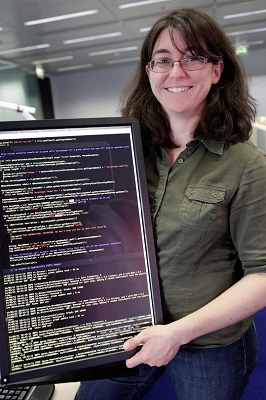
Photo by Science Relations (Sarah Killcoyne)