 Serge Wilmes, Luxembourg Minister of the Environment, Climate and Biodiversity;
Credit: MECB
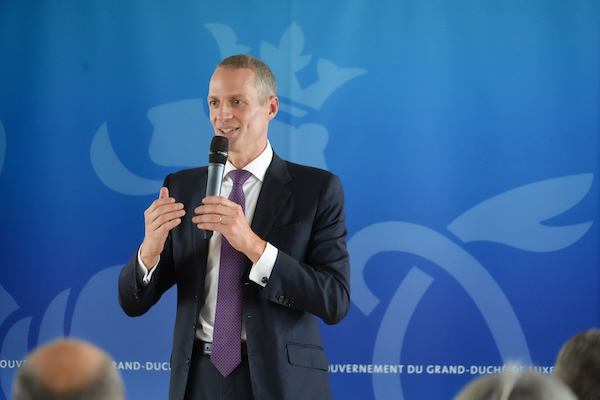
Serge Wilmes, Luxembourg Minister of the Environment, Climate and Biodiversity;
Credit: MECB
On Monday 28 September 2026, Luxembourg’s Minister of the Environment, Climate and Biodiversity, Serge Wilmes, met with representatives of Luxembourg’s municipalities for an information session dedicated to the urban tree canopy (UTC).
According to the Ministry of the Environment, Climate and Biodiversity, the meeting aimed to present the updated application guide, “Leitfaden Maßnahmen zur Sicherstellung der kontinuierlichen ökologischen Funktionalität” (“Guidelines for Measures to Ensure Continuous Ecological Functionality”), and to encourage municipalities in their efforts to increase greenery in urban areas.
This new principle relating to tree cover supports and recognises municipalities that make long-term investments in trees, hedges and other green infrastructure. Developed as part of the “Logementsdësch” (“Housing Roundtable”), the urban tree canopy principle makes it possible to better reconcile nature conservation, urban development and administrative simplification.
During his address, Minister Wilmes emphasised the essential role of green infrastructure: “In the face of increasingly frequent periods of heat and drought, trees, hedges and green spaces are a major asset for our towns and villages. They promote biodiversity, help cool urbanised areas, facilitate the infiltration of rainwater, protect soils and contribute to improving air quality. Investing in this natural heritage means strengthening our municipalities against the effects of climate change.”
The updated guide forms part of the framework of the amended Law of 18 July 2018 concerning the protection of nature and natural resources. The document clarifies the application of provisions relating to particularly protected species and provides greater legal certainty for urban development projects.
Municipalities meeting the criteria relating to tree cover, the development of green infrastructure and the use of suitable plant species will be able to benefit from simplified procedures for urban projects, while ensuring a high level of environmental protection.
The meeting also provided an opportunity to present the procedures for applying the UTC framework and to exchange views with municipal representatives on the opportunities it offers in the fields of spatial planning, biodiversity and climate resilience.