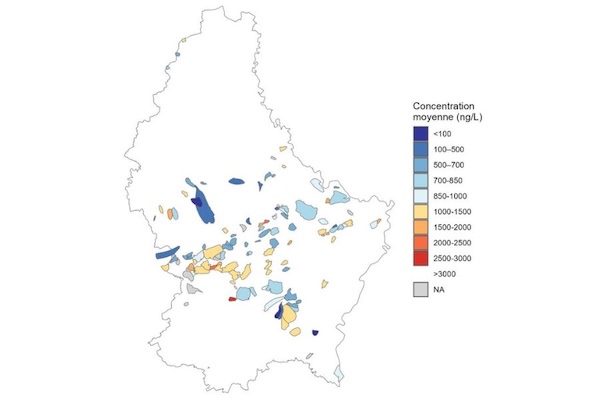
 TFA levels in groundwater drinking water catchment areas in Luxembourg;
On Tuesday 11 March 2026, Luxembourg’s Minister of the Environment, Climate and Biodiversity, Serge Wilmes presented the first report of the interministerial PFAS working group to the Chamber of Deputies, outlining 40 proposed actions aimed at improving knowledge, monitoring and reduction of PFAS pollution.
Luxembourg’s Ministry of the Environment, Climate and Biodiversity prepared the report with the Ministry of Health and Social Security and the Ministry of Agriculture, Food and Viticulture.
Ministers Martine Deprez and Martine Hansen also attended the presentation. Authorities created the working group to monitor the presence of Per- and polyfluoroalkyl substances, including trifluoroacetic acid (TFA), which they identified as a priority concern.
PFAS are highly persistent chemicals used in industrial processes and consumer products. These substances accumulate in the environment and in the human body and may harm human health. Scientific studies link exposure to certain PFAS with increased risks of cancers, immune system effects, higher cholesterol and reproductive impacts.
According to the report, Luxembourg has not recorded any breach of the legal limit for the sum of 20 PFAS in drinking water, set at 0.1 µg/l, as the highest concentration measured reached 0.060 µg/l. For TFA, Luxembourg has set a provisional guidance value of 12 µg/l, while recent results show concentrations in drinking water networks ranging from 0.087 to 2.5 µg/l.
The report stated that atmospheric deposits account for an estimated 50% to 70% of TFA contamination in drinking water, with agricultural activities also considered a likely source in some protection zones.
To address the issue, the working group proposed actions organised under four pillars: strengthening scientific knowledge; improving monitoring; implementing pollution reduction measures; and increasing public awareness.
Planned measures include expanded monitoring campaigns in water, soil and air, research into pollution sources, reduced use of substances that generate TFA and more information campaigns for the public and industry.
The report also calls for closer coordination at European level to support stricter regulation and restrictions on PFAS substances.