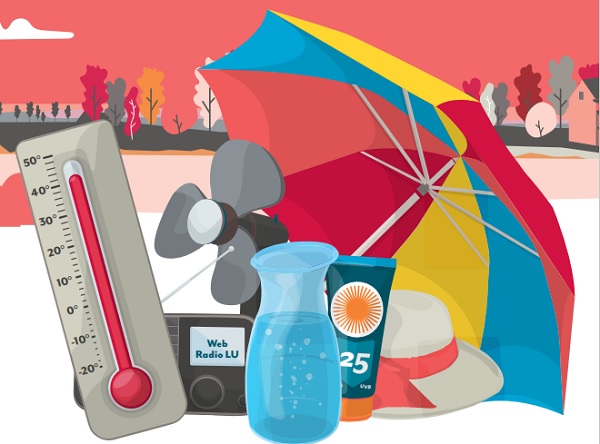
Luxembourg's severe weather risk assessment unit (CERI) has issued recommendations to the public following an orange heat warning for southern Luxembourg from Thursday 13 August 2026.
Based on forecasts from Luxembourg's national weather portal, MeteoLux, the orange warning (indicating "danger") will be in place in the south from 07:00 on Thursday until 07:00 on Friday 14 August 2026. A yellow warning (indicating "potential danger") will remain in place in northern Luxembourg during this period.
In response to the orange alert, the CERI convened on Wednesday morning to evaluate the weather situation and its potential consequences for the population.
According to current forecasts, very hot conditions are expected to progressively affect the entire country. Strong heat stress is forecast in southern Luxembourg, with maximum temperatures expected to reach 34°C to 36°C on Thursday and 35°C to 37°C on Friday. Night-time temperatures are also expected to remain relatively high, at 18°C to 21°C, limiting overnight cooling.
In northern Luxembourg, strong heat stress is expected only in some areas.
The heat may cause fatigue and exhaustion, particularly in the event of prolonged exposure to the sun or physical activity. The authorities noted that the orange warning is triggered when strong heat stress is expected for at least two consecutive days.
The CERI reiterated several recommended behaviours to adopt to help limit the effects of the heat:
-
drink plenty of water regularly throughout the day (at least 1.5 litres);
-
avoid prolonged and direct exposure to the sun during the hottest hours, i.e. 11:00 to 21:00;
-
keep blinds / shutters, curtains and windows closed during the day and ventilate at night;
-
favour light meals rich in water, particularly fruit and vegetables;
-
wear light, loose-fitting and light-coloured clothing and cover one's head when outdoors;
-
limit physical activity and avoid strenuous exercise during the hottest periods;
-
stay in cool and air-conditioned places as much as possible;
-
remain attentive to vulnerable people and regularly check on them.
The authorities warned of a risk of dehydration and heat stroke, particularly during prolonged exposure or intense physical activity. People considered particularly vulnerable include older people, young children, people with chronic illnesses or mental health conditions, those taking certain medications and isolated individuals.
In the event of symptoms suggesting heat stroke, such as a high body temperature, headache, nausea, confusion, drowsiness or loss of consciousness, the authorities advised contacting a healthcare professional promptly. In an emergency, the public should call 112.
The Grand Ducal Fire and Rescue Corps (CGDIS) also warned of an increased risk of vegetation fires during periods of high temperatures and drought, urging the public to exercise particular caution during outdoor activities and avoid behaviour that could start a fire.
Meanwhile, the Water Management Authority recalled that the nationwide vigilance phase concerning the drinking water supply has been in force since Friday 10 July 2026. Residents, businesses and municipalities are encouraged to continue conserving water, particularly by limiting non-essential uses of drinking water and respecting any instructions issued by their municipality.