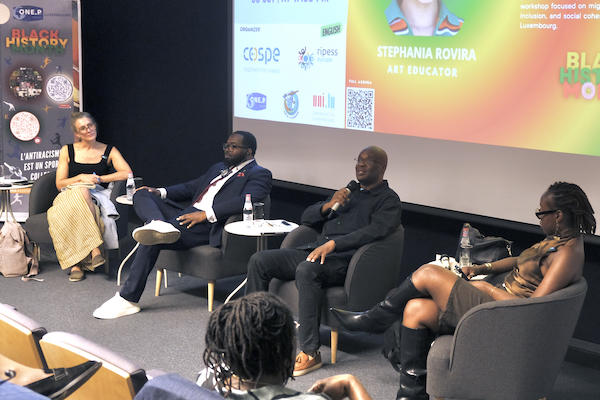
 (L-R) Carine Oberweis; Momodou Malcolm Jallow; N.Y.S.Y.M.B. Lascony; Britanie Lenga (aka Culture Dorée);
Credit: Steven Miller, Chronicle.lu
(L-R) Carine Oberweis; Momodou Malcolm Jallow; N.Y.S.Y.M.B. Lascony; Britanie Lenga (aka Culture Dorée);
Credit: Steven Miller, Chronicle.lu
On the evening of Wednesday 30 September 2026, Luxembourg non-profit organisation and universalist anti-racism association One People hosted an event in celebration of Black History Month at Cercle Cité in Luxembourg-Ville.
This year’s edition of Black History Month Luxembourg will take place from Thursday 1 to Saturday 31 October, under the themes “ADN – Héritage” (“DNA – Heritage”) and “Africa Decade”.
According to One People, the month will feature more than 30 events across several cities in Luxembourg, bringing together cultural activities, discussions, debates and personal accounts. In advance of the start of the official programme, the association arranged a conference in celebration of the journey of Black History Month and to celebrate the commitment of those who contribute to its growth.
Ahead of the event, One People said: “At a time when racist rhetoric, identity-based insularity and divisive ideologies are gaining visibility, we are convinced that it is more essential than ever to create spaces where we can meet, engage in dialogue, learn from one another, and build a shared society.”
The evening event, held in the Auditorium Henri Beck, was attended by around 50 people and welcomed former Member of the Swedish Parliament, Momodou Malcolm Jallow; patron of the fourth [2026] edition of Luxembourg Black History Month, Britanie Lenga (aka Culture Dorée); and N.Y.S.Y.M.B. Lascony, patron of the third edition of Luxembourg Black History Month as guests. The session was moderated by Carine Oberweis.
The conference was opened by Madeleine Yougye, the founder and director of One People, who began with the question, “Why is it important to have a Black History Month at the heart of Europe?”
She noted the rise of extreme right, identity problems and issues with black agency, and said: “We know Black History Month in the United States, we know Black History Month in Canada, these Black History Months tell another story, they tell the story of slavery, they tell the story of civil rights, they tell a lot, in fact, of this story. Here, in the heart of Europe, we sometimes lack space to be able to talk about the colonial history, the history of migration, to be able to explain what we live as black people in Europe, as descendants of Europe. This space is very important. It is important that we can create it ourselves, so that we can create it with our friends, with our allies, with all the people who want it to move forward. But it's missing and that's what keeps us going.”
Carine Oberweis, Honorary Consul of the Republic of Ghana in Luxembourg, then spoke of the work of One People and detailed the programme for the evening, introducing each of the guest speakers and the subjects which would be discussed, and posited: “What is missing? What is it that my own window on the world does not show me?”
She added: “Maybe that's where the Black History Month model comes in. This ability to listen to another story. To look for what is missing in a story. To confront resources and perspectives and to remain curious about what we do not know yet. We need it everywhere in our societies. For me, we are here to make visible. To better understand. To feel concerned. To enter into a relationship to be able to act together. To better cope and to improve our collective atmosphere of life. To act together to build a society in which all people can recognise themselves.”
N.Y.S.Y.M.B. Lascony then spoke of the importance of Africa owning its true history and the generational damage which has been inflicted by this being denied. He detailed how the African history taught to Africans is often authored by non-Africans and that large amounts of African history have either been erased or reside on other continents, an example being the vast volume of African artefacts which sit in British museums and across institutions across Europe, denying a continent access to its origins and tangible history.
In regard to the psychological damage borne of a continent denied of the knowledge of self, he remarked: “Africa is not only the cradle of the human species but the cradle of civilisation, where the human being was born and where we began to think. Black History Month is to allow the new generations to be detoxified… because as long as Africans do not take care to know their continent, other communities will always have a critical view of it.”
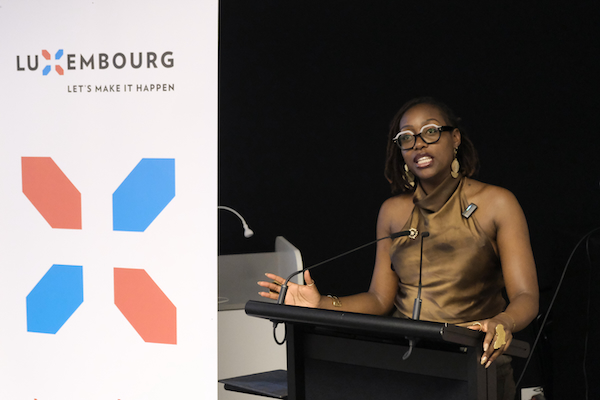
Britanie Lenga invited audience members to a participatory discussion, asking questions on where people have traditionally garnered information about their families and their cultures from, demonstrating how the transmission of information has played a crucial part in the story of one’s history.
On the transmission of African history, she remarked: “We are told about empires, we are told about kingdoms, we are told about wealth, we are told about great civilisations, and we are proud of it. But there is a hole in our history.”
She added: “Whether we are from the same continent, or whether we are from the diaspora, there is a hole in our history. At what point does it break? We are told about the Arab invasion, we are told about Islamisation, we are told about Christianisation. But our ancestors [before this] had their own form of intelligence, their own spirituality. What happened? That's the big question. That's the big void that we have.”
“How can you build people who are totally, completely proud of who they are if they don't know where they come from and where they end up? This is where we realise the importance of black history. Not to make a single story with all the black stories, but to be able to hear what it is to be black in Haiti, to be black in Morocco, to be black in France, to be black in Mexico, to be black all over the world and to realise the plurality.”
Momodou Malcolm Jallow concluded the speeches by talking about his experience of moving from Gambia as a teenager and ultimately becoming a politician in Sweden. He noted that for nine years he was the only black political representative in the Swedish parliament and described how his presence, his agency there, unsettled many in positions at both high and lower levels, despite him simply performing his job and exercising his democratic rights as an elected member of parliament, as well as chairing committees and being part of the Council of Europe.
Momodou Malcolm stated: “Representation without transformation is not enough… A black person invited onto a stage is representation, like I'm speaking here. Being consulted is participation. But being able to shape the agenda, to influence the decisions that have been made, to allocate resources to these decisions that are made, to change institutions, that is power. And there's a difference between power and representation. This is why black history matters, because history is never only about the past. History tells us who we are today also. But history also influences who society believes we are. For centuries, Africa has been described through the eyes of others... Our history was written for us.”
He added: “We should understand something fundamental. If you control the story of a people, you influence how the world sees that people. And eventually, you may even influence how that people sees themselves. That is why reclaiming history is not nostalgia. It is liberation.”
There then followed a Q&A session with the guests speakers answering questions from audience members.
The event concluded with a networking session with refreshments supplied by the organisers.
About One People
One People is a non-profit organisation founded in Luxembourg in 2021. In a country where more than 180 nationalities coexist, it works to strengthen civic and intercultural anti-racism based on respect for fundamental rights, equal opportunities and the participation of all. Convinced that the fight against racism is a collective responsibility, it mobilises citizens, institutions, communities and partners to build a society where anti-racism is the norm.
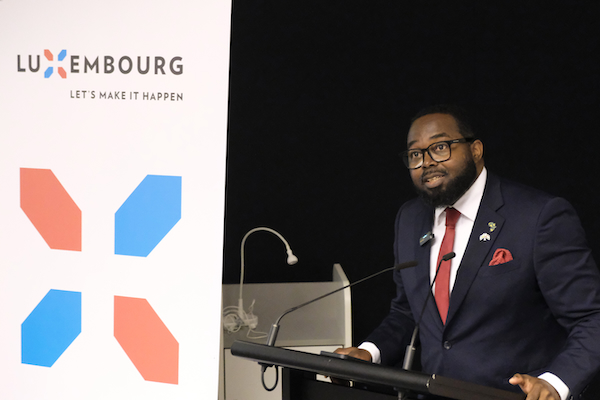 Caption: Momodou Malcolm Jallow
 Credit: Steven Miller, Chronicle.lu
Caption: Britanie Lenga (aka Culture Dorée
Credit: Steven Miller, Chronicle.lu