 Credit: Jazmin Campbell, Chronicle.lu
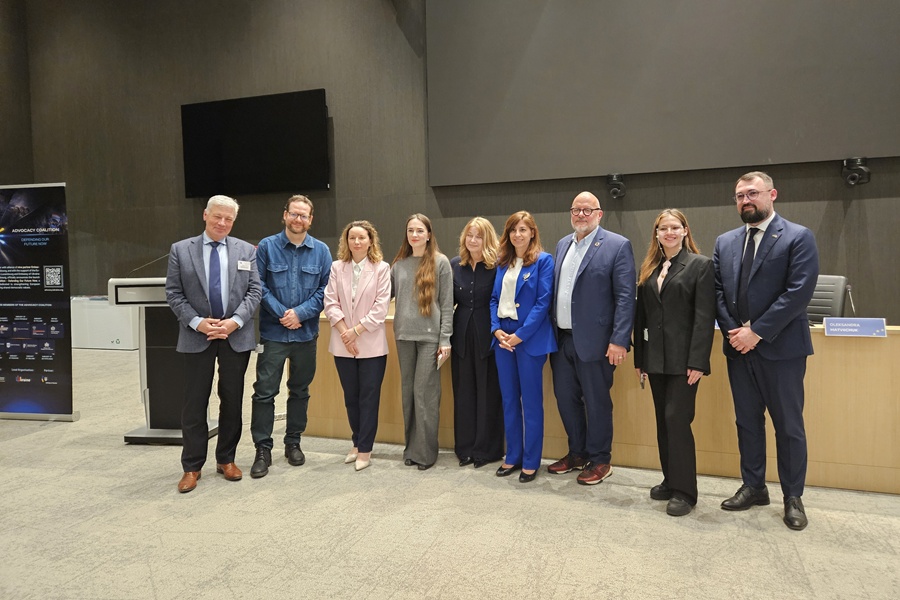
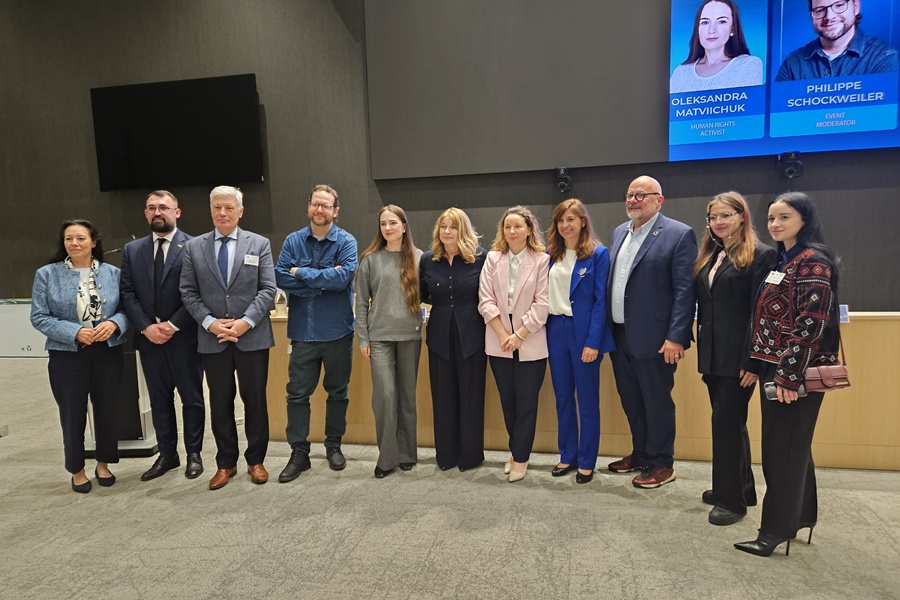
On Monday 23 March 2026, the newly launched Advocacy Coalition for Ukraine in Luxembourg held an advocacy event at the Europa Experience visitors' centre in Luxembourg-Kirchberg, dedicated to the subject of the deportation of Ukrainian children.
The conference marked the first official event of the Advocacy Coalition, a year-long initiative bringing together embassies, civil society organisations and community partners to strengthen European solidarity with Ukraine.
Regarding the deportation of Ukrainian children, the organisers described the issue as "not only a tragedy of war, but a documented war crime and a profound moral test for Europe".
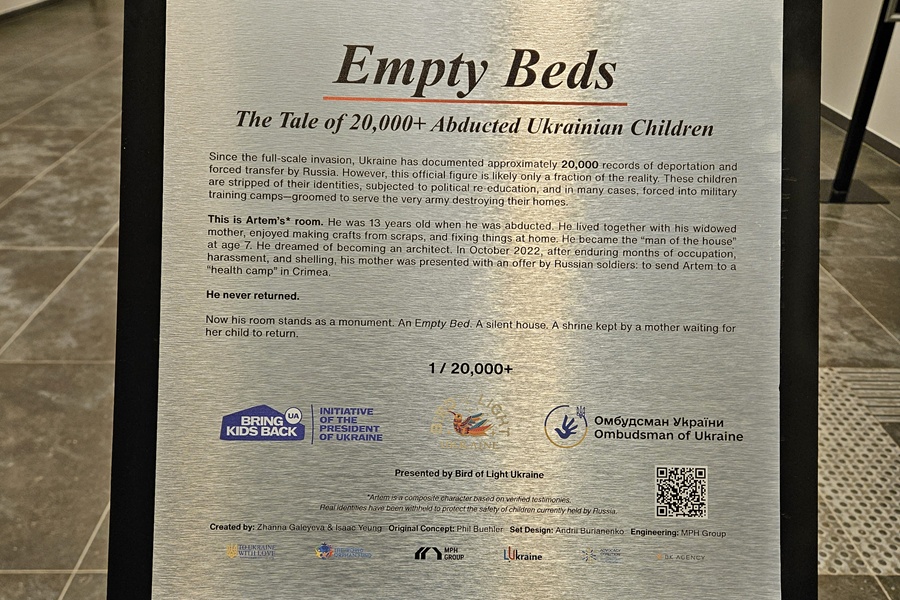
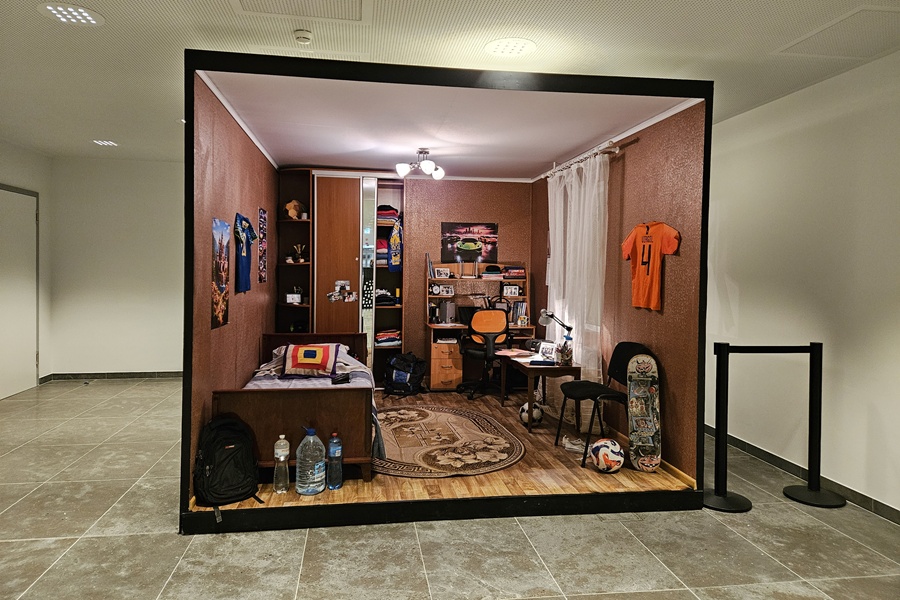
The event featured personal testimonies, a panel discussion and the opening of the immersive installation "Empty Beds". The latter presents a realistic 1:1 replica of a deported Ukrainian child's bedroom; it aims to convey the human impact of the war and the scale of the issue. The installation is on display at the Europa Experience centre until Sunday 12 April 2026.
Opening the conference, journalist Philippe Schockweiler stressed that the issue of deported Ukrainian children demands awareness and responsibility: once informed, one "cannot remain passive".
Czech Ambassador Barbara Karpetová briefly presented the Advocacy Coalition, which she said was a "testament" to what can be achieved together. Inna Yaremenko, Vice President of LUkraine and Luxembourg's representative of the Ombudsman of Ukraine then introduced the conference topic, stressing that there are real people behind the statistics. She too praised unity in strength and noted that "collective impact begins with individual responsibility". She concluded: "There is no time for fatigue, hesitation or compromise. We must defend our future now," calling for a stronger Europe.
Several speakers underlined the scale and gravity of the situation. In a video address, Ukraine's Ombudsman Dmytro Lubinets stated that an estimated 20,000 children have been deported to Russia since the start of the full-scale invasion. He described this practice as a deliberate policy aimed at erasing Ukrainian identity. He noted that just over 2,000 children have been returned so far, highlighting the complexity of the process and the need for long-term psychological and social support.
A particularly emotional moment came with the personal testimony of a young Ukrainian woman who described growing up under occupation, facing intimidation, propaganda and the constant threat of separation from her family. Her account highlighted the lived reality behind the statistics and the challenges faced by children in occupied territories, notably in terms of Russian "re-education". "Ukraine is my home," she said, adding that she hoped to once day return to her city once liberated.
Human rights lawyer and Nobel Peace Prize laureate Oleksandra Matviichuk warned that the deportation of children forms part of a broader pattern of war crimes. She shared real-life examples of people who have been affected and emphasised the need to restore the "human dimension" to political decision-making.
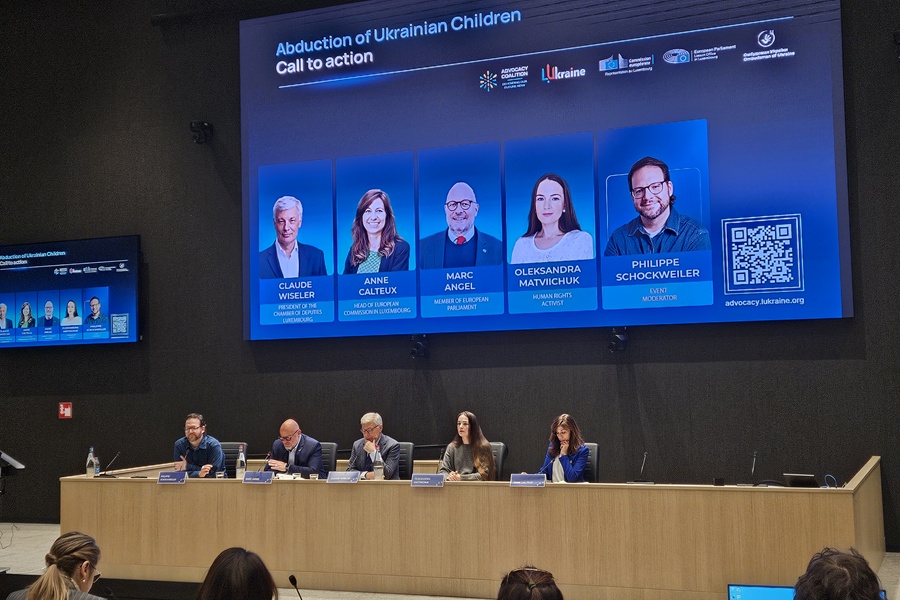
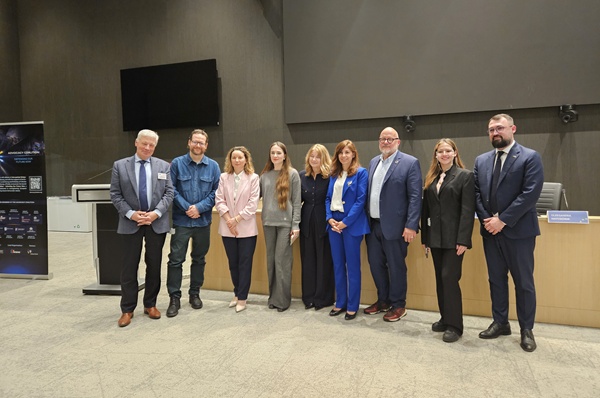
A panel discussion followed, featuring Oleksandra Matviichuk, as well as Anne Calteux, Representative of the European Commission in Luxembourg, Marc Angel, Luxembourg MEP and Quaestor of the European Parliament, and Claude Wiseler, President of Luxembourg's Chamber of Deputies (parliament).
The speakers stressed the need for continued European support, greater coordination and stronger action to ensure the return of deported children and accountability for violations of international law. They also highlighted the importance of keeping the issue high on the political agenda despite competing global crises. They agreed with Oleksandra Matviichuk about the need for a human dimension, as well as the need for a more systematic and faster approach. Oleksandra highlighted the courage of "ordinary people" in resisting Russian aggression but added that Ukrainians required more concrete support; she urged greater accountability and argued that justice is a prerequisite for lasting peace.
Following a Q&A session, the event - attended by approximately 150 guests - concluded with a reception. Attendees also had the opportunity to discover the new "Empty Beds" installation.
Further information about the Advocacy Coalition and its event programme is available at https://advocacy.lukraine.org/