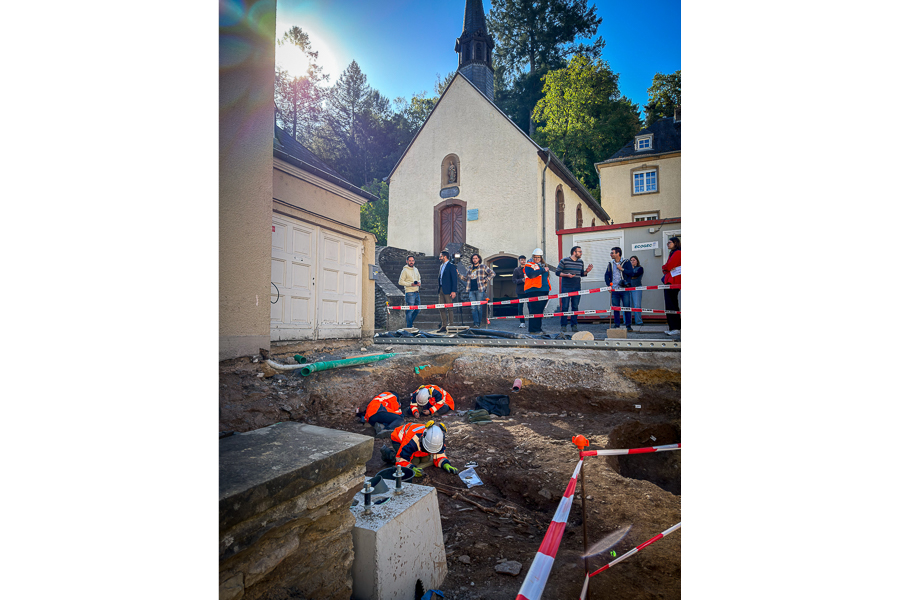
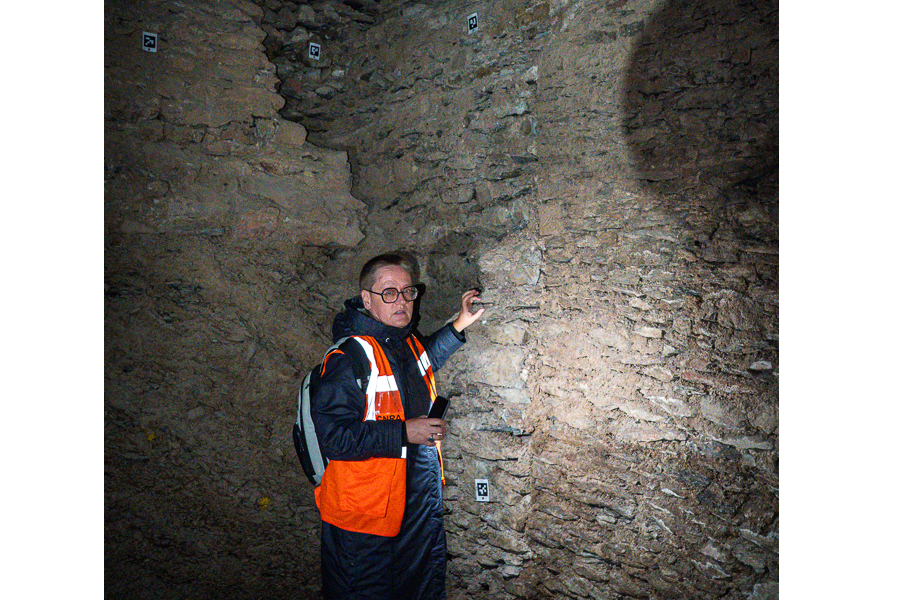
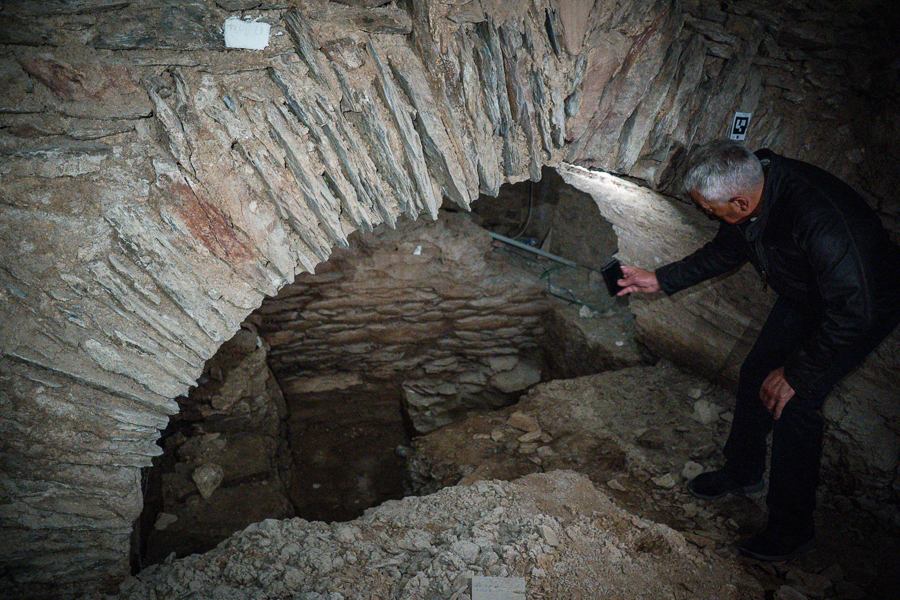
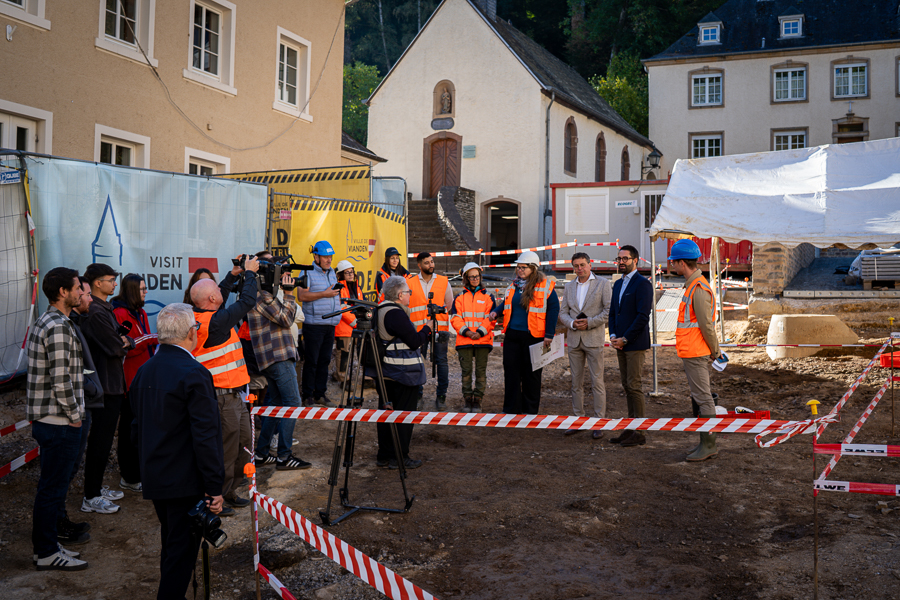
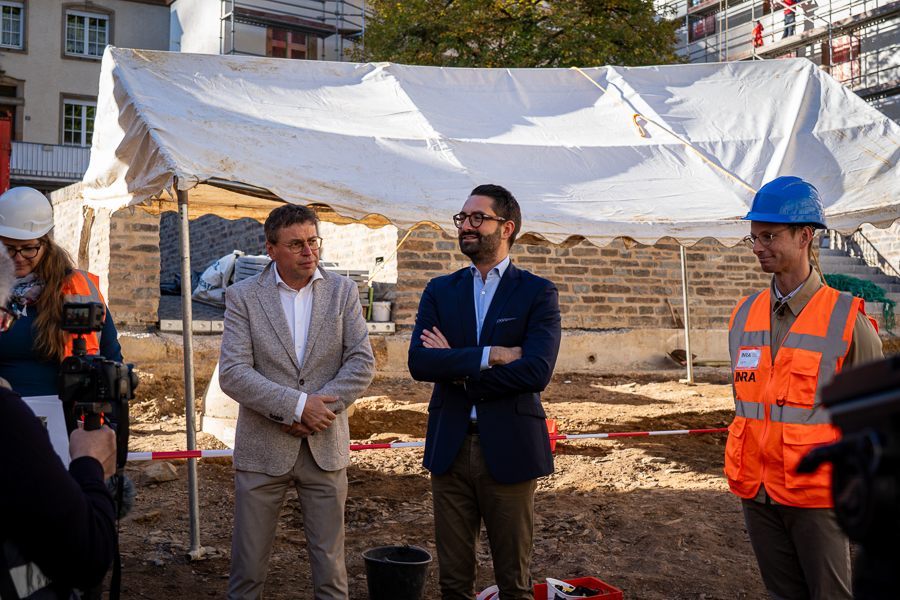
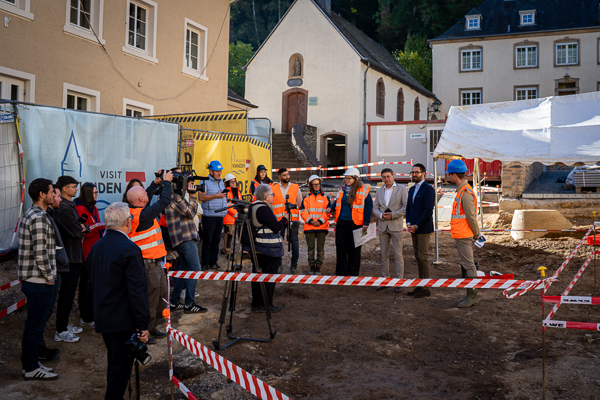
 Group photo, including François Weyrich, Mayor of Vianden; Eric Thill, Luxembourg's Minister for Culture; David Weis, Director of the INRA;
Credit: MCULT
Group photo, including François Weyrich, Mayor of Vianden; Eric Thill, Luxembourg's Minister for Culture; David Weis, Director of the INRA;
Credit: MCULT
On Wednesday 23 September 2026, Luxembourg’s Minister for Culture Eric Thill joined members of the press in Vianden to discover the archaeological excavations currently being carried out at the site of the future youth hostel on Place de la Résistance, next to the Church of the Trinitarians.
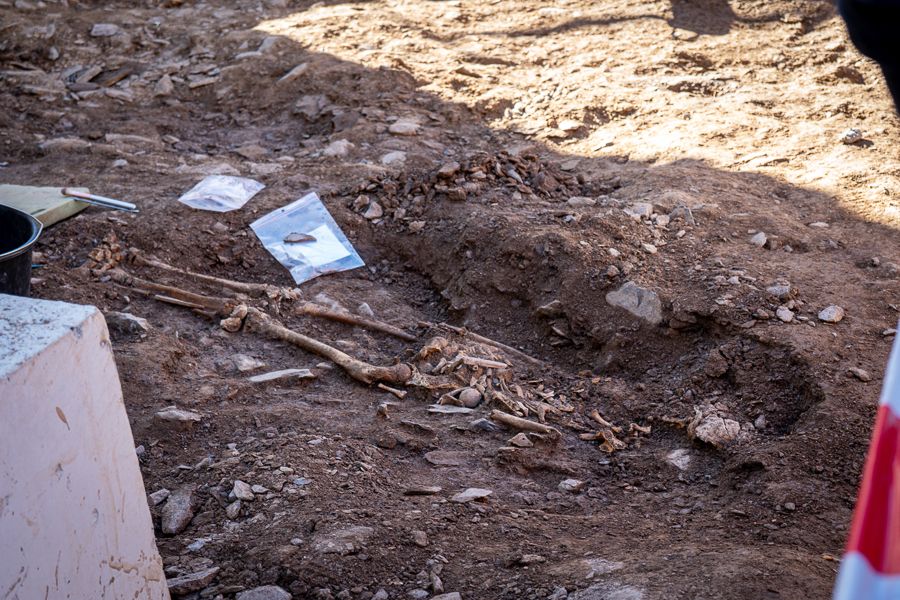
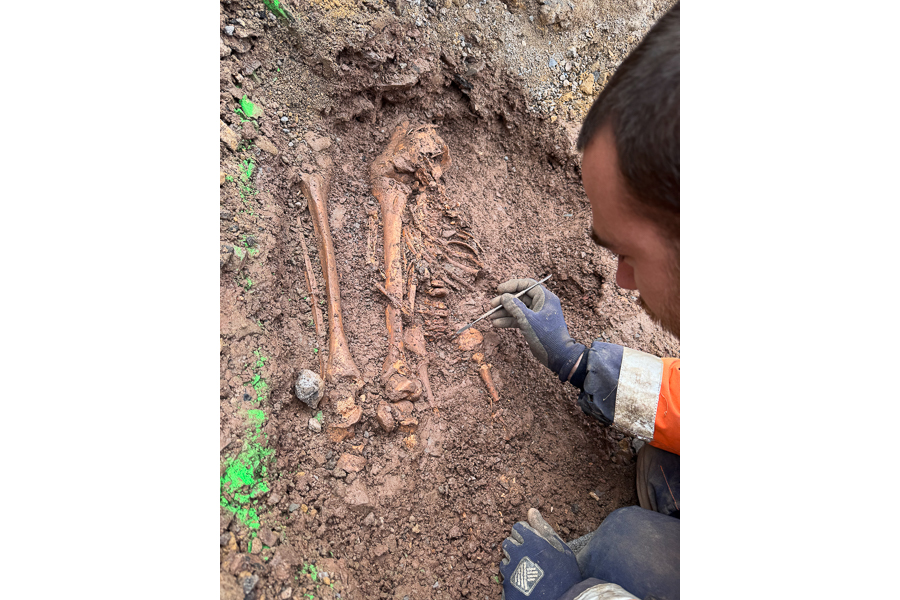
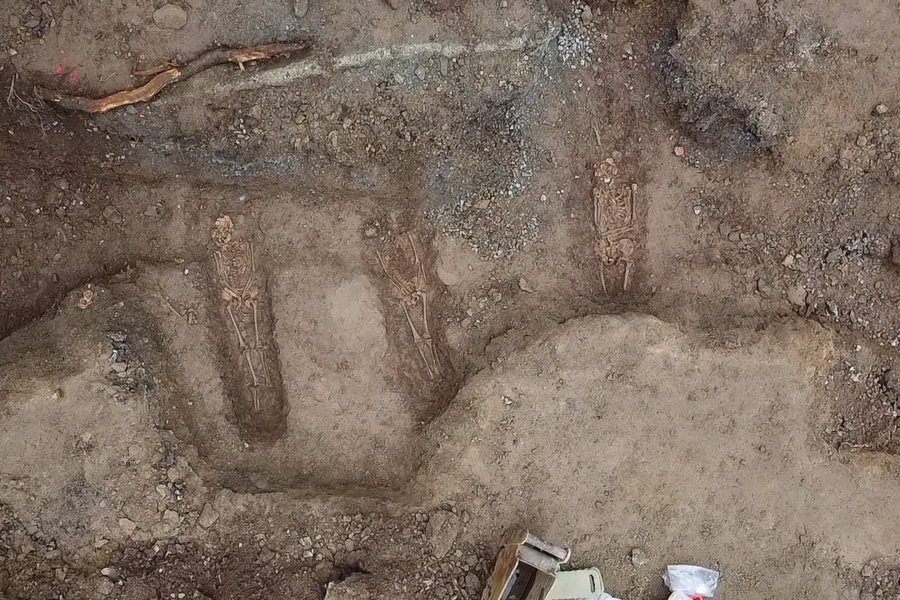
The excavations were launched in August 2026 following the discovery of more than 150 skeletons belonging to the former cemetery of the Church of the Trinitarians (established circa 1248). The excavations are now providing insight into life in the region between the Middle Ages and the 18th century.
Addressing those in attendance, Minister Thill highlighted the exceptional nature of the discovery of the skeletons, which he said will pave the way for important research aimed at improving knowledge of the historical and social contexts of both Luxembourg and of medieval Europe.
“This project perfectly illustrates the relevance of our legislation on preventive archaeological excavations, as it currently enables INRA archaeologists to carry out, in a controlled manner, all the work necessary to preserve and document these precious witnesses to our past before construction work resumes. It should be recalled that, since the amendment of the Cultural Heritage Act in 2025, all costs arising from these preventive archaeological excavations have been covered by the State,” remarked Minister Thill.
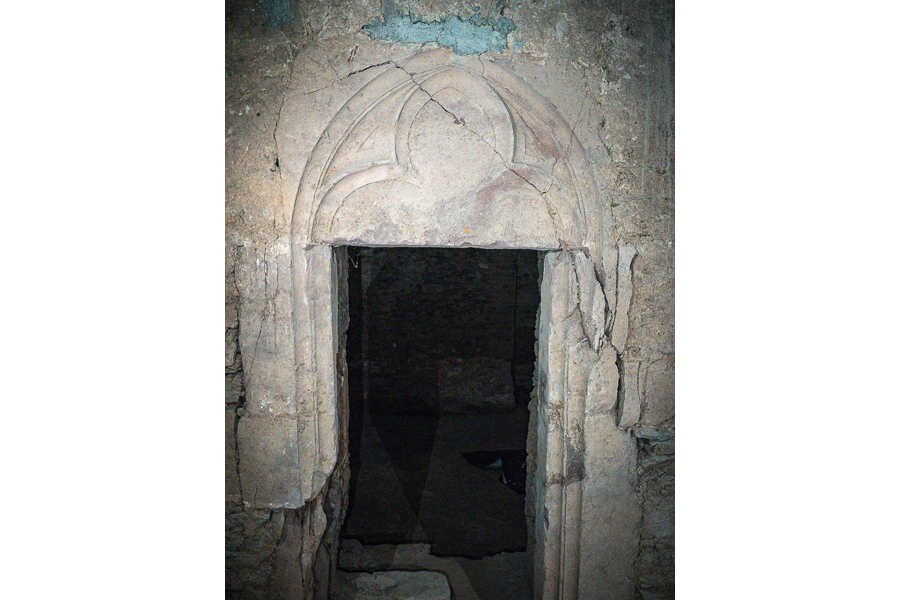
Archaeological research at the site in Vianden first began in 2021, following the discovery of a Gothic window during excavation work for the installation of a new electrical transformer station. This discovery revealed that the layers from the medieval era were located deeper than had been previously suggested.
Investigations subsequently continued through targeted excavations and archaeological documentation carried out alongside the planned construction work for the youth hostel. Attention eventually turned to the former cemetery of the Church of the Trinitarians, now located beneath the car park at Place de la Résistance.
According to the Ministry of Culture, while it was initially assumed that the Second World War and earlier construction work had largely destroyed the archaeological remains at the site, the preventive excavations revealed a much better-preserved subsoil than expected. The discovery of numerous human remains led the National Institute for Archaeological Research (INRA), in mutual agreement with the municipality, to suspend construction work in July 2026 and to begin preventive archaeological excavations in August. More than 150 skeletons have been uncovered to date.
The cemetery, which was associated with the former Trinitarian hospital, is of particular scientific interest because it served both people treated at the hospital and, until its disappearance at the end of the 18th century, members of the local population.
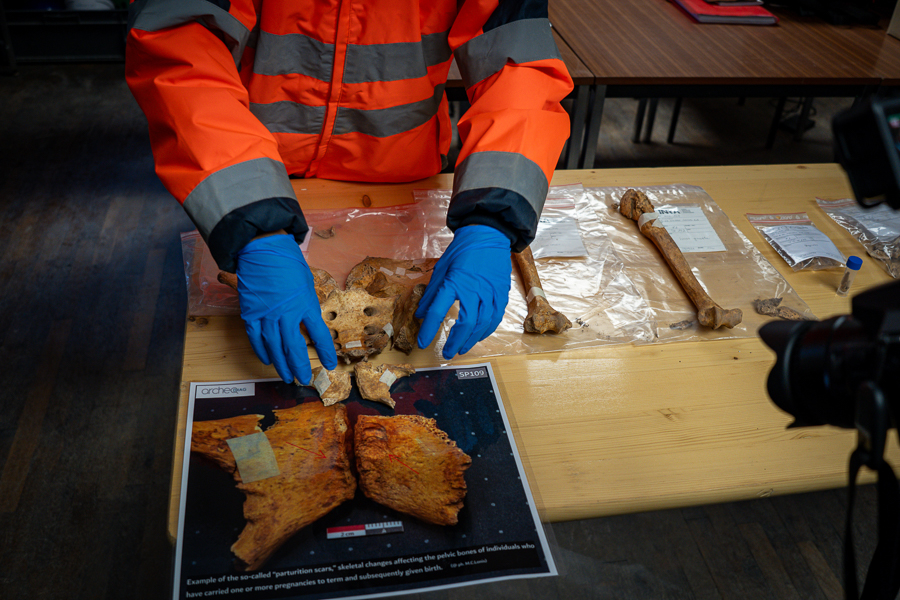
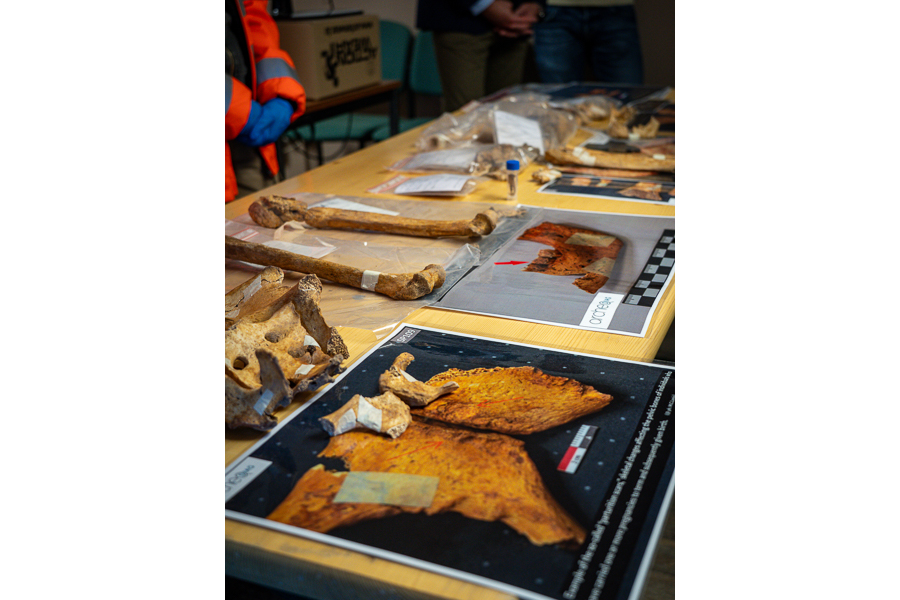
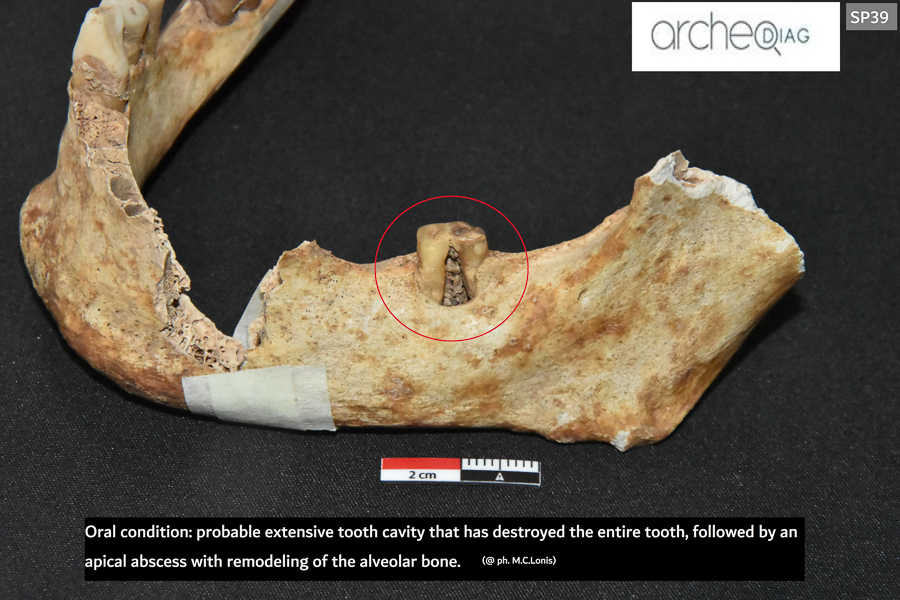
The ministry remarked that the study of the discoveries will provide a deeper understanding of the demographic structure of Vianden during the Middle Ages and the early modern period, while also providing information about living conditions and burial practices. The skeletons will then be cleaned, dried and prepared for detailed anthropological analysis, focusing in particular on observable abnormalities, fractures and pathological conditions.
Once this work has been completed, INRA plans to rebury the remains, in the context of an agreement with the Catholic Church. The excavation is expected to be completed by the end of 2026.
Speaking to Chronicle.lu, David Weis, Director of the INRA remarked that the current excavation in Vianden is of “outstanding scientific and historical importance” and provides “unique insights” into the population structure, health conditions and social differences present in Vianden from the Middle Ages through to the 18th century.
The archaeological research institute also noted that the excavation enhances its understanding of the cultural and religious history of the region, particularly the foundation of the Church of the Trinitarians by Count Frederick III following his release from captivity during the Crusades, contributing not only to local but also to national and European research into the Middle Ages.
SM