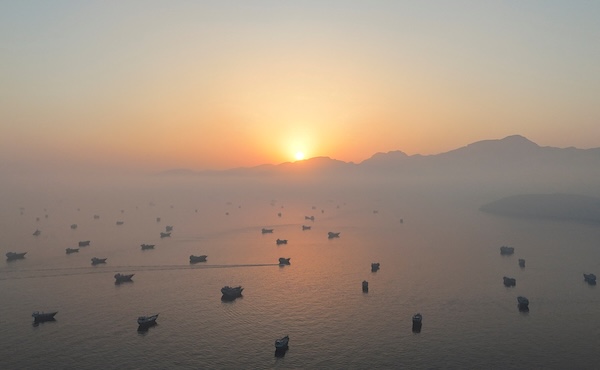
 A drone view shows vessels in the Strait of Hormuz, as seen from Musandam, Oman, 15 June 2026;
Credit: REUTERS/Stringer/File Photo
A drone view shows vessels in the Strait of Hormuz, as seen from Musandam, Oman, 15 June 2026;
Credit: REUTERS/Stringer/File Photo
SINGAPORE (Reuters) - Shipping through the Strait of Hormuz slowed, data showed on Wednesday 19 August 2026, as most shipowners avoided the key waterway because of a lack of clear signalling on its reopening from a blockade during the Iran war.
Six commodity vessels crossed the strait on Tuesday, Kpler data showed by 02:58 GMT, down from nine a day earlier and below the ten-day daily average of eleven.
Inbound traffic included an empty very large crude carrier that followed the Omani side of the strait, as well as two tankers, one of medium-range and the other intermediate, the data showed.
Two medium-range fuel tankers and a post-Panamax vessel exited the strait.
On Tuesday 18 August 2026, US President Donald Trump said no talks were taking place with Iran and insisted the Strait of Hormuz was open, contradicting Iran's assertion that it remained shut to shipping.
The waterway handled a fifth of the world's shipments of crude oil and liquefied natural gas before the war.
As security concerns curb oil shipments to the world's largest importer, two Chinese shipping giants that used to carry half its imports of Middle Eastern oil before the war have kept their tankers out of the Strait of Hormuz and Bab al-Mandeb since late July 2026, say tanker tracker Vortexa and a ship broker.
At the Bab el-Mandeb strait on the Red Sea, where Yemeni Houthis declared a naval blockade on Saudi Arabia on 20 July 2026, Kpler data showed 30 weekend transits by commodity vessels, up from nineteen in the prior week.
There were no tracked Saudi oil shipments.