 Paulina K.;
In a country where 70-75% of Luxembourg nationals normally end of working in the civil service, and most of the jobs in the country's largest business sector (the finance sector) are held by members of the international community, the innovation sector has been driven government initiatives and funding programmes such as Fit 4 Start through the national innovation agency, Luxinnovation which connects startups, researchers and enterprises; Also, ADEM, the national unemnployment office, has initiatives for those planning to start their own businesses.
Many of these jobs may be seen to be "safe" positions, without much risk, but there are people who are a bit more adventurous and are prepare to take "a leap of faith" to realise their own dreams, whether by design or by accident, or even by particular circumstances. Everyone's story is different...
However, on the ground, things many seem and feel a bit different… In this series of articles on entrepreneurship, Chronicle.lu is specifically addressing individuals who have left (the relative safety of) corporate life for (a relative risky jump into the unknown of) running one's own business.
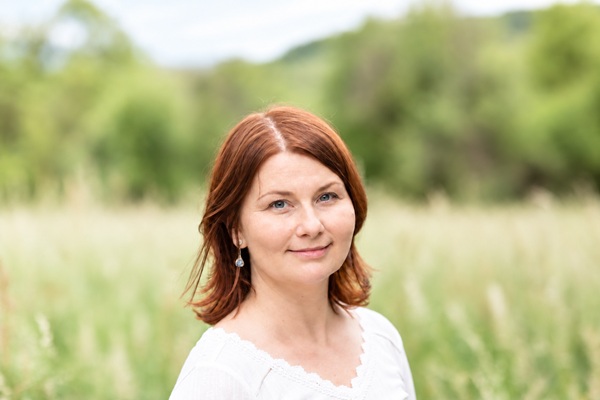
For the sixth in this series, we are talking with Paulina K. (her professional name) who is a qualified naturopath based in Luxembourg, specialising in women's health and wellbeing. Talking with Chronicle.lu, she explained: "My work mainly focuses on personalised three-month programmes, designed to support women through different challenges and stages of their lives. I currently offer two main programmes. The first focuses on stress, sleep difficulties and mental overload, while the second is dedicated to hormonal balance and emotional wellbeing, particularly during perimenopause and menopause. What matters most to me is that every woman is different. We all have our own stories, lifestyles and needs, so I don't believe in a one-size-fits-all approach. Depending on the individual, my programmes combine naturopathic consultations, nutrition and lifestyle advice, holistic massages, energy-based treatments and practical exercises that women can integrate into their daily lives. I also offer individual consultations, body treatments and small group workshops. I currently work independently, which allows me to take the time to really listen, understand each woman's situation and adapt my approach to her needs".
Chronicle.lu: Please tell us about your previous corporate work, including what sector you worked in, and for approximately how long
Paulina K.: Before becoming a naturopath, I spent more than ten years working at the European Investment Bank (EIB) in Luxembourg, first in Human Resources and later in budget management. It was a completely different world from the one I work in today. I gained valuable professional experience, worked in an international environment and learned a great deal about organisation and responsibility. But over time, my interests started moving in another direction. I became increasingly interested in health, the human body and the connection between our lifestyle, emotions and wellbeing.
Chronicle.lu: When you decided to set up your own business, how long did it take you to set everything up before you handed in your notice and left corporate employment?
Paulina K.: It was not a sudden decision. My interest in natural health had been growing for years, and I started studying naturopathy in 2018, while I was still working at the bank. I completed my main training in 2021 and continued with further specialisations, particularly in women's health. For a long time, naturopathy was something I was passionate about alongside my professional life. Gradually, I began to imagine doing it as my main occupation. Leaving a secure job after so many years was not an easy decision. There is a big difference between dreaming about working for yourself and actually taking that step, especially when you have a family and financial responsibilities. But I reached a point where I wanted to give this new direction a real chance.
Chronicle.lu: Did your employer have any specific initiatives in place to help you ease the transfer for corporate to self-employed status (e.g. have a period of half-time employment while you get everything set up)? If so, please provide details
Paulina K.: No, I did not receive any particular support from my employer, although I had not really shared my plans to become self-employed at work. It was a personal project that I had been preparing gradually and independently.
Chronicle.lu: In setting up your own business, did you receive any specific help, e.g. mentoring, or did you follow any specific training courses (either sector-specific or about innovation/entrepreneurship/setting up a business)?
Paulina K.: My initial naturopathy training involved approximately 1,200 hours of study, followed by two additional specialisations in women's naturopathy. I have continued training in different complementary approaches, and more recently in the Aviva Method, a movement-based technique focused on women's wellbeing and hormonal balance. But one thing I quickly discovered is that knowing your profession and knowing how to run a business are two completely different things! You can be very well trained in your field and still have no idea how to attract clients, market your services or make yourself visible. That is why I am currently investing in business and marketing training as well. It is another learning curve, and not always an inexpensive one.
Chronicle.lu: Did you apply for any form of state aid or subsidy?
Paulina K.: Not yet. I am currently looking into what kind of support might be available. I have to say that, compared with my previous experience of self-employment in Poland, I have found it quite challenging to start a small business in Luxembourg. The costs of living and running a business are high, while the local market is relatively small. For someone starting from scratch, without an established client base, this can be quite discouraging. I think more accessible financial support during the first years would make a real difference, particularly for people who are leaving salaried employment to create their own activity.
Chronicle.lu: Please tell us about your experience of the administrative process, e.g. applying for a business licence, opening a bank account, registering your company, apply for a VAT number, etc.
Paulina K.: I found it more complicated than I expected. There is quite a lot of information to find, and it is not always clear where to start. You often have to figure things out yourself, which takes time and energy when you are already trying to build a business. Interestingly, this is not my first experience of self-employment. Around twenty years ago, I worked as a language teacher in Poland and had my own business there. I remember the process being much simpler, with clearer information and financial incentives for people starting out, including temporary relief from certain taxes and social contributions. Of course, it was a different country and a different time, but I remember feeling that starting a business was genuinely encouraged. I think Luxembourg could benefit from a similar approach, especially for small independent entrepreneurs. When you are starting a business, you already have so many things to think about. Having clearer guidance and some financial breathing space in the beginning would be a huge help.
Chronicle.lu: How long after leaving corporate employment did you "open for business"?
Paulina K.: Within a few months of leaving the bank, I was already actively working on developing my business. The first steps were not necessarily the most visible ones. I spent time defining my services, thinking about the women I wanted to work with, creating my website and figuring out how to communicate what I offer. I soon realised that building a business involves much more than simply opening your doors and waiting for clients to arrive. You need to make yourself known, build trust and explain why someone should choose to work with you. It takes time, especially when you are starting without an existing client base.
Chronicle.lu: What do you find the most challenging aspect of running your own business? Sales / marketing / administration / finance…
Paulina K.: Without a doubt, making myself visible and finding clients. When I decided to become a naturopath, I imagined spending most of my time working with people, helping them improve their wellbeing and sharing what I had learned over the years. The reality is that, especially in the beginning, a large part of your time goes into things that have very little to do with your actual profession: marketing, social media, administration, website management and networking. And of course, there is the financial side. When you are self-employed, there is no guaranteed salary at the end of the month. I think this is something people sometimes underestimate when they dream of leaving the corporate world. At the same time, I really enjoy the creative freedom. I can develop my own workshops, explore new ideas and decide how I want to work. It is challenging, but it is also very rewarding when someone leaves a consultation or workshop feeling better, more relaxed or simply more understood. Those moments remind me why I chose this path.
Chronicle.lu: What lessons have you learned that you would like to share with others thinking of doing the same, i.e. leaving corporate world and setting up on your own?
Paulina K.: First of all, I would say: don't underestimate how much work goes into building your own business. Having a passion for something is a wonderful starting point, but it is not enough on its own. You also need patience, financial preparation and a willingness to learn things that may be completely outside your comfort zone. I have also learned that progress is rarely as quick as we would like. There are moments when you question yourself, especially when you put a lot of energy into something and the results are not immediately visible. Coming from a large institution, where you have a defined role and a stable salary, this is a big adjustment. But there is also something very satisfying about creating something of your own, even if it grows slowly. I am still at the beginning of this journey, and I certainly don't have all the answers. What I do know is that I wanted to give myself the chance to build a professional life that feels more meaningful to me. And I think that sometimes, if you have been thinking about making a change for years, it is worth listening to that feeling rather than always finding reasons to postpone it.