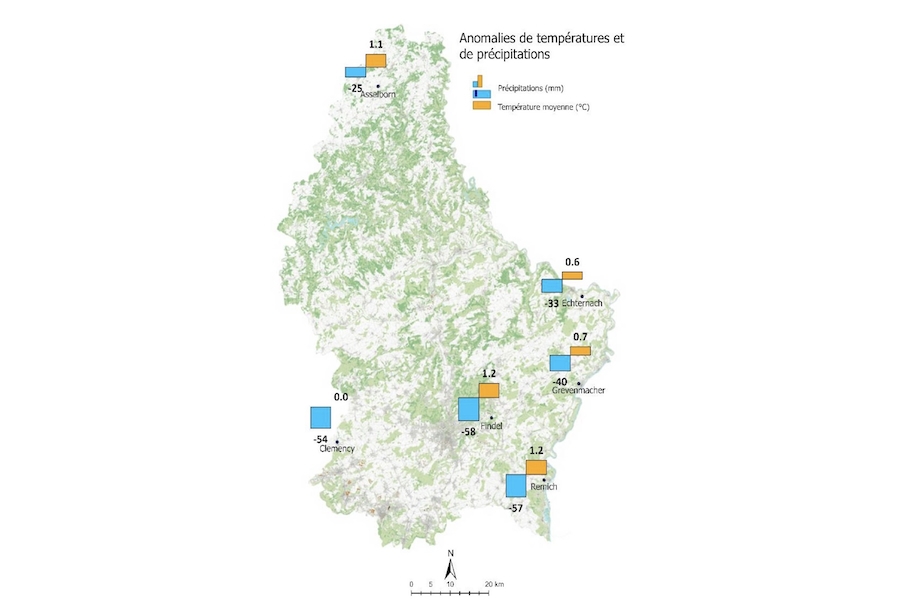
 Anomalies in air temperature and precipitation at different locations in Luxembourg, compared to the climatic normal (1991-2020);
Credit: ASTA/MeteoLux
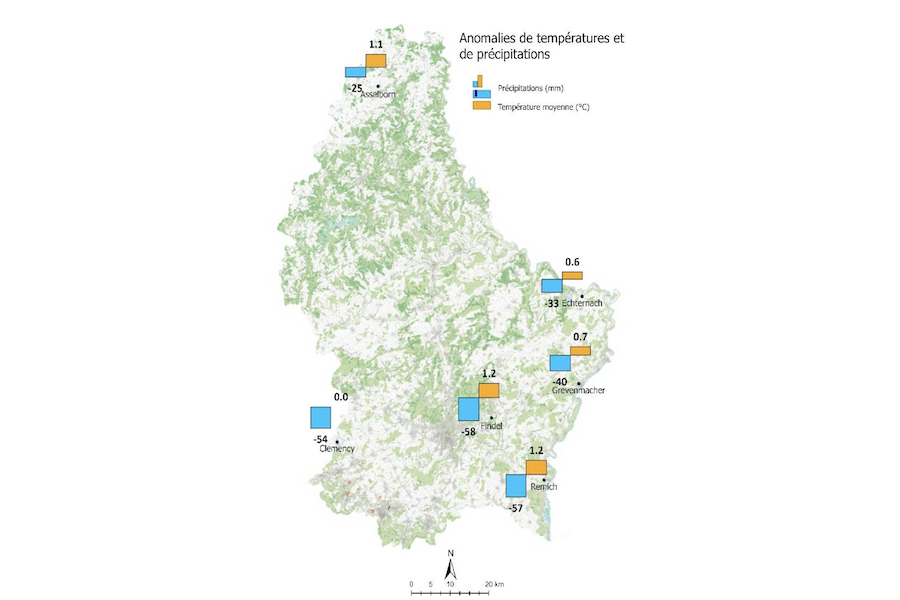
Anomalies in air temperature and precipitation at different locations in Luxembourg, compared to the climatic normal (1991-2020);
Credit: ASTA/MeteoLux
On Monday 1 June 2026, AgriMeteo and the meteorological service of the Agricultural Technical Services Administration (ASTA) released their report on the Grand Duchy’s weather trends for Spring 2026.
The report was compiled using data from ASTA, the AgriMeteo weather stations, the MeteoLux weather station and the meteorological department of the Air Navigation Administration, at Findel Airport. The analysis of rainfall and flooding was carried out by the Water Management Administration (AGE).
Warmer than average temperatures
According to the report, with the exception of the Clémency weather station, the months of March and April were warmer than average. May was marked by strong contrasts, with around two-thirds of the month colder than average, including periods of frost.
From mid-May until the end of the month, exceptionally warm summer temperatures were recorded. On Tuesday 26 May, several ASTA stations recorded their highest-ever daily maximum temperature for the month of May, although this did not exceed Luxembourg’s absolute record of 33.1°C, recorded in Ettelbruck on 27 May 2005.
Lack of rainfall
Following a dry winter, spring was also characterised by a lack of rainfall. A precipitation deficit was recorded across all stations (from -57.9 mm to -25 mm). While deviations from the climatic reference period remained relatively moderate in March (between -13.1 mm and -3.1 mm), the differences were significantly more pronounced in April, with precipitation totals ranging from 9.8 mm to 25.5 mm, the rainfall deficit ranged between -39.6 mm and -22.8 mm. With the exception of the Asselborn station (+5.6 mm), May was also notably dry, with a deficit ranging from -22.2 mm to -4.4 mm.
Consequences for agriculture
According to the report, winter crops developed well despite some localised damage caused by frost, weeds or excess water, particularly in rapeseed crops. Spring crops were sown under favourable conditions, and the final maize and potato plantings were completed at the end of May. Vegetable, fruit and vineyard crops generally benefited from favourable conditions, despite increased irrigation requirements and several contrasting weather episodes during May.
In addition, the first forage harvests were completed under good conditions, with average yields but promising quality for the first cut, and a successful hay harvest. At this stage, the heat and drought have not yet affected yields but the situation could change rapidly if current conditions persist.
Further details can be found at www.agrimeteo.lu.