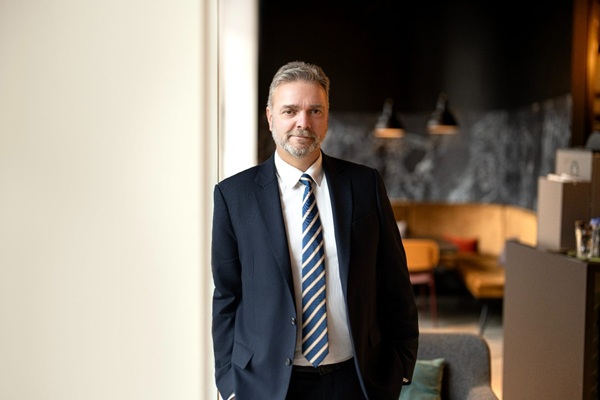
 Darren Robinson;
In a country where 70-75% of Luxembourg nationals normally end of working in the civil service, and most of the jobs in the country's largest business sector (the finance sector) are held by members of the international community, the innovation sector has been driven government initiatives and funding programmes such as Fit 4 Start through the national innovation agency, Luxinnovation which connects startups, researchers and enterprises; Also, ADEM, the national unemnployment office, has initiatives for those planning to start their own businesses.
Many of these jobs may be seen to be "safe" positions, without much risk, but there are people who are a bit more adventurous and are prepare to take "a leap of faith" to realise their own dreams, whether by design or by accident, or even by particular circumstances. Everyone's story is different...
However, on the ground, things many seem and feel a bit different… In this series of articles on entrepreneurship, Chronicle.lu is specifically addressing individuals who have left (the relative safety of) corporate life for (a relative risky jump into the unknown of) running one's own business.
For the third in this series, we are talking with Darren Robonson who told Chronicle.lu "We run Anderson Wise, a recruitment and executive search business based in Luxembourg, helping employers find the right people. I work with a team, rather than on my own. When we started, these were people I had worked with for between ten and twenty years. I had hired and trained them, and we knew one another extremely well. That shared history was an enormous advantage, we were building a new business, but not a new team. The success we have achieved would not have been possible without this team. They put their trust in me at a moment of considerable uncertainty, and their commitment, expertise and hard work have made the business what it is today. It may have been my departure that prompted the move, but what we have built has very much been a team achievement".
Chronicle.lu: Please tell us about your previous corporate work, including what sector you worked in, and for approximately how long.
Darren Robinson: I spent over 20 years in the recruitment industry before setting up our business. I was a very corporate employee, committed to the organisation, the team and the clients, giving 100% every day, many evenings and most weekends. I believed in loyalty and trusted that the commitment worked both ways. That trust disappeared in a telephone call five days before Christmas in 2018. The message was essentially: “Don’t come back. We don’t need you.”
It was an abrupt end to a substantial chapter of my working life, but ultimately the beginning of a much better one.
Chronicle.lu: When you decided to set up your own business, how long did it take you to set everything up before you handed in your notice and left corporate employment?
Darren Robinson: There was no carefully planned resignation or gradual transition. I was fired. Afterwards, I decided I would not go back to work for another recruitment firm. My wife helped clarify that decision by reminding me that I might simply end up 'working for another ***hole'. It was a fairly compelling argument. When the Luxembourg team asked what I was going to do, my immediate answer was that I did not know. Their response was: 'Whatever you do, we’re coming with you'.
That changed everything. These were people I knew, trusted and had worked alongside for many years. Starting our own business suddenly became a much easier decision. I sometimes describe it as the best decision I never made. I had not chosen to leave corporate life, but once the choice was taken away, I realised I did not want to go back.
Chronicle.lu: Did your employer have any specific initiatives in place to help you ease the transfer for corporate to self-employed status (e.g. have a period of half-time employment while you get everything set up)? If so, please provide details
Darren Robinson: No. There was no phased departure, part-time arrangement or supported transition into self-employment. The transition support came from my wife, my colleagues and the organisations that subsequently helped us establish the business. My former employer supplied the initial push, although I doubt that was the intention.
Chronicle.lu: In setting up your own business, did you receive any specific help, e.g. mentoring, or did you follow any specific training courses (either sector-specific or about innovation/entrepreneurship/setting up a business)?
Darren Robinson: I contacted the House of Entrepreneurship and met an adviser who explained the information, requirements and steps involved in creating a company. That practical guidance was particularly valuable in turning the idea into an actual business. On the recruitment side, I was starting in an industry I already knew very well. I also had experienced colleagues around me, so we were not learning our profession at the same time as learning how to establish a company. It was, in some respects, a “cheat start-up”, a new business, but with an established team, considerable experience and existing market recognition.
Chronicle.lu: Did you apply for any form of state aid or subsidy?
Darren Robinson: BGL, where I already had my personal banking relationship, became our business bank. They helped us secure financial support through a loan with SNCI. Having a bank that knew me and helped us navigate the funding process made a real difference.
Chronicle.lu: Please tell us about your experience of the administrative process, e.g. applying for a business licence, opening a bank account, registering your company, apply for a VAT number, etc.
Darren Robinson: The key for me was getting the right guidance early. The House of Entrepreneurship helped me understand the steps involved, while BGL supported the banking and financing side. Knowing the recruitment industry was one thing; understanding the process of establishing a company was another. Having people explain what needed to happen, and in what order, made the process much more manageable.
Chronicle.lu: How long after leaving corporate employment did you "open for business"?
Darren Robinson: We opened for business in September 2019 approximately 9 months after my departure. The team and I were already well known in the Luxembourg market, so it did not take long to establish business relationships under the new company. We were fortunate to have those foundations in place around six months before the COVID lockdown. That did not make the pandemic easy, but it meant we faced it as a functioning business rather than one still trying to get off the ground.
Chronicle.lu: What do you find the most challenging aspect of running your own business? Sales / marketing / administration / finance…
Darren Robinson: The biggest challenge is balancing working in the business with running it. Recruitment and client relationships are familiar territory. As a business owner, however, you also have to make time for finance, administration, marketing and the decisions that determine the company’s future. You cannot focus only on the work you enjoy or know best. The rest still needs doing.
Being involved in business associations has also helped us build visibility and develop relationships. Particularly in a market like Luxembourg, being known is useful; being trusted is far more important.
Chronicle.lu: What lessons have you learned that you would like to share with others thinking of doing the same, i.e. leaving corporate world and setting up on your own?
Darren Robinson: First, recognise what you already have, not just what you are leaving behind. In our case, that meant industry knowledge, longstanding relationships, a strong team and a reputation in the market. We were not starting from nothing, even if the company itself was new.
Second, get advice early. You may know your sector inside out without knowing how to establish and run a company. There is no prize for trying to work out every administrative requirement on your own.
Third, invest in relationships before you need them. The colleagues who chose to come with me were people I had worked with for ten to twenty years. You cannot manufacture that trust when a crisis arrives.
Finally, do not confuse corporate employment with guaranteed security. I had given a great deal to an organisation, and it ended with a telephone call five days before Christmas.
Running your own business carries risks, but my experience taught me that being employed carries risks too. The difference is that now I have a say in the decisions.