 Terry Allington;
Credit: Ali Sahib, Chronicle.lu
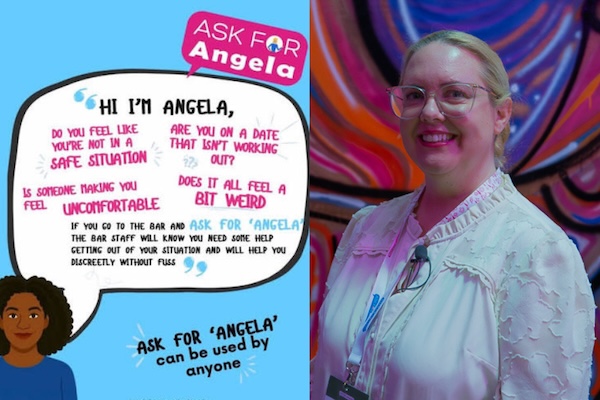
Recently, Chronicle.lu contacted Ask for Angela Luxembourg to learn about the progress of the safety initiative since its official launch on Monday 6 July 2026 and the challenges it has faced in encouraging more hospitality venues to participate.
Originally launched in the United Kingdom (UK) in 2016, the initiative allows people who feel unsafe or harassed to discreetly seek assistance from trained staff at participating venues. Since its launch in Luxembourg with eleven establishments, one additional venue has joined, while several others are currently undergoing training.
Terri Allington, President of Ask for Angela Luxembourg, described the progress as "remarkable", noting that 300 people had now completed the training programme, which had not yet started in March 2026.
She confirmed that the scheme had already been used multiple times. The association encourages people and participating venues to report these experiences through its online form to identify possible improvements and recognise establishments that have handled situations well.
Commenting on cooperation with Luxembourg's Grand Ducal Police, Terri Allington said: "Feedback from the police has been positive. They've briefed all response centre staff and tested their new joiners, with a 100% pass rate, which I'm delighted with. It shows the police is really taking it seriously, which is great."
She also highlighted the strong public response to the initiative, particularly during the women's safety march organised in Luxembourg City in October 2026.
"Public support has been overwhelming. The march on the street showed that people want more safety," she said, adding: "Yet there seems to be a huge gap between what the public want and bars actually responding by signing up."
Challenges with venue participation
While festivals and event organisers have shown interest in participating, including some planning to introduce the scheme next year, the response from permanent hospitality venues has been limited.
According to Terri Allington, organisers have proactively contacted and visited establishments but many have shown little interest. Some venue operators reportedly interpret the initiative as criticism of their businesses or believe that harassment does not occur on their premises.
"People tend to say that this doesn't happen in their bar, so they don't need the scheme. The problem is that when people feel harassed or unsafe, they would rather leave quietly than spend a while explaining," she said.
Following an attack on Grand-Rue in August 2026, Terri Allington personally contacted venues that had previously been approached, encouraging them to consider becoming safe places for people seeking help, even if they believed such incidents did not occur inside their establishments.
"Only one new bar signed up for training off the back of that email," she said.
She added that two other bars had registered and received training materials but had either failed to progress or unsubscribed from updates. She suggested that some establishments may not have realised that the training requires around fifteen minutes per staff member.
Public support & future expansion
Discussing the support needed to expand the initiative, Terri Allington explained that the association currently relies largely on her work as a full-time volunteer, limiting the time available to visit venues and manage operations.
"Ask for Angela is essentially one full-time volunteer, so I don't have the capacity to do the operational work and constantly visit venues. Therefore, support from the public would be amazing," she said.
She encouraged members of the public to raise awareness by asking staff at restaurants, pubs and clubs whether their establishments participate in Ask for Angela.
Addressing hospitality businesses, Terri Allington stressed: "Just sign up for the training. Even if they decide not to join Asbl and create their own poster, just sign up for the training because it's free and self-paced. Why would you not?"
Looking ahead, the initiative plans to expand into shops in 2027, providing additional places where people who feel followed, harassed or overwhelmed in public can seek assistance.
Ask for Angela is active in several countries worldwide, including at least seven European Union (EU) countries: Luxembourg; France; Belgium; Spain; Cyprus; the Netherlands; and Ireland.
The association is also preparing a new public awareness campaign and inviting interested volunteers to contact the organisers through social media or its website.