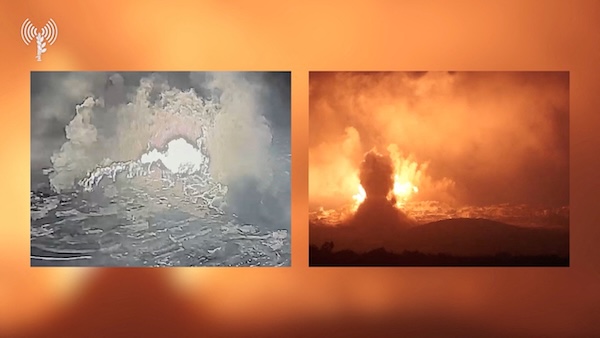
 A split-screen image from two videos, including thermal footage, that Israel says shows its military destroying Hezbollah underground infrastructure in Majdal Zoun, southern Lebanon, in this still image from video released on 28 June 2026;
Credit: Israeli Military/Handout via Reuters
A split-screen image from two videos, including thermal footage, that Israel says shows its military destroying Hezbollah underground infrastructure in Majdal Zoun, southern Lebanon, in this still image from video released on 28 June 2026;
Credit: Israeli Military/Handout via Reuters
CAIRO (Reuters) - On Sunday 28 June 2026, the Israeli military destroyed underground infrastructure used by the Lebanese militant group Hezbollah in a village in southern Lebanon, according to a joint statement by the Israeli prime minister and defence minister.
The US was informed ahead of the attack, which targeted a 200-metre (656-ft)-long tunnel in the town of Majdal Zoun, according to the statement from Israeli Prime Minister Benjamin Netanyahu and Defence Minister Israel Katz.
The strike came two days after Lebanon and Israel agreed a US-brokered security arrangement intended to ease hostilities along the border. The agreement provides for a phased Israeli withdrawal from some parts of southern Lebanon alongside the deployment of the Lebanese army, although Israeli forces would be permitted to remain in an expanded security zone for the time being.
The Israeli statement said the tunnel contained hundreds of weapons and launchers.
The attack came hours after the Israeli military said it had struck Hezbollah militants armed with rocket-propelled grenades and hit a rocket launcher in the Nabatieh area of southern Lebanon.
Hezbollah said early on Monday 29 June 2026 that the Israeli attacks were a "flagrant" violation of the ceasefire to which it has so far adhered, adding that it is closely monitoring all such violations and reserves the right to "defend its homeland and people."
Hezbollah leader Naim Qassem has rejected the security agreement, describing it as a surrender to Israel. He said the group would continue its armed resistance.
Netanyahu said in his statement late on Sunday that the Israeli military would remain in the security zone in southern Lebanon and will "continue to destroy terrorist infrastructure, remove threats from the northern communities, and safeguard the security of Israel's citizens."
More than a million Lebanese have been driven from their homes by the conflict that has run in parallel with the wider Iran war. Hezbollah and Iran say Washington pledged to ensure the end of hostilities in Lebanon as part of its memorandum of understanding signed two weeks ago to end the wider war.