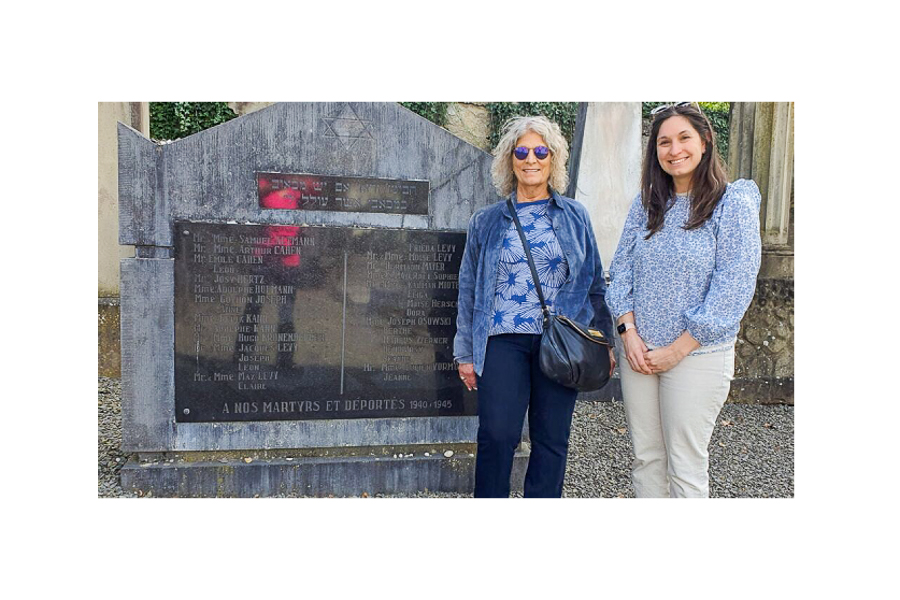
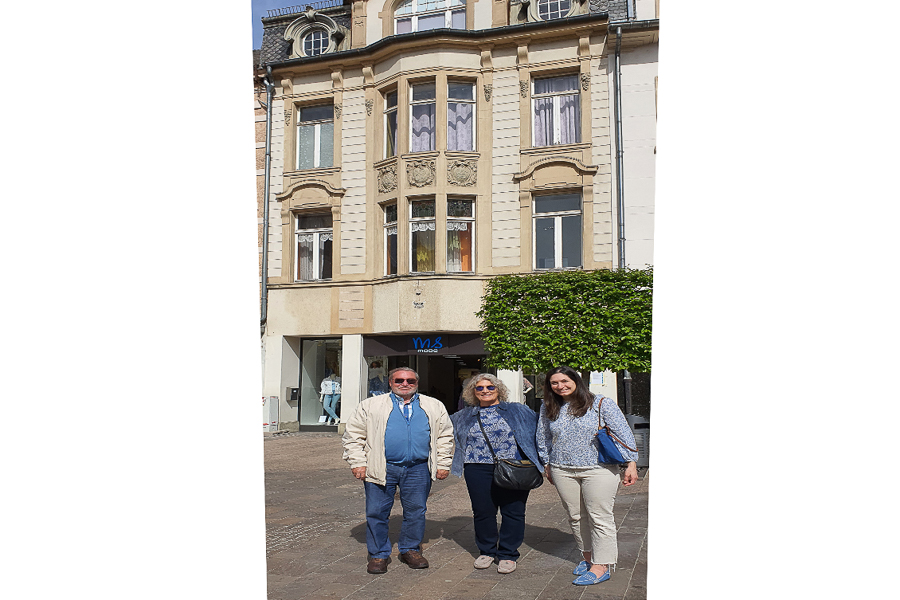
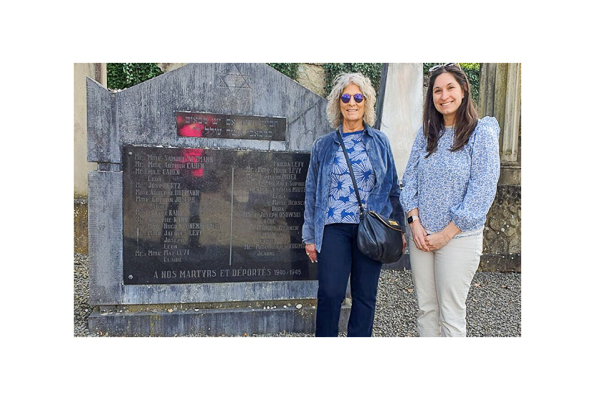
 Nancy Cohen and her daughter, Allison Young, visit the Jewish cemetery in Ettelbruck, Luxembourg;
Credit: Liliane Goniva
Nancy Cohen and her daughter, Allison Young, visit the Jewish cemetery in Ettelbruck, Luxembourg;
Credit: Liliane Goniva
Luxembourg's growing community of dual citizens in the United States continues to strengthen cultural ties between the two countries, with many embracing their heritage and sharing it through language, tradition and entrepreneurship.
This article is the sixth in a series on Luxembourg Americans who have gone through the process of reclaiming Luxembourg nationality to become Luxembourg citizens. These dual citizens, who were assisted in their citizenship journey by Luxembourg Legacy, reflect the passion that new Luxembourgers in the United States have for all things Luxembourg.
Rural Catholic Luxembourgers seeking a better life in agriculture made up most of the US immigrant population. However, a noteworthy portion of Luxembourg’s Jewish population made its way to America as well. That includes Nancy (Joseph) Cohen, whose Jewish Luxembourg family history is filled with tragedy, good fortune and serendipitous discoveries.
Nancy Cohen’s paternal grandmother Gothon (Bermann) Joseph was born in Ettelbruck and she and Simon Joseph (who died during the influenza epidemic during WWI), had two children, Anna and Marcel, Nancy’s father.
When Nazi Germany invaded Luxembourg in 1940, Jewish Luxembourgers faced intense persecution and many were forced into hiding or exile, while a large percentage were deported and exterminated in the Jewish Holocaust.
Because he had a Luxembourg passport, Marcel Joseph, who was born just across the border in Germany but moved to Luxembourg when he was a year-and-a-half old, was not sent to a displacement camp. Fanny Mlotek, who later married Marcel, was from Pforzheim, Germany, and held a German passport. She was taken to a holding camp where Jews being held there were allowed a three-hour free passage each day. She used that time to try to procure documents to leave Germany. That is when she met Marcel Joseph.
“My father made sure that before he left Europe, he had all the papers set up for his mother and his sister. He would never have left without them. Of course, things happened and they could not get out,” Nancy Cohen said.
She related a story of her father saving 60 people from a Nazi camp in Bayonne, France. “It is like a Spielberg movie. He had to appear in front of the Nazi guards, and they could have arrested him right there and thrown him into a camp, but somehow, he got all the way to Portugal, where their boat was leaving. But he was sent back and they had to hide in abandoned train stations. It is just a crazy, amazing story,” she said.
Marcel Joseph did everything he could to get his mother and sister out of Luxembourg.
“My grandmother - may she rest in peace - who was a hardnosed Luxembourger, said, ‘Here I was born; here I will stay.’ And my aunt stayed with my grandmother. They were eventually sent to Auschwitz and the rest is history,” Nancy said.
Marcel Joseph and Fanny Mlotek emigrate to the Dominican Republic
Marcel was designated a leader for his heroic efforts in rescuing people from the camp and was subsequently selected for Dominican Republic dictator Rafael Trujillo’s programme to accept Jewish refugees into the Caribbean country. Rafael Trujillo’s intention was to “whiten” the population and improve his international image. Nancy Cohen’s parents had to sign an agreement that they would stay in the Dominican Republic for at least six years. There, they were married, and Marcel farmed and Fanny worked in an office.
“When my parents finally got the necessary documents and money together to move to the US, they pretty much just came with the shirts on their backs,” Nancy said.
Seeking jobs, her parents moved to Cleveland, where her mother’s brother lived, and then to Portland, Oregon, where Nancy was born. The family moved to Wisconsin when she was six years old.
Coincidental connections with family history
In the 1980s, as part of a reconciliation effort, West German towns and cities invited former Jewish residents back as honoured guests. Nancy’s parents were invited and she accompanied them on the trip in 1983. She found it haunting. “I just could not stand it. Every older person I saw there I pictured in an SS uniform. It made my blood run cold,” she said.
When they drove across the border into Luxembourg, Nancy’s father yelled at her to stop the car. “He got out and kissed the ground,” she said. “I sort of vowed at the time — I mean, my dad is my hero, and I knew I had to connect myself to Luxembourg.”
About four years ago, she thought about her bucket list item of acquiring her dual citizenship, so she googled it and she found Kevin Wester’s name. “I am sitting here in Santa Monica, California, and Kevin popped up. Kevin, from Milwaukee, where I grew up. So, I signed up to get my citizenship,” said Nancy, who works as a registered clinical laboratory scientist at the American Red Cross.
That led to her connection with Lilliane Gonvia, Kevin Wester’s cousin who grew up in Ettelbruck. She assists him with obtaining birth certificates for citizenship clients. After a conversation with Kevin, Lilliane mentioned the Josephs of Ettelbruck to her then 96-year-old mother, a lifelong resident of Ettelbruck, who remembered the family and told her that Gothon Joseph had sewn dresses for her when she was a girl back in the 1930s. That was one serendipitous connection of many.
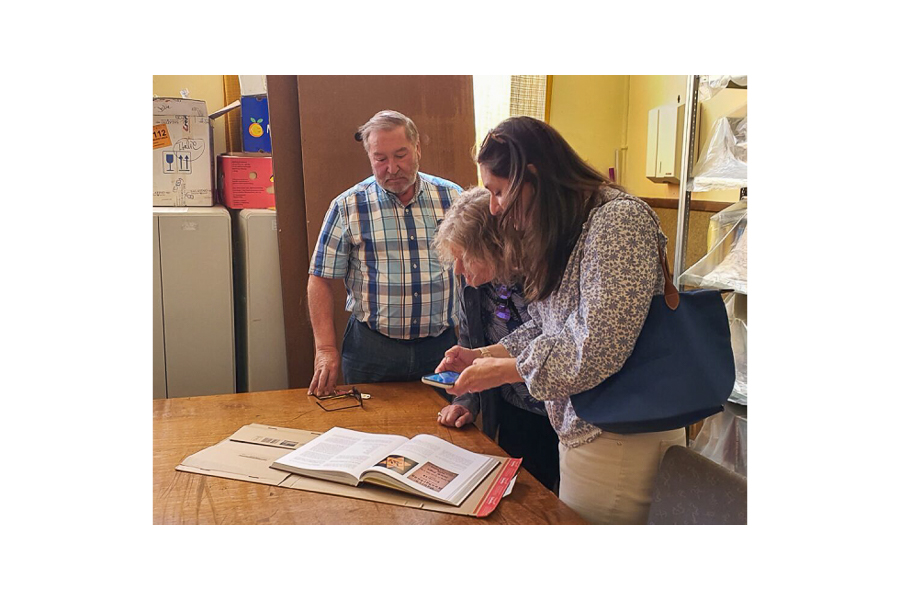
Through Lilliane, Nancy Cohen met Nico Beckerich, whose family owned a bakery in Ettelbruck that baked bread for and helped the Jews in hiding. Anna Joseph, who was a haberdasher like her mother, had a workshop above the bakery. Nico said that Anna sewed clothes for a doll displayed in the bakery window — coded outfits that provided covert messages and warnings to Jews about what was happening.
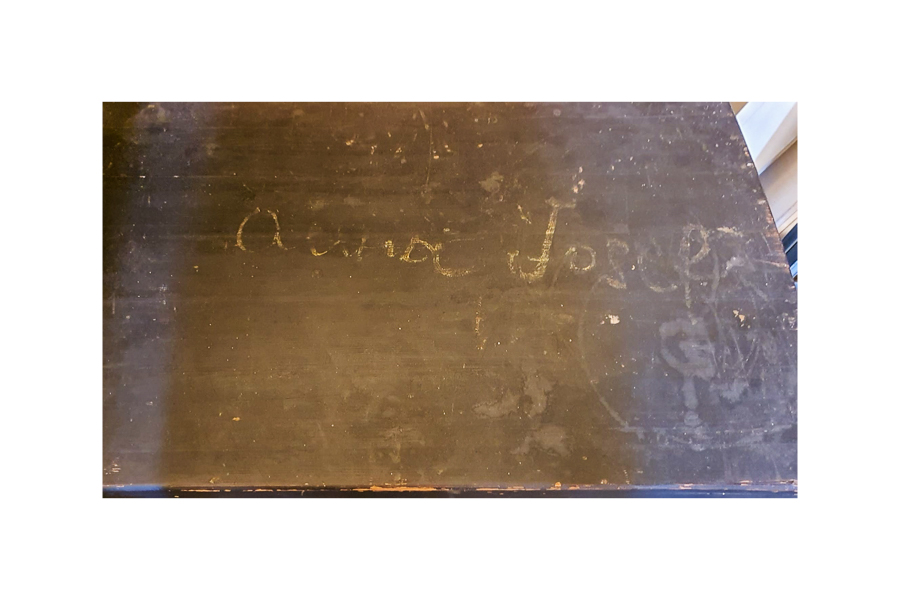
On her 2022 trip to Luxembourg to apply for citizenship, Nancy met Lilliane and Nico and went to the bakery building in Ettelbruck and saw the window of her aunt’s workshop. Nico showed her a photo of a large wooden chest that had belonged to Anna, who had written her name on the lid thinking she would be returning to resume her life in Ettelbruck.
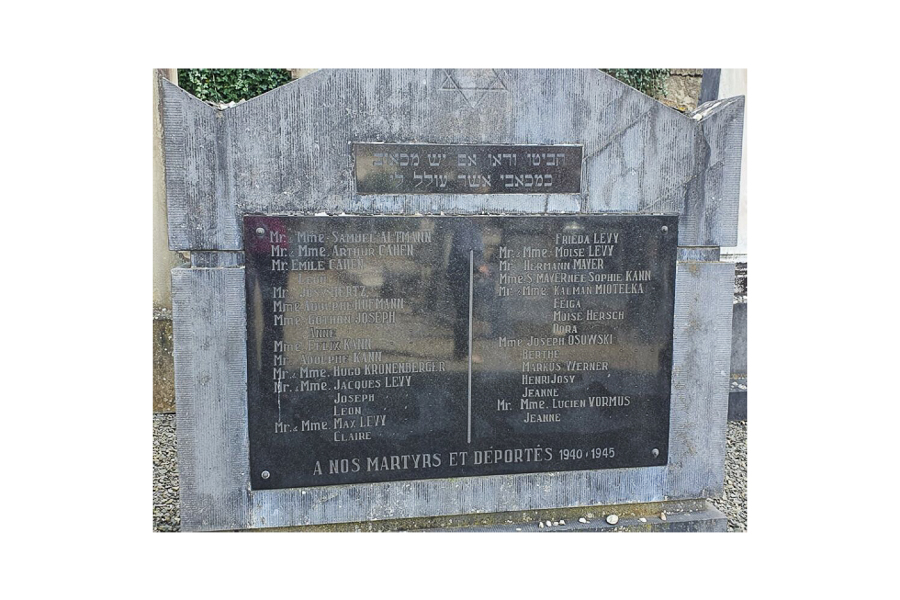
Nancy also visited the Jewish cemetery in Ettelbruck and found her grandmother’s and aunt’s names on the plaque of martyrs of Luxembourg. She also visited the grave of her father’s best friend, Julian Khan. The synagogue in Ettelbruck, the oldest remaining synagogue in Luxembourg, was destroyed inside during World War II, but the structure survived. It is being renovated as a cultural venue, meeting space and a museum dedicated to local Jewish history. Nancy has donated historic family photographs (her father miraculously got them through immigration), letters, documents and other items to be displayed there and, according to Nancy, serve as “a living legacy of our family.”
That legacy, she said, reads like a film script. “I mean, it is just crazy,” she said. “And that I made all these connections. My dad would probably say ‘Gothon is looking down on you’.”
Nancy Cohen’s father told the story of when Grand Duchess Charlotte went through Ettelbruck in a parade. His mother did not have a lot of money but was said to be very well respected.
“My father said the duchess tipped her hat to my grandmother as she passed by. Now, I don’t know if this story is true, but my dad stood by it,” Nancy said.
Citizenship reclamation a tribute to her father
Nancy Cohen said getting her dual citizenship felt like closure. “The day I got my citizenship letter, I looked up to heaven, and I said, 'Dad, I did it', and it was just a real moment for me. My dad was always my light and I miss him. He was a very, very proud Luxembourger. I did this for him.”
Will Nancy return to Luxembourg anytime soon? “God willing, yes. When they open the memorial museum, we are definitely going back, because that is going to be a big moment for my family,” she said.