 Credit: LENSMEN
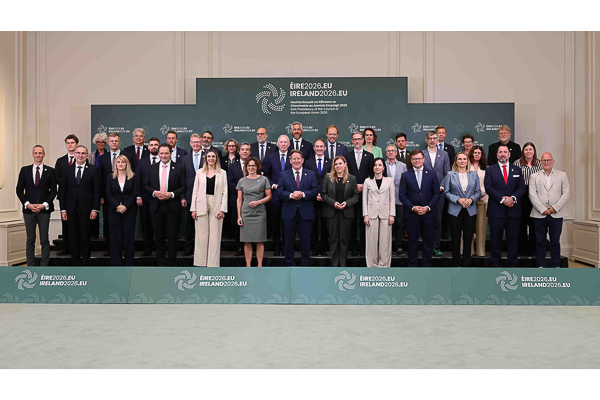
Luxembourg's Minister of the Environment, Climate and Biodiversity, Serge Wilmes, participated in the informal meeting of EU Environment Ministers, held on Thursday 23 and Friday 24 July 2026 in Dublin, under the Irish Presidency of the Council of the European Union.
According to Luxembourg's Ministry of the Environment, Climate and Biodiversity, discussions focused on the role of the circular economy in strengthening the resilience, competitiveness and strategic autonomy of the European Union, as well as on the EU's priorities in climate and environmental diplomacy ahead of COP31 on climate and COP17 on biodiversity.
During discussions on the circular economy, Minister Wilmes stressed that circularity is both an environmental protection tool and a strategic lever for strengthening European competitiveness. He noted that the European Union remains highly dependent on imports of raw materials essential for the energy and digital transition. In this context, he called for an efficient European market for secondary raw materials, better use of resources already present in the economy and stronger policies on repair, reuse and recycling. The minister also highlighted the importance of recovering critical raw materials contained in electrical and electronic equipment to reduce Europe's strategic dependencies and strengthen the security of its value chains.
Climate transition and economic competitiveness also featured on the agenda. Minister Wilmes stressed that decarbonisation and competitiveness are complementary pillars of Europe's prosperity and strategic autonomy. He reiterated the importance of maintaining a predictable regulatory framework to ensure the confidence of businesses and investors, while accelerating the deployment of renewable energy, energy infrastructure and innovative industrial decarbonisation technologies. The minister also underlined the central role of the European Union Emissions Trading System (EU ETS) in directing investment towards clean technologies and supporting emissions reductions.
Discussions also covered the European Union's international priorities ahead of COP31. Minister Wilmes argued that the conference should primarily focus on the implementation of climate commitments. He stressed that emissions reductions should remain the central priority of international negotiations, while noting that cooperation initiatives and action-oriented partnerships can complement the multilateral process and accelerate the achievement of the objectives of the Paris Agreement. The minister also highlighted the importance of international climate finance and increased mobilisation of private capital to support the investments needed for the climate transition, particularly in the most vulnerable countries.
The meeting concluded with exchanges on the European Union's role in international climate and biodiversity negotiations. Minister Wilmes stressed the need to better demonstrate to citizens that climate and environmental policies contribute to protecting public health, strengthening regional resilience, reducing the costs associated with climate change and preserving the prosperity of future generations.
"In an increasingly fragmented world, Europe must continue to lead by example, build strong partnerships and demonstrate that climate and environmental action brings tangible benefits to our citizens, our economy and our security," Minister Wilmes concluded.