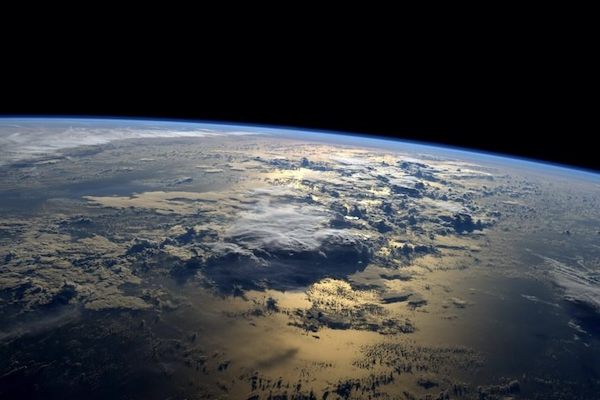
 Credit: NASA
If 2026 does not mark a significant turning point in human action regarding the impact of climate change, then we stand at the precipice of absolute disaster.
I do not say that lightly and I do not say it as hyperbole. I say it because what is now unfolding on a daily basis is what has been predicted for several decades and, in some cases, is ahead of the curve of prediction in how soon such disasters will unfold without a significant change in how we live as a species.
Since the beginning of 2025, wildfires have decimated large areas of Europe, the western United States, Canada, Australia, South Korea and Indonesia. In that same period, extreme levels of rainfall have caused extensive damage in Pakistan, Mexico, Sri Lanka, Bolivia, China and Japan. Factor in the record temperatures being experienced worldwide and it is now impossible to deny that the climate many of us once knew and built our lives around simply no longer exists in that form, anywhere.
The rise in average temperatures attributed to fuelling such events is primarily attributed to the rise in carbon within the atmosphere. This has accelerated greatly since the industrial revolution as a result of the ever growing use of carbon-based fuels. The oil industry knew about this as long ago as 1957 and the consequences of its refusal to make the results of its own studies public are now playing out worldwide.
For decades we have been warned of how catastrophic even a single degree of average warming can be in relation to global climate stability. Yet such a simple figure is often used by climate change deniers as representing nothing, an insignificance. After all, what is “one degree”?
Put simply, a 1°C rise is the difference between ice becoming water and a glacier collapsing and not collapsing.
For 2025 the annual global mean near-surface temperature above the pre-industrial period of 1850 to 1900 was calculated at approximately 1.55 °C. Arctic temperatures over the five northern hemisphere winters between 1991-2020 were 2.8°C above average temperatures. That is a lot of ice melting at sea level. It is no different at altitude.
Some estimates suggest the first ice-free day in the Arctic Ocean could occur before 2030. In 2025, sub-Arctic Norway, Sweden and Finland recorded their worst heatwave on record and temperatures exceeded 30°C within the Arctic Circle itself. In Antarctica the situation is just as bleak, with an estimated 135 billion metric tonnes of ice per year on average breaking off the continent and melting in the sea. According to the NASA estimates that loss contributes about 0.4 mm per year to a rising global sea-level.
The recent glacial collapse in Nepal and the thousands of deaths and devastation left in its wake is a horrifyingly stark example of how fragile the tipping points of these environments are. China, India, Pakistan, Nepal, Afghanistan, Tajikistan, Kyrgyzstan, Kazakhstan, Russia, Canada, United States, Argentina, Chile, Norway, Iceland, Switzerland, Austria, France, Italy and New Zealand all have major mountain glaciers. They are all melting at an unprecedented rate.
Additionally, the multiple heatwaves which occurred across Europe this summer, the resulting 35,000 deaths directly attributed to the record temperatures and the wildfires which gripped nearly every corner of the planet in 2026 represent other obvious consequences of climate change. However, while the main headlines talk of fire and floods there are additional impacts which must be given equal weighting right now; primarily those relating to water access, food production, migration and disease.
Water
As climate patterns have shifted, so too has the rain. Europe has experienced repeated periods of drought for several years and 2025 was among Europe's three driest years for soil moisture since 1992. This is water needed for agriculture, industry, transport, energy and basic human necessity. Europe’s groundwater reservoirs are considerable but not infinite and years of repeated drought will have undoubtedly taken their toll.
The impact on the continent’s waterways has been painfully obvious in 2026, with the Rhine being one of the most exposed water routes. The record low levels affected cargo transport, including feedstock for animals and fuels and materials for various industries. This has forced companies to switch to road and rail transport, increasing costs, and in the case of road freight, increasing climate damaging emissions.
Hydropower output fell, with electrical networks having to switch to alternative sources, such as coal and gas, to meet demand. Again, a move which forces a shift to systems which produce climate damaging emissions.
While nuclear power plants do not rely on water to produce electrical energy they are reliant on water for cooling and maintaining reactor temperatures. Several nuclear plants across Europe were forced to cut capacity and, in cases such as Hungary's Paks nuclear power plant and the Cattenom nuclear power plant located just across Luxembourg’s French border, they were forced to switch off reactors due to low water levels.
Even drinking supplies were affected. Thankfully, Luxembourg has now lifted the vigilance phase for its drinking water supplies, which had been in place since early July 2026. But the fact these situations exist shows how close we all are to the very real reality of water scarcity becoming a significant problem.
Food
Water scarcity also seriously impacts food production. However, this is ironically in two differing ways; too little and nothing grows, too much at the wrong time and nothing grows. For much of the population of the planet the second scenario is just as scary as no water at all.
As a result of the increased average temperature of the planet the oceans have warmed to levels where the once reliable circulation of weather patterns has shifted where moisture rises and rain falls. The Asian monsoon region produces around 87% of the world's rice, along with other food staples such as wheat, corn, soya beans and sugar cane, along with coffee, tea, spice and material ingredients such as cotton and rubber.
All of these are reliant on a consistently delivered and specific amount of rain. The cycles which supply that are shifting violently. It requires no stretch of the imagination to understand how catastrophic those changes could be worldwide, both socially and economically.
Migration
Combine the effects of extreme temperatures and/or extreme weather with a lack of water and an inability to reliably grow food and we enter the realm of mass migration. When extreme drought or crop failure occurred in the late 20th and early 21st century, such as in Ethiopia in the 1980s and Somalia in 2022, countries have rallied together to provide aid and emergency assistance. When it begins happening in multiple places, locations ordinarily not associated with such disasters, help will only go so far. People will begin to move, and they will move en masse. They will not be moving to places suffering a similar fate but to “safe haven” countries which are still liveable and have the resources needed to survive.
Unfortunately, the practical, societal and political pressures of such enforced migrations will be immense for those on the receiving end of such an influx. The European Refugee Crisis of 2015 will pale into insignificance and the current political arguments about migration and small boats will mean nothing in comparison to this new reality.
Disease
But for me, one of the most striking aspects of the changes not being discussed that we are on track to experience relates to disease and the unleashing of bacteria and viruses which have remained dormant for millennia under the permafrost of elevated and near-polar areas.
There is no doubt that the COVID-19 crisis and the pandemic which followed firmly placed the idea of transmissible disease firmly into the psyche of many. The real horror is that the viral strains which dominated much of early 21st century discussion (COVID-19, SARS and HN51) will look minor by comparison to what currently resides beneath the ice.
Siberia contains some of the world's largest areas of permafrost. As the Arctic warms, previously permanently frozen ground is becoming increasingly vulnerable to the planet’s rising temperatures. Under that ice are tens of thousands of years of biological history to which modern humans have never been exposed and, ergo, have no immunity to.
Ancient plague bacteria have been detected in human remains recovered from permafrost regions dating back over 5,000 years.
Siberian permafrost is essentially a biological time capsule. It has preserved bacteria, viruses and other microorganisms which have existed in frozen stasis for thousands, if not hundreds of thousands of years. Parts of Siberia are warming at more than 1°C per decade, with northern Siberia among the fastest-warming regions on Earth.
A 2023 study reported thirteen previously unreported viruses isolated from seven ancient Siberian permafrost samples. These are not necessarily a threat to humans but this does not mean they are not a threat elsewhere in the ecosystem that exists today, which could then develop into something transmissible to humans.
Honest warnings
There is no U-turn or reverse gear here. The path in front of humanity is full of unknowns but the science ultimately tells us in which direction we are heading.
Surely now is the time when the world’s leaders need to heed the warnings of those who understand the science and be brutally honest with the world at large, regardless of the noise generated by the businesses who want us to ignore the warning signs before us.
The infrastructure and systems which have given many of us a rich and comfortable life have an ultimate cost, which is now being brutally displayed to us. We and every future generation will pay for this unless significant change is placed before the hubris of war, profiteering and deference into digital ignorance that the 21st century is currently being defined by.
And I did not even mention El Niño.