 Credit: Luxembourg Government
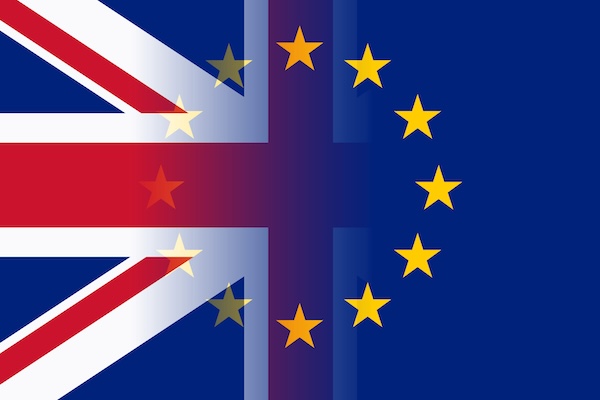
Tuesday 23 June 2026 marked the ten-year anniversary of the result of the United Kingdom’s referendum on its membership of the European Union.
Before I give my opinion on how this referendum has affected both the European and the United Kingdom, it is probably best to re-state the specifics of the result.
Not all referenda are equal
Technically, 23 June 2016 was not when the UK decided to leave the EU. The Brexit referendum authorised by the European Union Referendum Act of 2015 was non-binding and did not require the UK government or Parliament to implement the result. There was no provision in the act which stated that the outcome would automatically have any legal effect. It was a choice made by the UK parliament to implement the result.
The background to the referendum lay in then Prime Minister David Cameron’s commitment to hold such a referendum to appease the far-right members of the Conservative Party.
If the Brexit referendum result had been legally binding, it is highly likely that the government’s advisers would have insisted on the inclusion of a minimum turnout and/or an approval threshold. After all, the 1979 Scottish devolution referendum did impose such thresholds. Meaning that not only did a majority have to vote "Yes" but at least 40% of the registered electorate had to support the proposal. Although a majority of 51.6% voted for independence, the 40% threshold was not met, so the proposal did not proceed. The Brexit vote was won with 51.9% of the vote and with no threshold to meet. At this point it is pertinent to point out that 62.0% of Scottish voters chose not to leave the European Union.
And the background to the Brexit referendum was that Conservative party, in return for them supporting him as Prime Minister.
The mythical monster of Brussels
Having lived in England for almost ten years prior to the vote, I was sadly unsurprised by both the malaise and mis-information spread about the European Union during the run up to the vote, as well as the outcome itself. During my time there, which I certainly enjoyed, there was always a wildly odd undercurrent in the media about EU policies and specifically “Brussels”. (I deliberately place the city in inverted commas because the “Brussels” in the UK press is very much not the same as Brussels, capital of Belgium.)
To much of the UK press, “Brussels” was an administrative monster in charge of every aspect of life in Europe. This gave rise to the Euro Myth; a term used to describe any invented story about the EU’s activities and institutions. Examples range from the EU introducing a ban on curved bananas to legislation that would make all coffins a single size, meaning large or oversized people would not fit in them.
These types of myth were then supercharged during the Brexit referendum, and, if the referendum taught us anything, it is that it’s supporters love a good myth (see: “We send the EU £325 million a week. Let’s fund our NHS instead” and “Taking back control of our borders”.). They were not occasional quips included in inside or comment columns in newspapers or jokes quipped by stand-up comedians. They were often front and centre on tabloids and high on the programming list for national TV news bulletins. During the Brexit referendum campaigning they took on new and often sinister lows, with pathetically little kick-back from those who were apparently meant to champion the EU and discourage voters from choosing to leave. It was if the suggestion of being part of the EU was some form of put-down for the UK, and such an insult was unpatriotic.
But the malaise did not start there; it was already creeping in... In many other EU Member States EU-funded improvement projects would have feature information panels showing the name of the specific EU fund responsible; in the UK, such panels were either missing or the name of the fund was deliberately presented in a small font. In other EU Member States, such as Luxembourg, government press releases would be sent out after a minister had attended an EU Council Meeting, stating what was decided and Luxembourg's position; whereas in the UK, the media, and therefore the public, were often not advised of what their ministers were doing, with the direct result being that the work of the EU was often not communicated or seen as being undertaken without the cooperation of the UK’s EU representation.
Unsavoury aftereffects
When the UK government formally triggered Article 50 of the Treaty on European Union, beginning the legal process of withdrawal, I was living in Scotland with my French partner and although we were both under the impression that Brexit was very likely to happen because of our experiences in England, we could never have anticipated the gut punch its delivery would represent.
We were used to the sneering towards the EU and the casual racism which does exist in the UK (and in every country) but following the referendum result, the underlying mood hardened. We quickly learned friends and family had voted for it. Work colleagues boasted on a daily basis about how great it was and how great the UK would now be, being freed of the bureaucratic shackles of the EU. The UK could now stop “them” from entering the country and taking jobs; changing “the culture”.
To my knowledge, none of these people had ever spent more than a holiday’s duration in Europe. None of them considered the implications for anyone European that they may have a relationship with, be it at work or socially. None of them considered the educational implications force upon generations of children who would now be isolated from studying abroad. None of them considered the businesses which would be destroyed by the red tape they were told they were voting to be freed from. None of them considered that the promises of the “Sunny uplands” of Brexit Britain might no more than a paper thin promise written on a postcard.
To this day I am eternally grateful that I had the opportunity to live and work in Luxembourg in my early 20s, circa 1998. It opened my eyes to a multitude of different cultures and experiences which I would never have experienced had I remained in Scotland. I was working with a multitude of different nationalities on a daily basis, learning more about other countries and other cultures than I ever could from a book, a film or a deliberately xenophobic headline in a newspaper. These experiences meant I knew what the UK was losing with the Brexit vote. Consequently, my partner and I left the UK in 2017 and returned to Luxembourg.
Brussels sets the clock
Sadly, but unsurprisingly, the arrogance displayed by those now in power in the UK only increased when the negotiations for withdrawal began. This was perfectly illustrated when the UK’s Brexit Secretary, David Davis, arrived to meet his counterpart Michel Barnier at an official negotiation meeting without a single piece of paper to his name. Conversely, the EU’s representatives looked ready for legislative battle. It was an astonishingly ignorant faux pas and set the tone for what proved to be a series of negotiations where the EU rightly held firm and the UK learned a series of very hard lessons in diplomacy and legal reality.
By the time the Council of the European Union formally adopted the decision approving the withdrawal agreement on 30 January 2020. The very next day, the UK legally left the European Union at 23:00 GMT (00:00 Brussels time).
Living as a Brit on a landlocked island
So here we are, ten years later. The question is, was it all worth it?
For me, personally, leaving the UK for Luxembourg certainly was, but it has not been without its problems. Thankfully, I left well in time to secure a job and register in the country before any legislative changes had taken effect. This ensured that, come the withdrawal, I was lucky enough to secure a work visa which allowed me to work in the country. The withdrawal agreement also meant that when that visa expired after five years I could easily apply permanent residency.
However, I am, to this day, restricted to working in Luxembourg and cannot move to another EU country to retire or work, without applying for, and being granted a visa, which is not a foregone conclusion. This will be achievable if I receive my Luxembourg nationality, which I am working towards. However, it has meant that over the years I have had to turn down several job offers I received from companies in other countries.
I feel incredibly lucky to call Luxembourg my home. Not only because of the obvious reasons relating to the standard of living and social benefits but because I look across to the UK and see what it has become.
I also feel for those that did not vote to be cut-off from Europe in such an egregious fashion.
Failed promises
The EU has swiftly moved on from the UK’s decision to leave. Sure, many were sad to see it go, but in reality the doom-mongers that said the EU would suffer without the UK have been repeatedly proven wrong. Many in the UK are still complaining that the undeniable failure of Brexit is because it was never properly implemented and it is the fault of successive governments who have failed to deliver the form of Brexit promised to the public.
In reality, the failure of Brexit lies not solely on its implementation but in the truth that Brexit never could be what was promised. This is a reality which has impacted the UK so deeply it has contributed to six Prime Ministers losing their job since the vote to leave took place and four of those have moved on since Brexit was enacted. It has also left the UK in a state of flux where the majority appear too politically paralysed to discuss the subject. Afterall, if it was nasty the first time around, imagine what it will be like having to revisit the lies and obfuscation and admit that so many made such a disastrous and damaging decision for often ludicrous and misguided reasons.
Take the Brexit promises of the return of blue passports (which EU Member States Croatia, Greece, Ireland, Cyprus and Malta already had), or the promise of better fishing rights (which have been dissolved even further following the UK’s withdrawal) and more stringent control of borders (which have seen a massive increase in non-EU immigration, both legal and illegal), all of which were proven to be pure folly. In the event of a re-run, will anyone want to bring up that they fell for the blatantly false bus-emblazoned promise of an extra £325 million a week for the National Health Service?
The reality was that EU funding in the UK supported a wide range of projects, from regional economic development and infrastructure to community facilities, environmental projects, research and skills programmes, which came through EU programmes such as the European Regional Development Fund (ERDF), European Social Fund (ESF), European Agricultural Fund for Rural Development (EAFRD) and LEADER rural development programme.
Many of these programmes, particularly the ERDF and ESF, benefited many of the UK’s poorest regions, providing funding which has never been replaced by subsequent post-Brexit governments. Ironically, many of those regions voted to leave the EU. This, in part, shows how the vote was rooted in a lack of education about what the EU is, how it functions and how it is controlled. That lack of education was very deliberate and is rooted in such childish post-war falsehoods as “If it wasn’t for Churchill winning the war everyone would be speaking German“, combined with the old notions of empire which still reverberate around many of the UK’s institutions. With “Brussels” promoted on a daily basis in the media as the bogeyman of Europe - intent on absolute control of both mind and money - Brexit was an inevitability. Undeniably, the lazy lack of rational, educational and real opposition from the Remain camp is equally to blame. Arrogance on both sides sealed the Brexit victory.
Where to now?
Ten years on, the whispers of a return to the EU have begun to make noise. But the EU has moved on. It is not the EU of which the UK was once a guiding and influential member. It is an EU which, despite its many faults, has remained solid in the face of multiple crises and continues to attempt to improve life for its member states and their inhabitants, albeit sometimes through overly bureaucratic means.
However, the UK continues to suffer from its Brexit hubris, be it small-to-medium businesses amputated from their closest market and strangled with red tape, the health system suffering from an exodus of EU-native staff who had propped up the staffing numbers for years, a banking system shed of EU regulation and powering new levels of wealth inequality, a fishing industry further decimated by Boris Johnson’s disastrous 2020 deal or the car manufacturing industries in the north of England shedding jobs as quotas and investment from their owners reduced as year-on-year because the complexities of new EU manufacturing rules has hindered cross-channel trade to the tune of billions of pounds.
I could talk of the detrimental impacts on culture and education which have seen touring artists locked out of opportunities because of additional paperwork, legislation and the associated costs, or the collapse of the UK’s involvement in the ERASMUS system which is denying generations of students the opportunity to learn in a world outside of the UK, or any of the detrimental outcomes brought about by the UK’s decision to leave the EU but the most damaging aspects will come to light should the UK decide to reverse its decision.
In 1984, Margaret Thatcher famously secured a rebate from the EU’s predecessor (the European Community) of around £1 to 3 billion annually. In later years this rose to around £4 to 6 billion per year and represented an estimated two-thirds of the UK’s net contribution to the EU. That is not coming back if the UK rejoins the EU. The UK gave away the savings it had secured when it lied to its people about the true cost of membership.
In 1997, the UK chose not to participate in the Schengen agreement because it wanted to retain control over its own border checks and immigration arrangements. Outside of the EU, the UK’s border controls are now regarded as a serious problem by the voting public and dominate the news media. It might not have wanted Schengen freedoms but if it wants to return to the EU the UK now will have to sign up to them, giving away almost all control of free movement. If only the reality of the UK’s pre-Brexit border controls had been explained accurately to those who voted to give away their own freedom of movement.
As part of the Maastricht Treaty, signed in 1992, the UK negotiated a formal opt-out from the obligation to adopt the euro, with the pound viewed as a symbol of national sovereignty and identity. In the event of the UK returning to the EU, it is highly unlikely it will be given the luxury of another opt-out as a condition of a new Member State joining the EU nowadays is that it must adopt the euro. Ironically, the UK ‘s penchant for identity politics could end up stripping it of one of its most historic and identifiable assets.
The legacy of Post-Brexit promises
Ten years on from what many regard as the single greatest act of self-harm by a first world nation in modern times, Brexit has ultimately delivered the opposite of what it promised; only benefitting those affluent enough to avoid and take advantage of the turmoil it created.
The UK is now undergoing an identity crisis which has seen a notable rise in populist posturing and support for more far-right policies, fuelled in part by the economic and societal changes inflicted by the Brexit vote and the failure of subsequent governments to square the circular arguments which fuelled the decision to leave.
Europe undeniably has its own problems. Much of the world does too. But, even with war on its doorstep, I would rather have the collective nous of the countries in the European Union on my side when trying to find a common ground to such problems rather than the nationalistic hubris of post-Brexit Britannia and its inability to recognise that it is no longer an influence on the world stage, nor in any position to negotiate as if it was.