

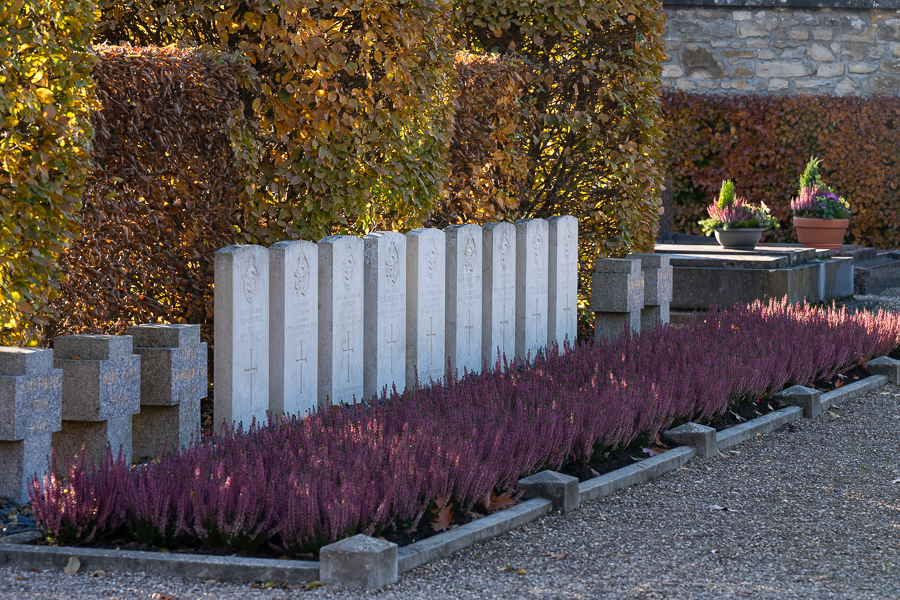
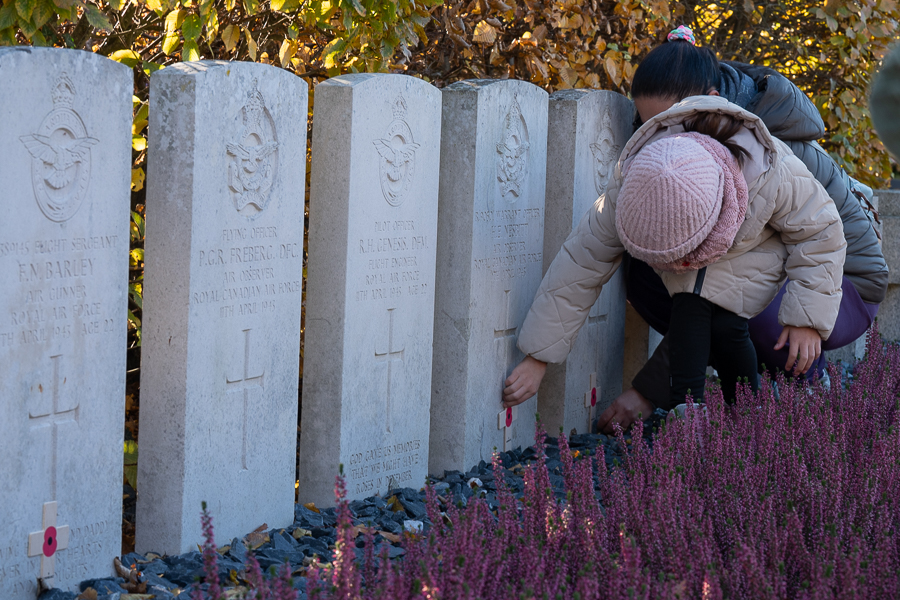
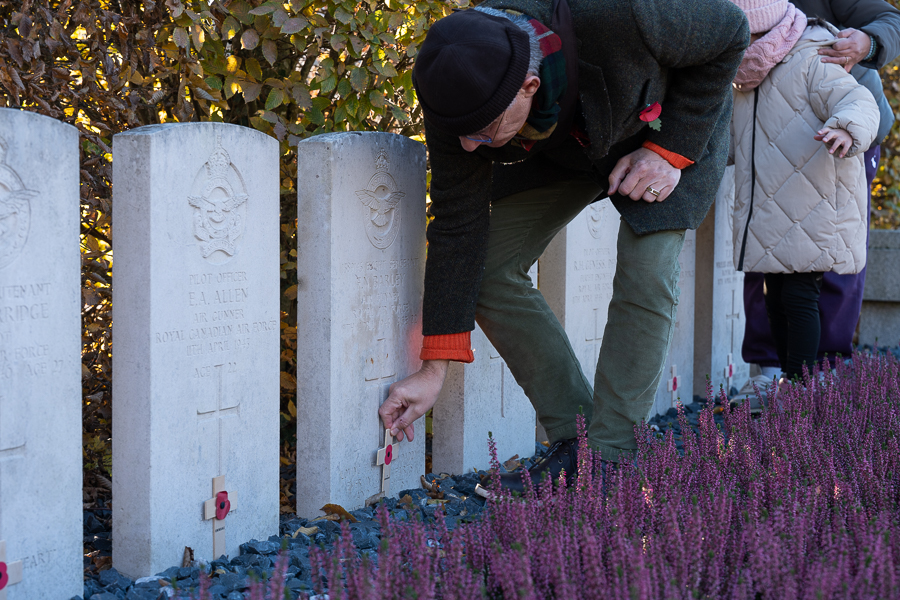
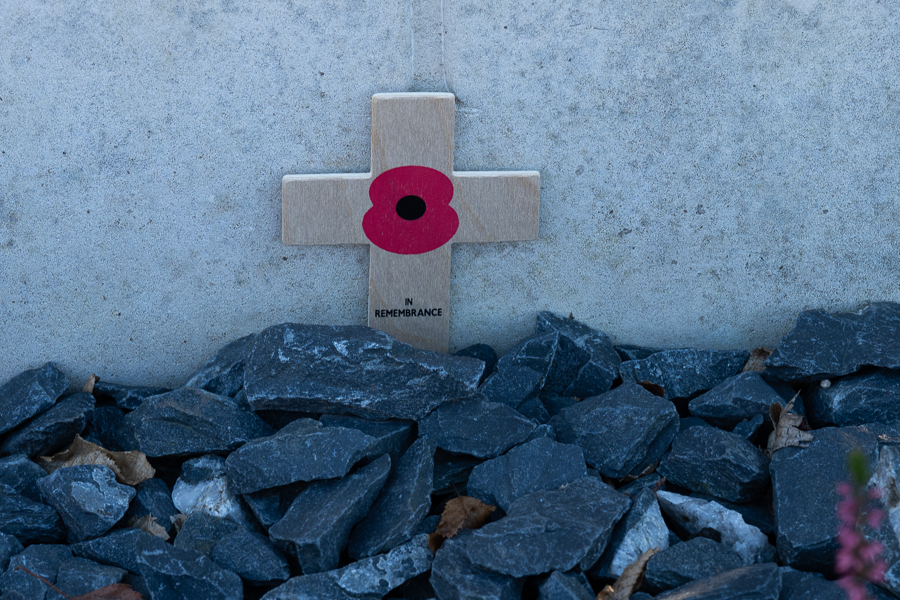
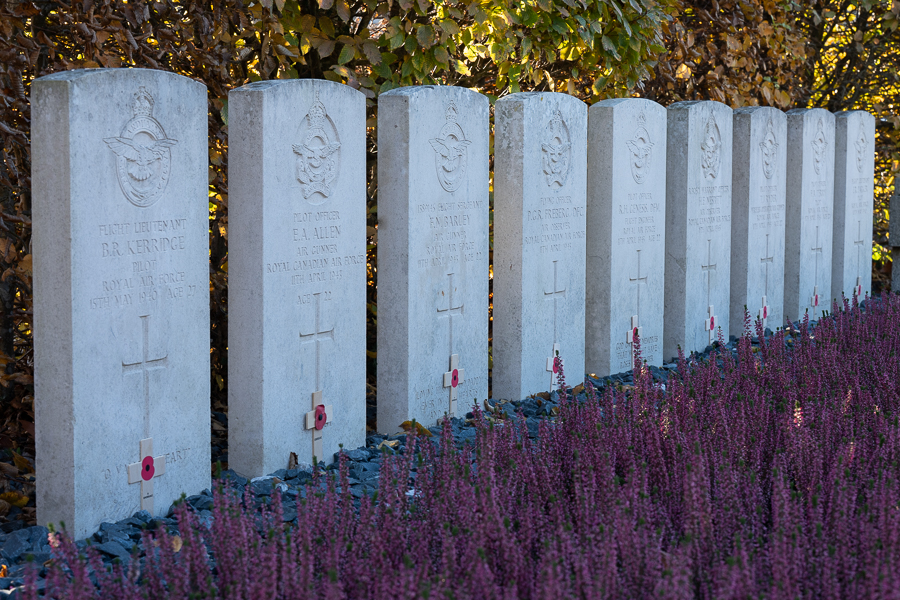
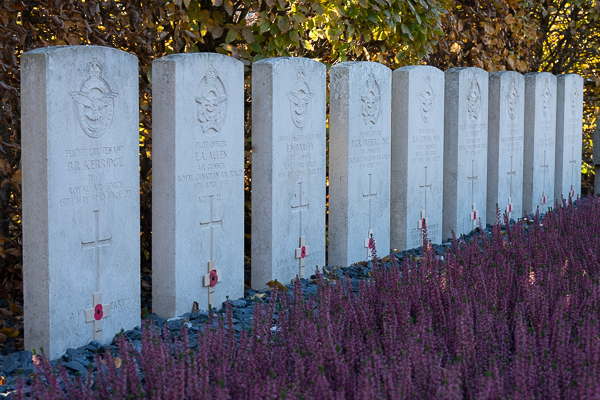
 Poppy Crosses laid at Allied War Graves in Hollerich Cemetery;
Credit: Ali Sahib, Chronicle.lu
The annual poppy appeal campaign is run by the Royal British Legion to support serving and former members of the British Armed Forces and their families. Founded in 1921, the campaign takes place every autumn in the weeks leading up to Remembrance Sunday and Armistice Day in November.
This campaign is also undertaken in other countries, including Luxembourg (see https://chronicle.lu/category/charity-volunteering/64208-british-embassy-hosts-launch-event-for-2026-poppy-appeal) but is primarily restricted to fundraising. The Allied War Graves in Luxembourg total 29 from WW2, in the north of the country mainly from the Battle of the Bulge, but also last minute casualties in the south of the country along the Liberation Trail: they can be found in Pétange, Mertert, Maulusmuehle, Hollerich, Heinerscheid, Folschette, Diekirch and Bas Bellain.
Over the course of many decades, Cynthia Albrecht - who passed away recently, aged 93 - purchased poppy crosses from the Royal British Legion and laid them at Allied War Graves in cemeteries across the Grand Duchy.
This past weekend, Cynthia Albrecht's sons and friends have maintained her tradition, and laid poppy crosses at graves in Mertert Hollerich on Saturday 14 November, and Pétange, Lamadelaine on the Sunday.
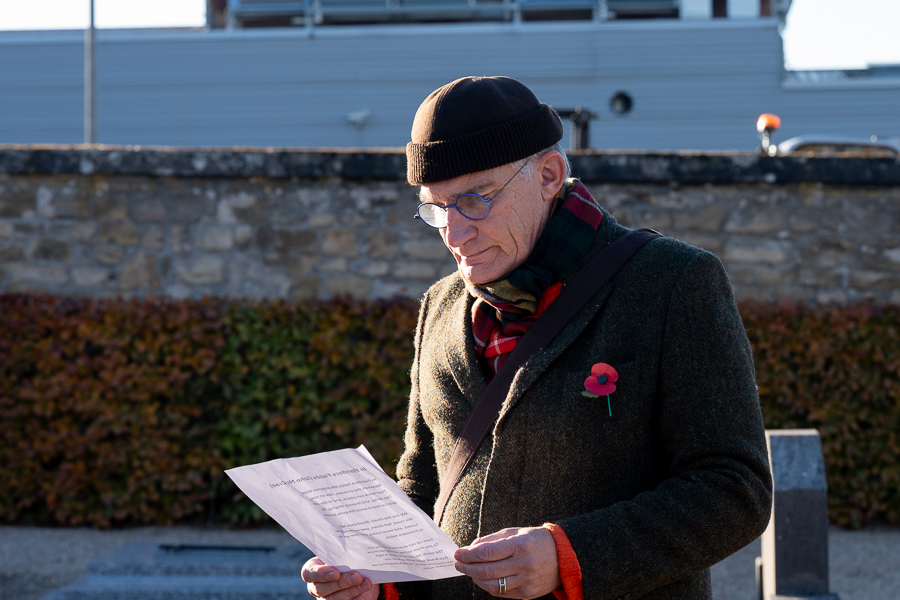
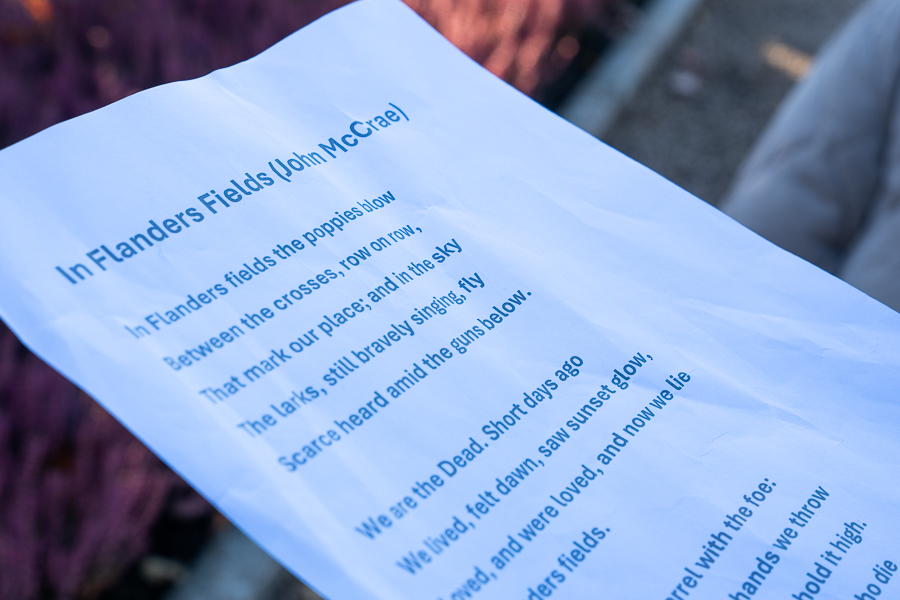
Chronicle.lu caught up with them at Hollerich cemetery where her son, Christopher Albrecht, stated: "My mother, Cynthia Albrecht-Lelliott, was a long term organiser of poppy cross laying. We are building on her legacy". He read the poem "In Flanders Fields" (https://www.poetryfoundation.org/poems/47380/in-flanders-fields) and laid poppy crosses on Allied War Graves there.
Poppy Symbolism
The poppy flower has become a symbol of war sacrifice in the UK and Commonwealth, and among the worldwide community of allied forces; Firstly in relation to WW1 but then WW2, and gradually expanding to all conflicts, current and future.
The symbolism stems from the poem "In Flanders Fields", written in the midst of WW1 in 1915, when its author, Canadian army soldier John McCrae, found poppies growing vividly around the graves of his soldier colleagues who had died at Ypres (Belgium) only months before.
Laying poppy remembrance crosses on graves of allied war dead is largely a grassroots tradition, aimed at making sure that no single sacrificed life is forgotten.
The tradition is equally a firm awareness campaign and warning message with regard to current and future wars.