


 Credit: natur&ëmwelt
Luxembourg has what is known as a Temperate Climate in which winters are generally mild and summers comparatively cool, with rainfall that can be high; its flora and fauna have thrived in and adapted to this climate over the centuries and millennia, with ongoing challenges due to pollution and recent climate change, as well as the introduction of non-native species, resulting in disruptions to the norm.
Nevertheless, with various initiatives and organisations helping the ecosystem and habitat, including sustainability and re-wilding, there is a lot happening in nature across the Grand Duchy.
Chronicle.lu has teamed up with natur&ëmwelt (the non-profit organisation (naturemwelt), the foundation (Hëllef fir d'Natur) and the Wildlife Care Centre (Flegeestatioun) for a series of articles on Luxembourg's nature reserves, in which we look at the natural habitats that preserve biodiversity and protect ecosystems from development, pollution and intensive agriculture.
No. 6 in this series focuses on Kaleburn.
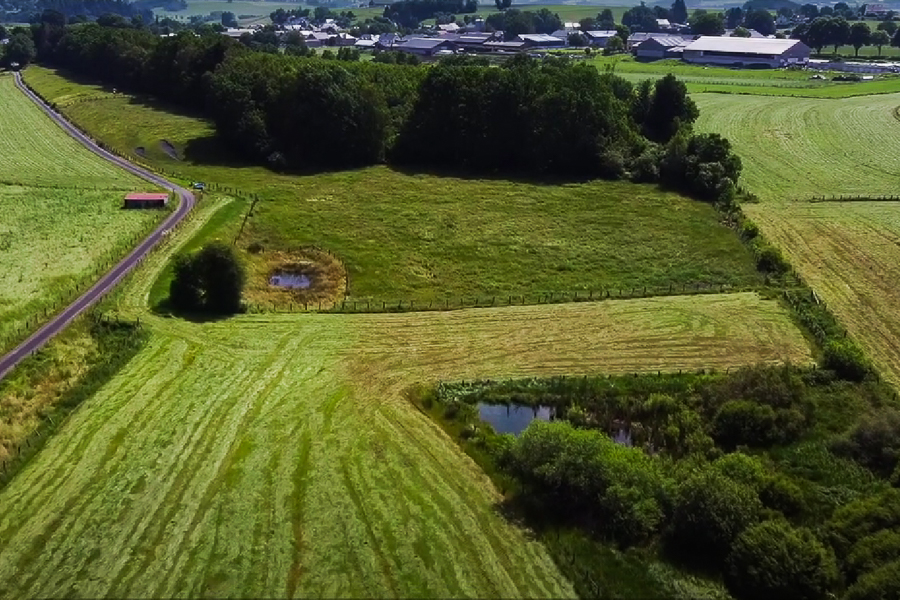
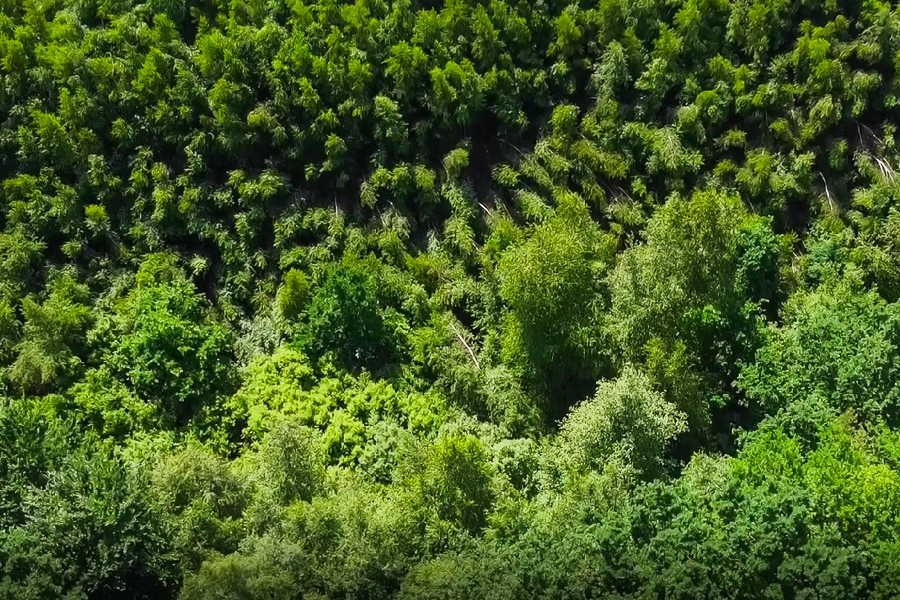
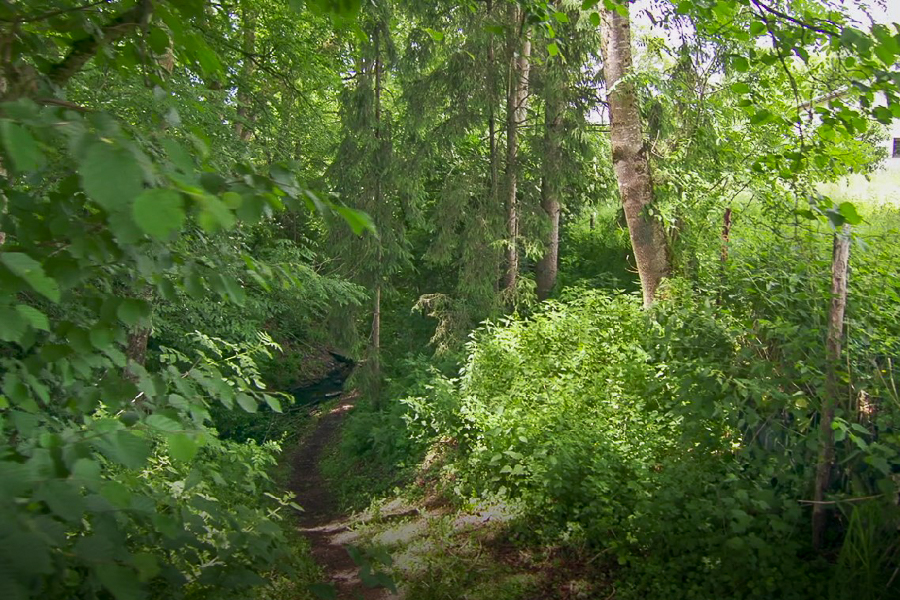
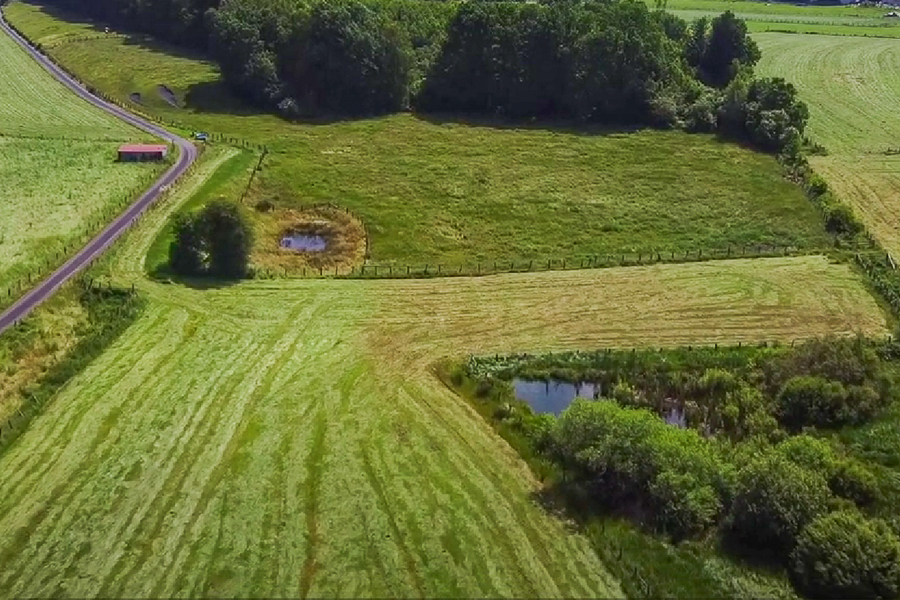
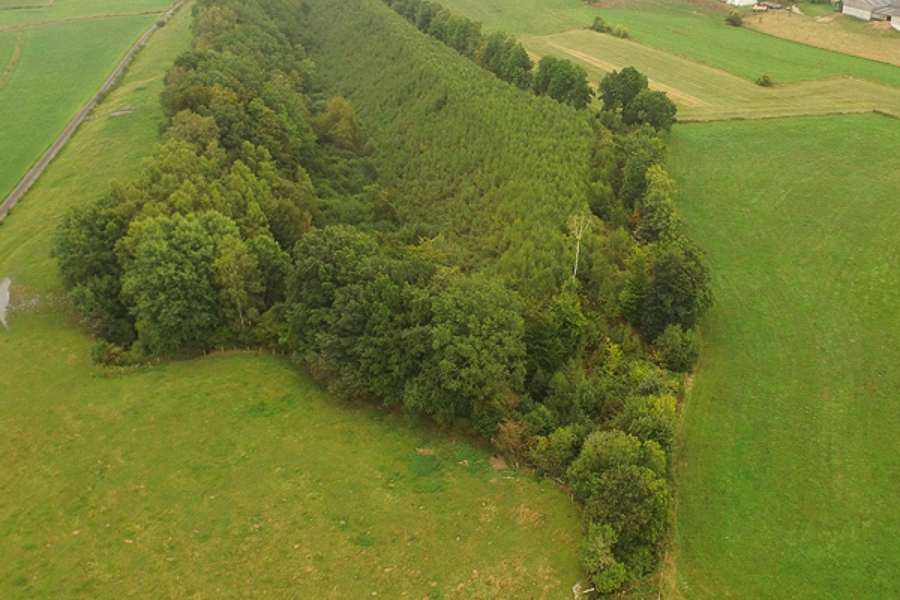
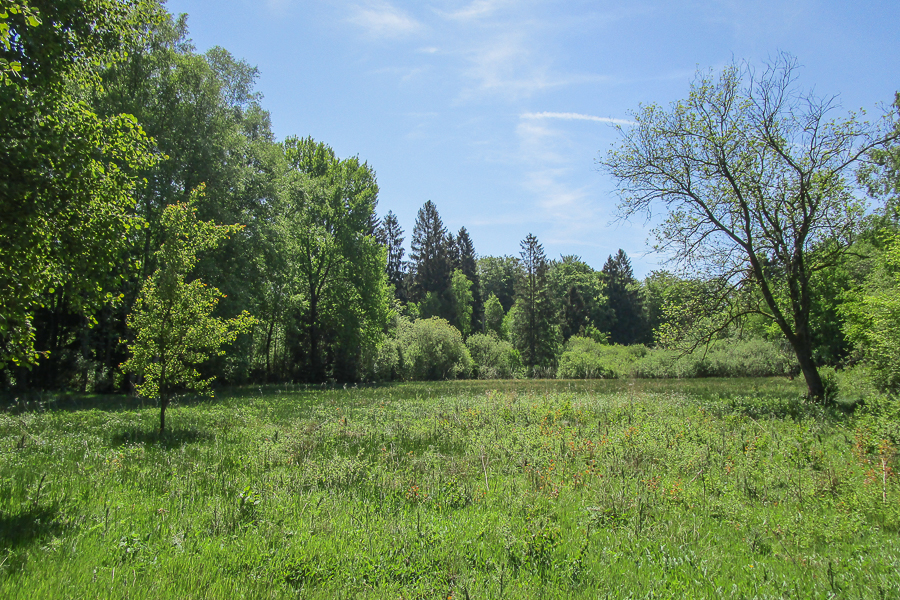
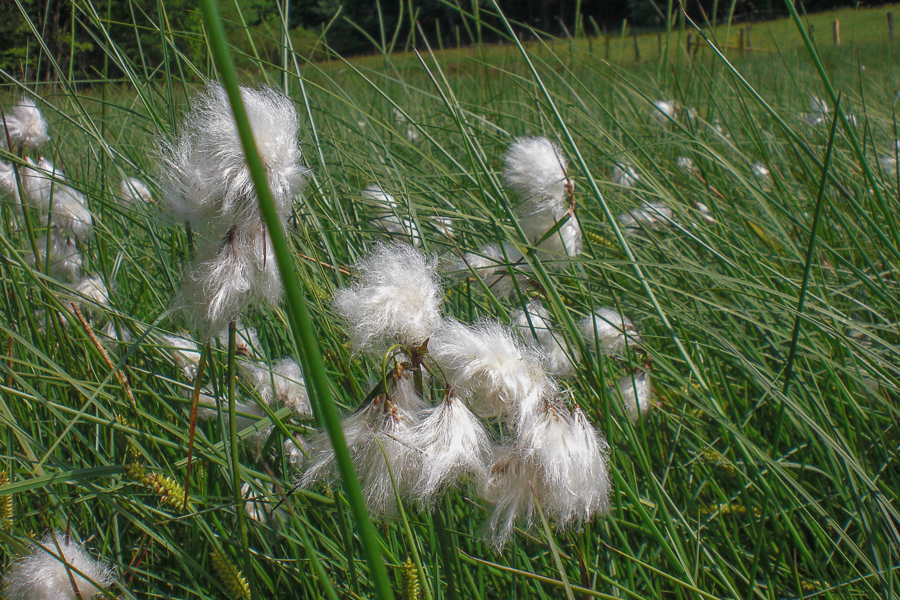
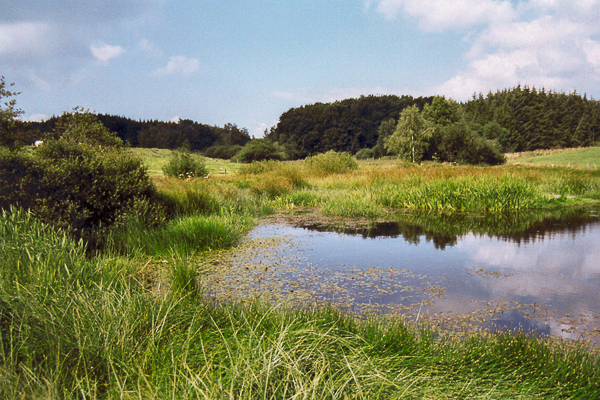
Hikers exploring the Kaleburn area discover remarkable historical remnants alongside exceptional biotopes. The site encompasses a unique combination of habitats, including a peaty birch wood, wet scrublands and meadows, which together shelter butterflies and amphibians of great rarity. The entire area highlights the geological and ecological importance of this corner of the Ardennes plateau.
The Birth of a Peat Bog: Perfect Conditions for Sphagnum
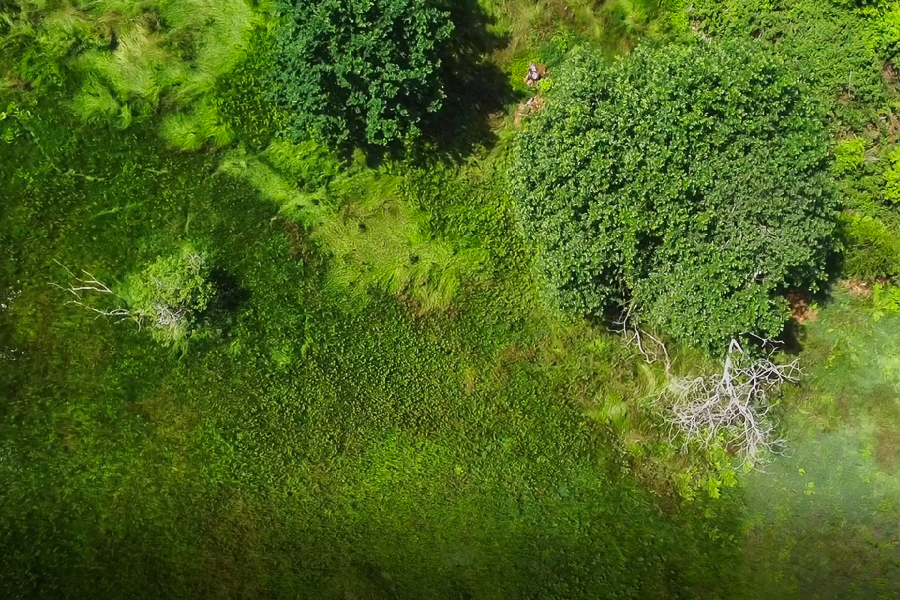
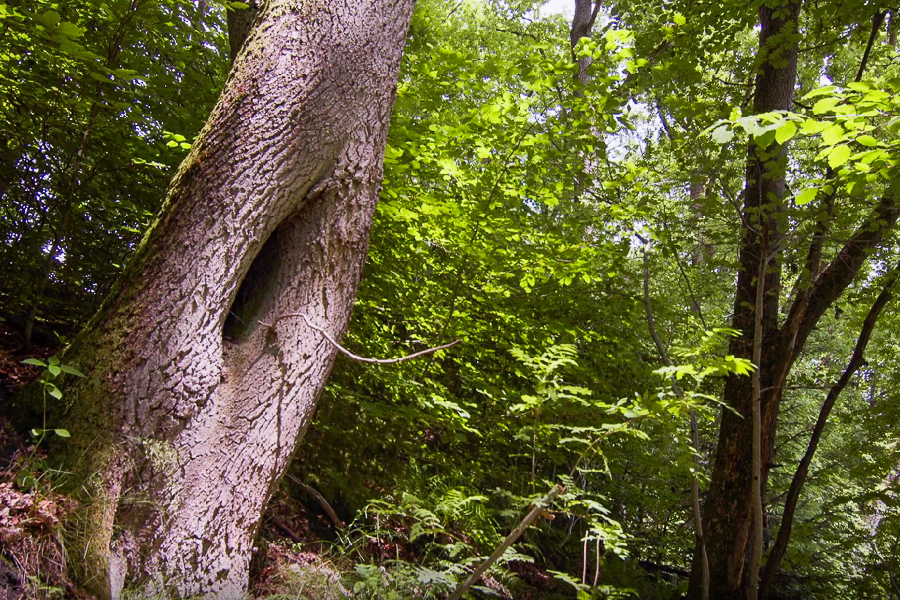
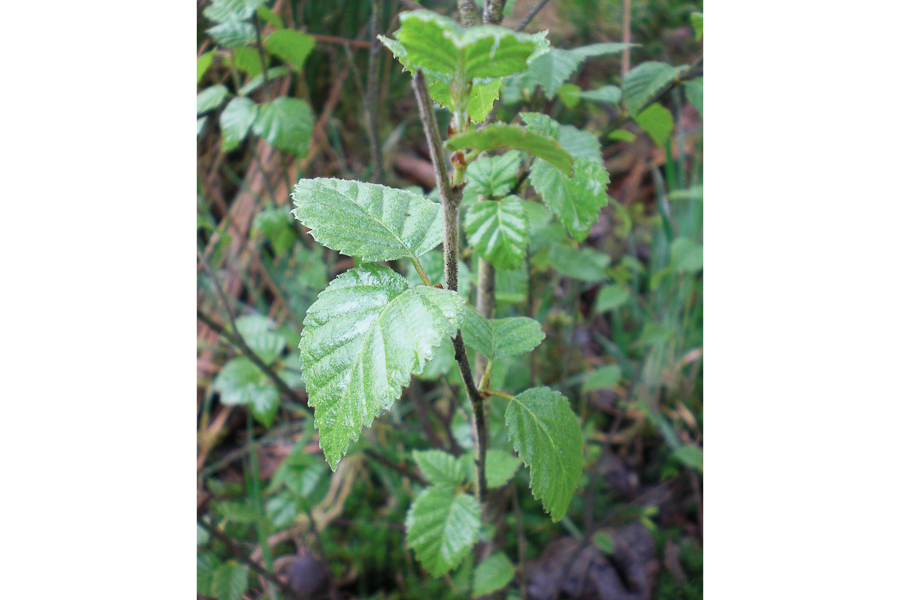
At the heart of Kaleburn lies a peaty lowland bog, formed due to a perfect storm of specific site conditions: the location within a depression on the high Ardennes plateau, poorly draining soils that promote rainwater accumulation, high local rainfall and low average temperatures. This environment allowed Downy Birches (Betula pubescens) to colonise the area, notably growing with Sphagnum moss sleeves surrounding their trunks — the very mosses responsible for peat formation. Comprehensive surveys have identified a total of 61 moss species, including nineteen different Sphagnum species. This peaty Sphagnum birch wood is an extremely rare habitat in Luxembourg, enjoying protection at both national and European levels, underscoring its status as a priority bryological hot spot.
Glacial Relicts: Butterflies and Water Bodies
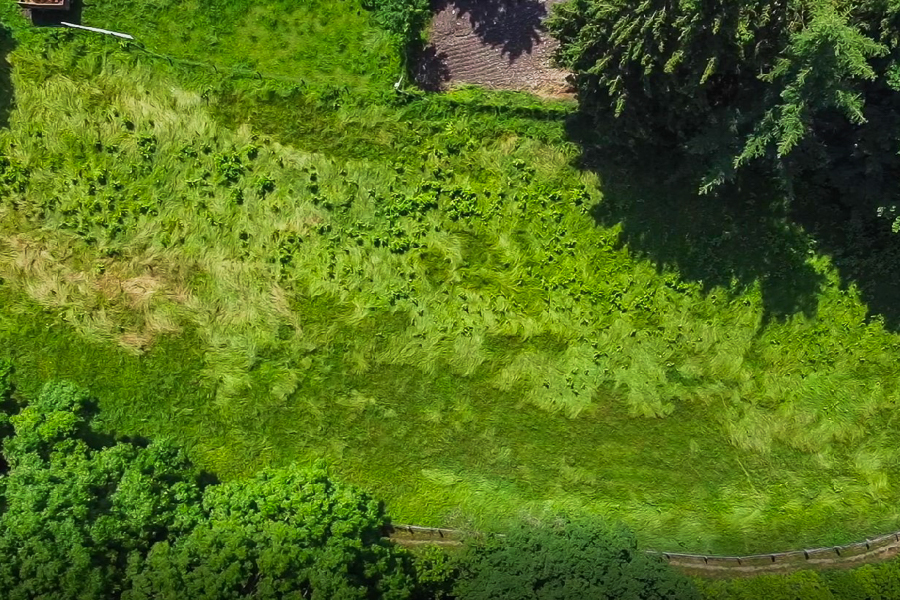
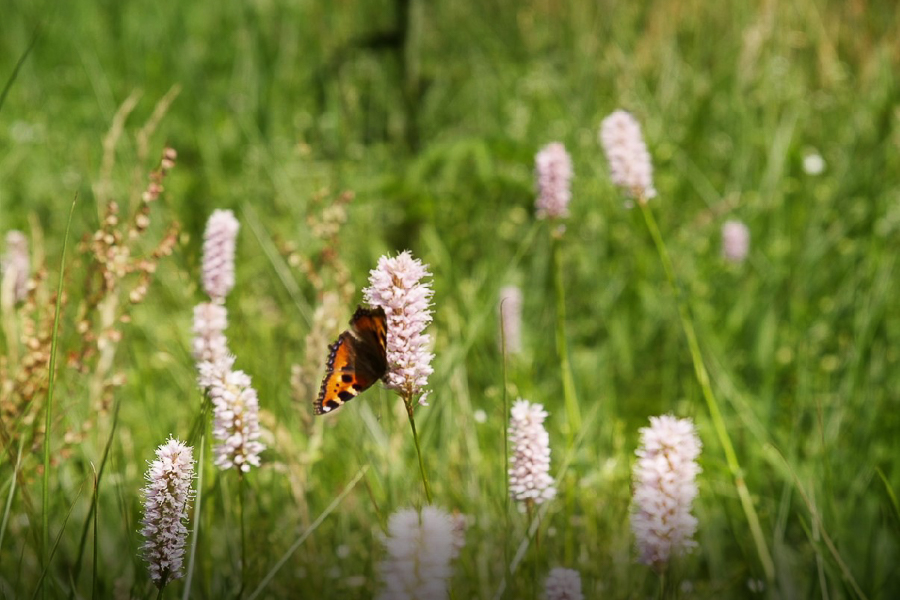
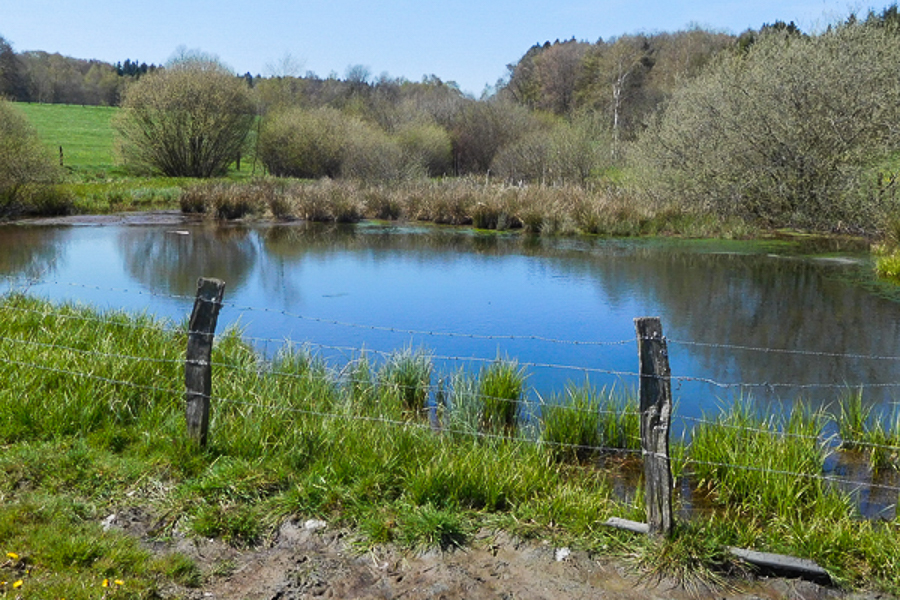
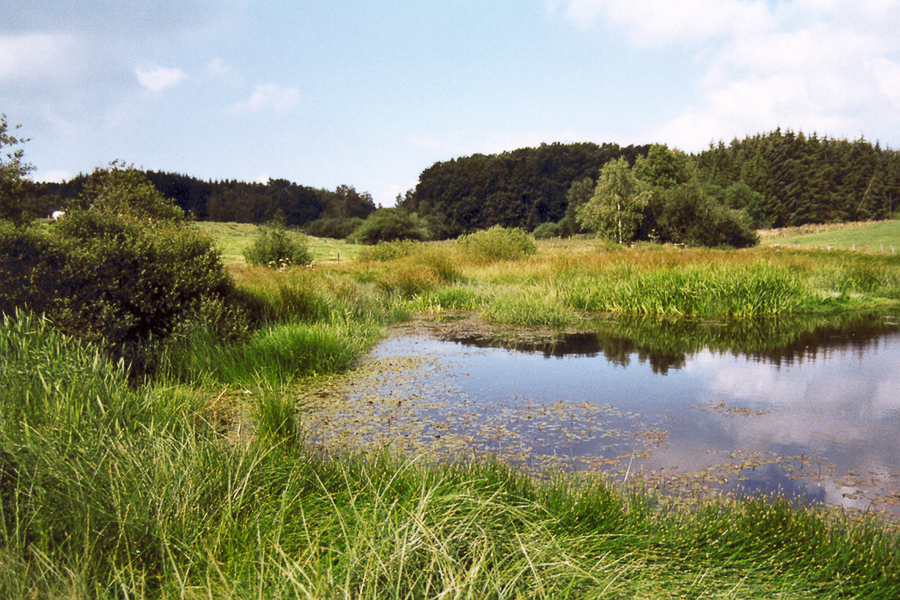
The bog is framed by wet scrublands and bistort meadows, providing vital breeding grounds for two species considered glacial relics: the Purple-edged Copper (Lycaena helle) and the Marsh Fritillary (Boloria eunomia). The site holds historical entomological significance, as it was here that the first observation of Lycaena helle in Luxembourg was recorded in 1978 by entomologist Marcel Hellers. Additionally, the site features several ponds, one of which hosts the Great Crested Newt (Triturus cristatus), a species relatively common in the Gutland but extremely rare in the Oesling region.
Essential Host Plants and Historical Echoes
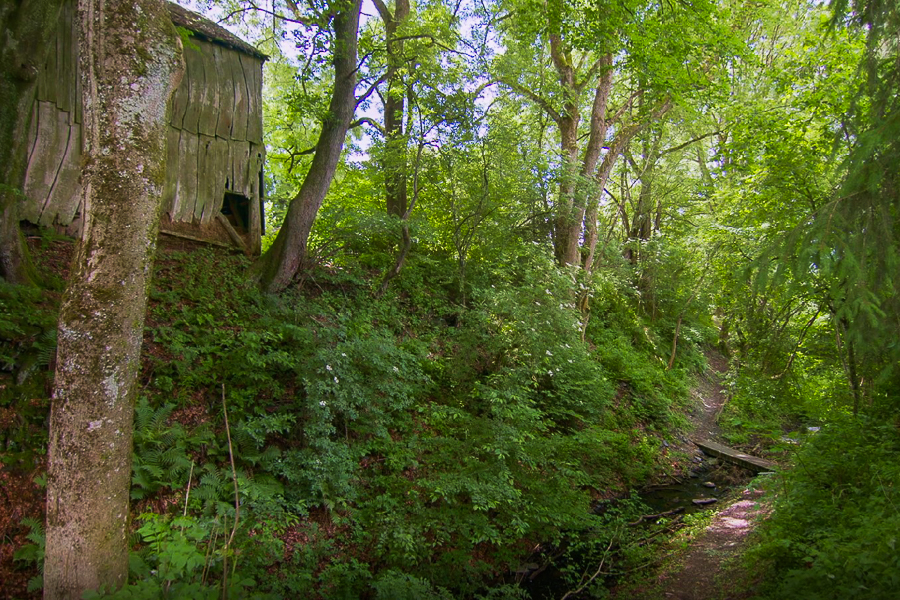
The survival of the Purple-edged Copper is directly linked to its host plant, the Bistort (Bistorta officinalis), a member of the Polygonaceae family. This edible plant, traditionally used for medicinal purposes, features characteristic bright pink flower spikes and is typical of the Éislek wetlands. The Bistort is indispensable, as the butterfly lays its eggs exclusively on its leaves, which serve as the sole food source for the caterpillars. Furthermore, the Kaleburn stream flows upstream of Hoffelt into a 1.35km-long "canyon," reaching a maximum depth of 11m. This imposing valley is actually an artificial trench, the access route for the planned underground canal intended to link the Meuse and Moselle river basins via a navigable waterway. This ambitious project, initiated by the King of the Netherlands and Grand Duke of Luxembourg in 1825, ultimately failed due to tensions arising from the Belgian Revolution and the subsequent establishment of the Belgian-Luxembourg border in 1839.
Visitor Information: Discovering Kaleburn’s Hidden Depths
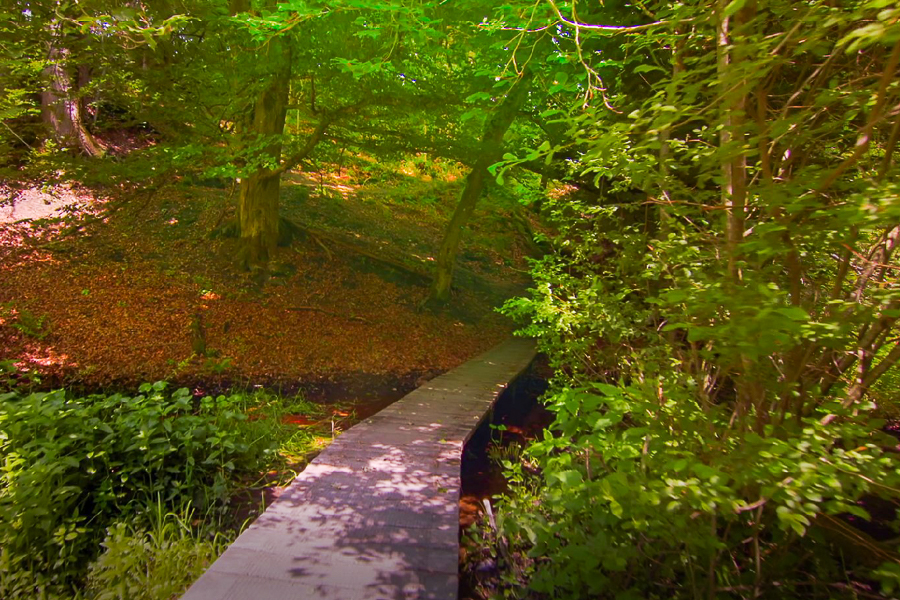
The Kaleburn area offers a unique hiking experience, seamlessly blending natural wonders with fascinating industrial history. The best time to visit is late spring (May to early July) to observe the blooming Bistort (Bistorta officinalis) and the flight period of the rare glacial butterflies, the Marsh Fritillary and the Purple-edged Copper. Hikers will discover the historical remnants of the Meuse-Moselle canal project running through the canyon near Hoffelt, offering a dramatic contrast to the surrounding wilderness. Due to the presence of sensitive, poorly drained peat bogs, sturdy, waterproof footwear is essential year-round. While the main area is rich in wildlife, visitors are urged to stay on designated trails to protect the delicate Sphagnum mats and avoid disturbing known amphibian breeding sites.