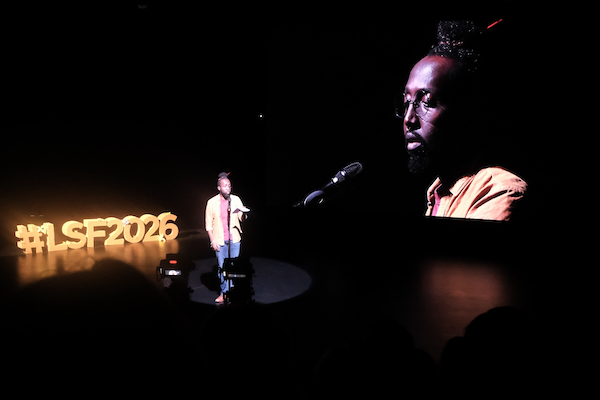
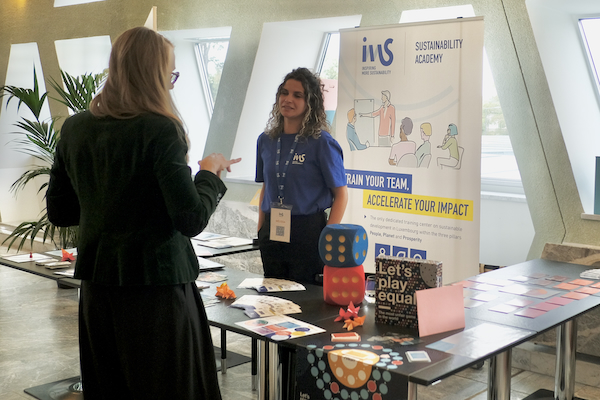
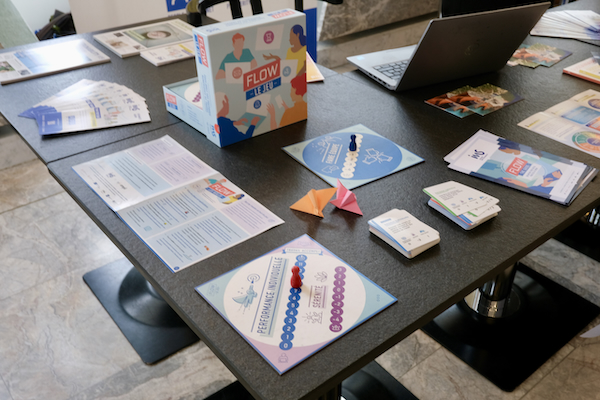
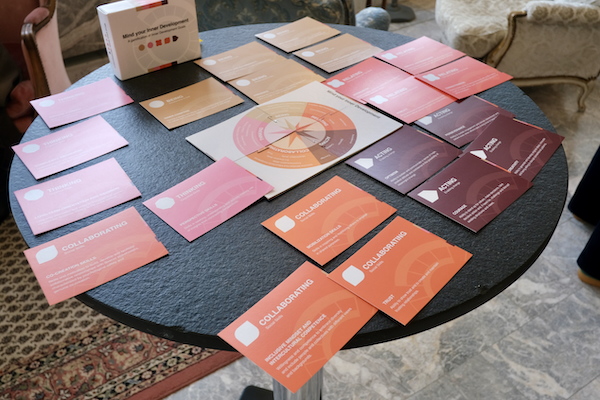
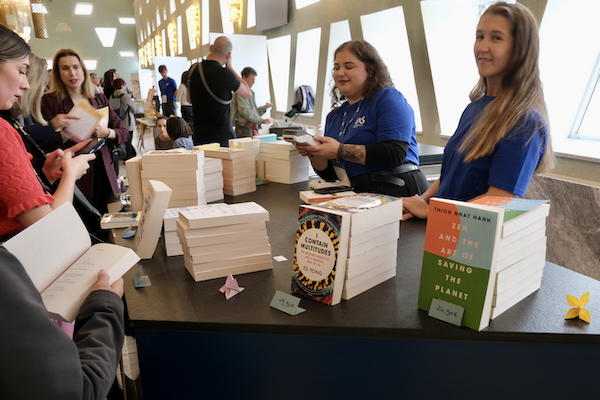
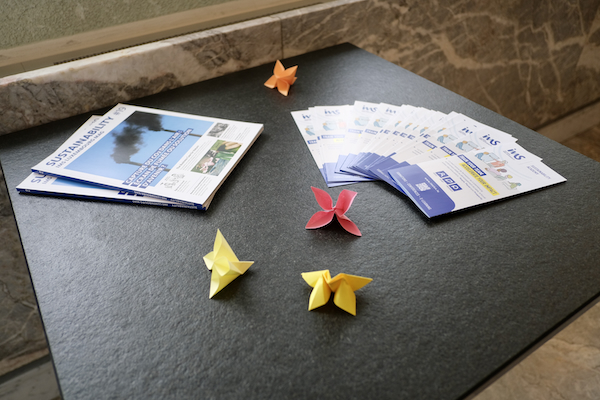
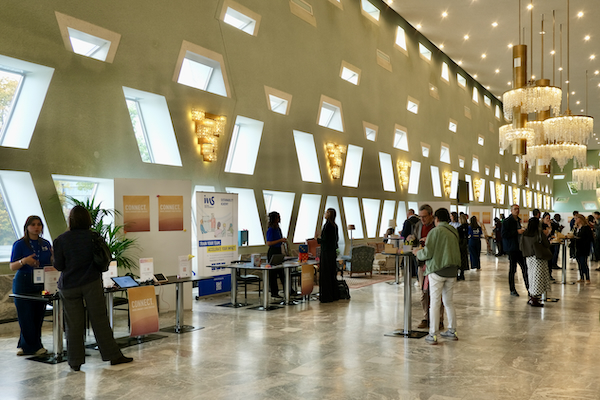
 Luxembourg Sustainability Forum (LSF) at the Grand Théâtre de Luxembourg in Luxembourg-Ville.;
Credit: Steven Miller, Chronicle.lu
On Tuesday 27 October 2026, Luxembourg non-profit organisation Inspiring More Sustainability (IMS) hosted the Luxembourg Sustainability Forum (LSF) at the Grand Théâtre de Luxembourg in Luxembourg-Ville.
Launched in 2008, the Luxembourg Sustainability Forum is the leading event in the field of sustainability in Luxembourg. Organised annually by the IMS team, it offers, through a high-calibre programme, fresh perspectives as well as practical and inspiring solutions to environmental and social challenges.
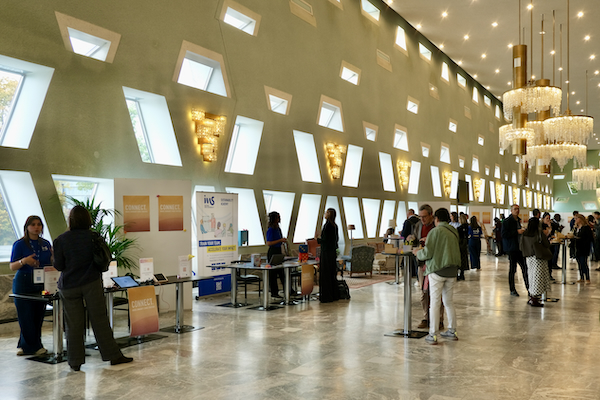
The venue’s upper area featured tables offering advice, data and literature on health, mindfulness and food sustainability, as well as seated areas for attendees to meet and converse. A ‘reset’ space offering mindfulness talks was also available to attendees, allowing them to relax before and after each forum session. Attendees were also invited to enjoy a variety of food and refreshments provided by the hosts.
The event opened with a performance by poet and performer Tanguy R. Bitariho, whose poem asked, “What is the real cost of doing nothing, of letting the rainbow dissolve into ashes?”, in the face of the rise of artificial intelligence, polarising politics and “the dogmas entrenched in industry”.
Founder and President of IMS Luxembourg, Christian Scharff, and Sustainability Practice Leader at IMS Luxembourg, Marie Sauvignon, then welcomed the 280 attendees to the fifteenth edition of the LSF.
Christian Scharff began by acknowledging “a certain sense of powerlessness when we look at the scale of what we are trying to achieve” asking oneself, “Can I really do anything? What contribution can I make?”, and noting that the time scales involved in protecting biodiversity and preserving the planet’s major natural balances “often extend beyond what we can readily comprehend”.
Marie Sauvignon responded that there is good news and “a subject that speaks to everyone”: health. She added: “Health is one of the most powerful levers for encouraging sustainable development and climate action,” and reinforced that this topic would be the centre of conversation for the forum.
The programme for the forum was split into two parts: “One Health: Our Body, Our Planet” and “Inner Ecology: Our Mind, Our Impact”.
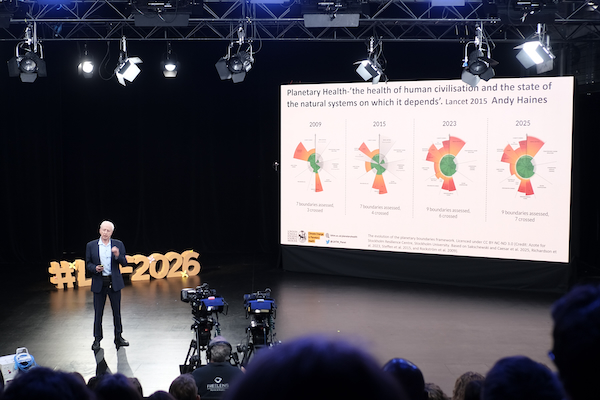
Part one was opened by Sir Andy Haines, Epidemiologist and Professor at the Centre on Climate Change and Planetary Health, who gave an overview of how human health is interlinked with the health of our planet, and also the actions that we need to take in order to address some of these challenges.
He touched on the acceleration of planetary temperatures over the past ten years, particularly in Europe, and the impact climate change is having on the Atlantic meridional overturning circulation (AMOC) - the natural system of water movement in the Atlantic which transports warmer, southerly waters in the west up towards the north of the Atlantic Ocean, helping to maintain the temperate climate Europe experiences today - and how the projected changes to this current could reduce temperatures across Europe to life-changing low levels.
Sir Andy Haines also detailed studies into how rising temperatures affect foetal health in pregnant women and accelerate the possibility of cross-species viral transmission, increasing the potential for major pandemic diseases. Additionally, he detailed how the modern food system destroys the environment and reduces biodiversity, and touched on the subject of solastalgia, the grief and anxiety caused by environmental change.
“There are two types of response we can take. One is to adapt to the changes that we cannot prevent. And the second is mitigation, which in climate and environmental terms means cutting emissions, reducing the drivers that are driving us towards a very increasingly hazardous future,” stressed Sir Andy Haines.
“It is really important for us to keep going and keep having this ambitious goal ahead of us, which is to secure the health of our planet, but also the health of us humans living on the planet.”
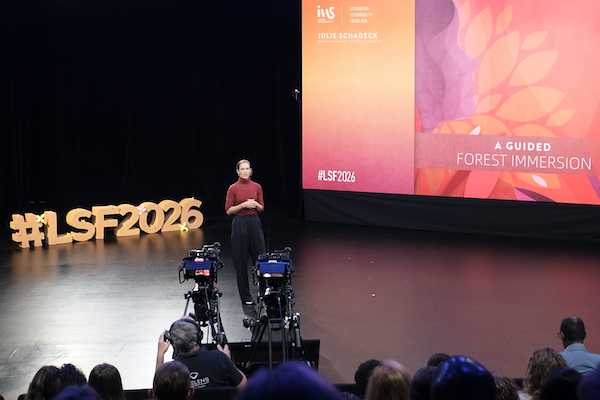
Julie Schadeck, General Manager of UNature Luxembourg, gave an immersive presentation on how the interaction between our environment and senses directly influences our wellbeing and health, highlighting a Finnish study which showed the positive benefits of installing plants and greenery into workspaces and how this approach directly influenced [positive] bacteria diversity and immunity regulation in the body.
She touched on how an immediate and physical connection with nature has been proven to be more influential on environmental thinking than knowledge alone, and how spending time in nature makes us feel healthier, improves the nervous system and reduces psychological stress.
Julie Schadeck invited the attendees to feel under their seats, where a pinecone had been placed, and to participate in a brief experiment with everyone asked to touch, feel and smell their pinecone. She explained how the act of physical interaction with even a small token of nature, such as that pinecone, had physical and psychological benefits at a personal level, with each individual having a similar experience but recording a slightly different, more personal outcome.
She noted: “Now you know [the pinecone’s] weight. You know its edges. You know its patterns. And maybe, just a little, it is starting to feel like yours. The pinecone, however, it has not changed. What changed is your relationship to it and that is what attention and experience [of nature] can do. It can change how we relate to our world.”
Additional presentations were also given on the positive role bacteria can play in our ecosystems and personal environments, food as a means of medicine, the influence of dietary choices at a personal and environmental level, the sustainability of health systems and IMS’ Climate Truck project.
Deputy Mayor of Luxembourg Maurice Bauer was also invited to speak and he talked of Luxembourg City’s efforts to create a healthier environment for all, from air quality to building design, the food given to children at school and the public spaces available to the city’s inhabitants, including a collaborative project with IMS involving the planting of 30,000 trees across the city.
He remarked: “I believe that the city of Luxembourg is trying to set an example, to play the role of a pioneer.”
Following a break period, the forum continued with a series of talks on subjects such as mental health, wellbeing at work and the benefits of freediving on the body.
Further information about the work of IMS and its programme of conferences and events can be found at https://imslux.lu/eng.