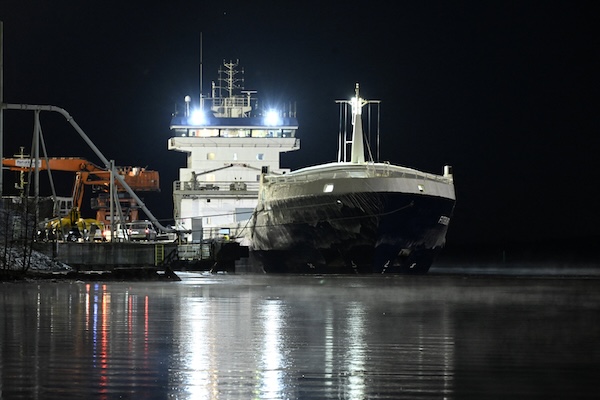
 Seized vessel Fitburg rests in harbour in Kirkkonummi, Finland, 31 December 2025;
Credit: Roni Rekomaa/Lehtikuva/via Reuters
Seized vessel Fitburg rests in harbour in Kirkkonummi, Finland, 31 December 2025;
Credit: Roni Rekomaa/Lehtikuva/via Reuters
HELSINKI (Reuters) - On Thursday 22 January 2026, Finland’s Defence Command said in its annual military intelligence review that Russia was “likely to persist in its ambitions to damage the undersea infrastructure of the Baltic Sea”.
The Baltic Sea region has been on high alert after a string of power cable, telecom link and gas pipeline outages since Russia invaded Ukraine in 2022. The most recent related incident occurred on New Year's Eve when Finnish authorities seized a cargo vessel en route from Russia to Israel on suspicion of sabotaging an undersea telecoms cable.
NATO has boosted its military presence in the region over the last year with frigates, aircraft and naval drones.
In an interview, Finland's Chief of Intelligence Major General Pekka Turunen said it was clear that Russia had the ability to destroy underwater infrastructure if it wanted, but added that no "smoking gun" had been found to prove Russia or another state actor was behind the recent incidents.
"It is unusual that this (so many incidents) occurs," Turunen said, adding their number had increased significantly since 2023, in comparison with past times.
"The change is real," he said.
Russia has repeatedly denied any involvement in the incidents, and last year conducted its own drills to defend against "underwater saboteurs" in the Baltic Sea.
The number of suspicious security-related incidents have also increased around military personnel and exercises on land in Finland, the Finnish Defence Command said in the review.
"The phenomenon is most likely related to increased vigilance and a lower threshold of reporting, but there is also genuine intelligence-gathering relating to military national defence in these numbers," it said.
Turunen said the incidents had involved drones and some people around military facilities or exercises, but he declined to give further details.