

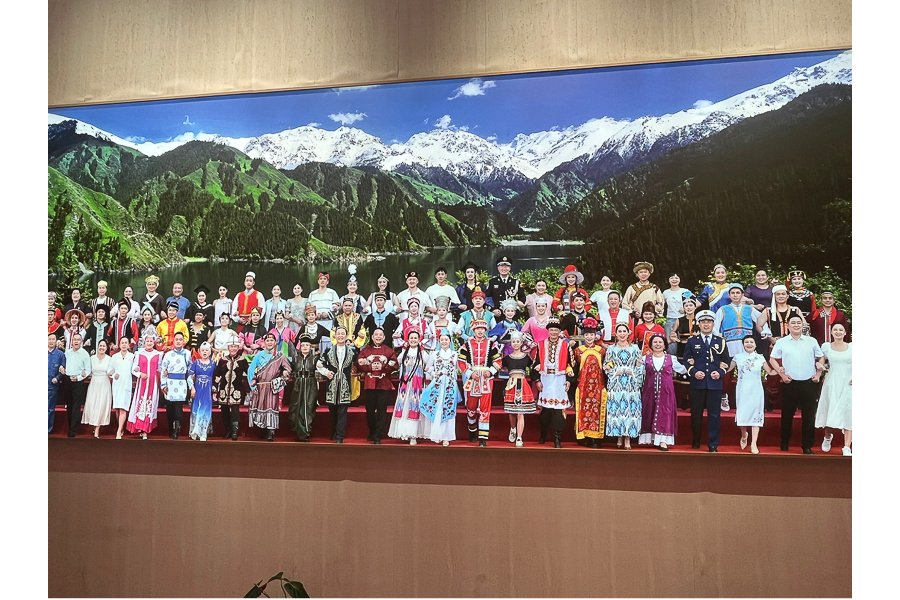




 70th anniversary of founding of the Xinjiang Autonomous Region;
Credit: Chronicle.lu
70th anniversary of founding of the Xinjiang Autonomous Region;
Credit: Chronicle.lu
In continuing my series of articles on visiting Ürümqi, the capital of Xinjiang in north-western China, this is what we got up to on Day 2 - for the first article in the series, and links to all others, see here.
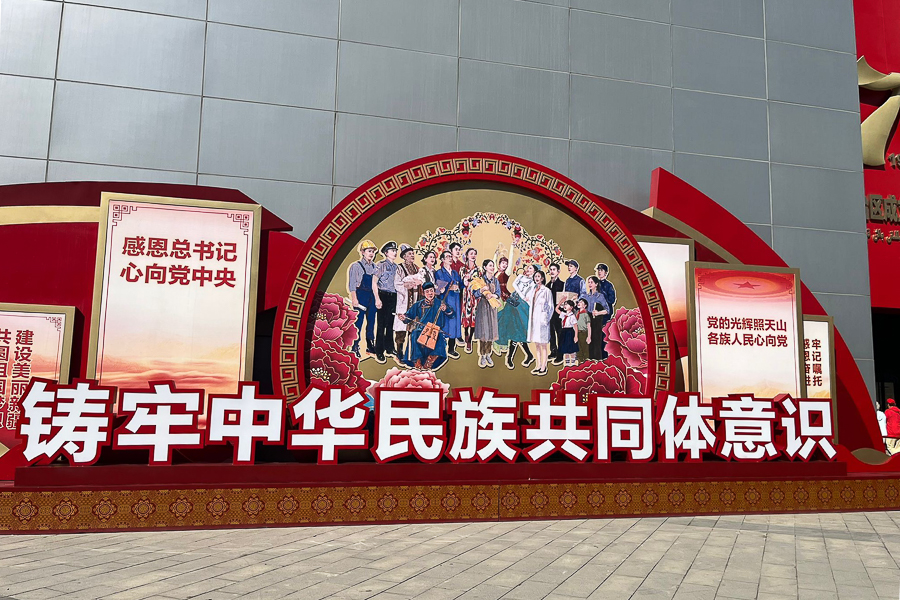
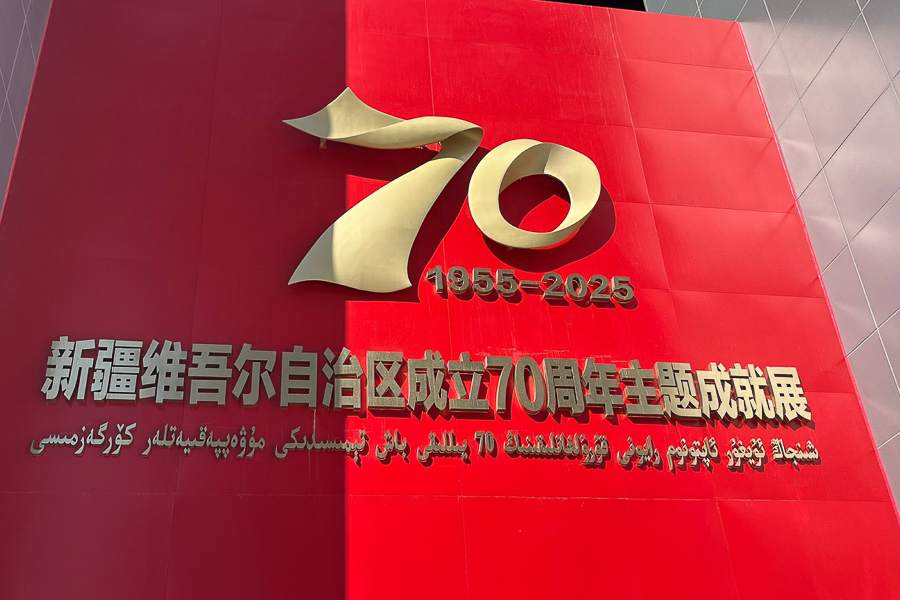
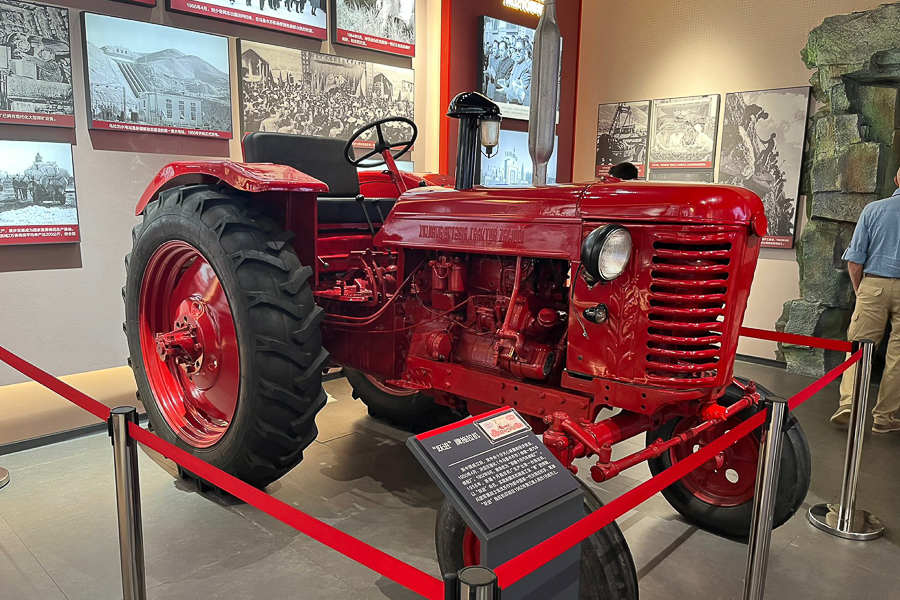
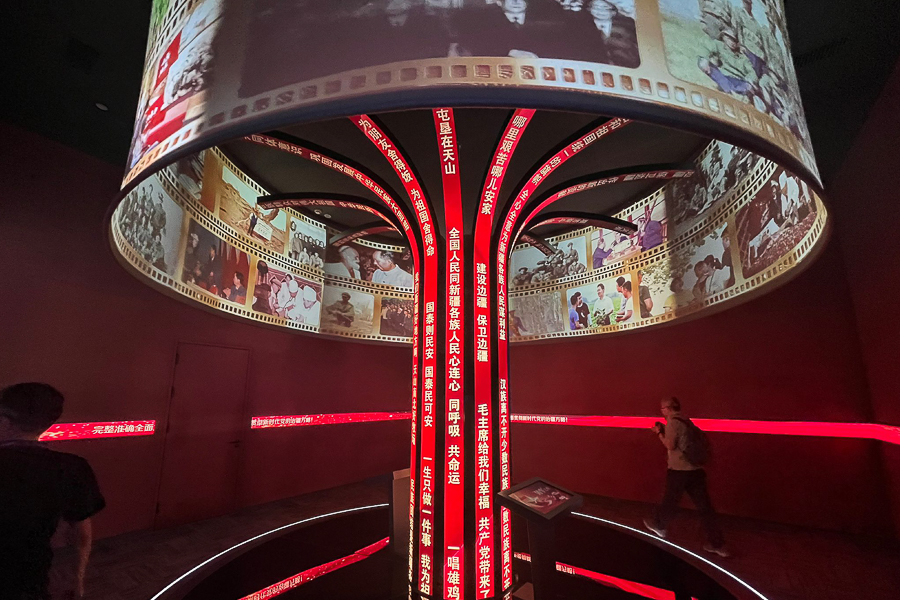
Themed Exhibition marking the 70th anniversary of the founding of the Xinjiang Uygur Autonomous Region, in the Urumqi Cultural Center
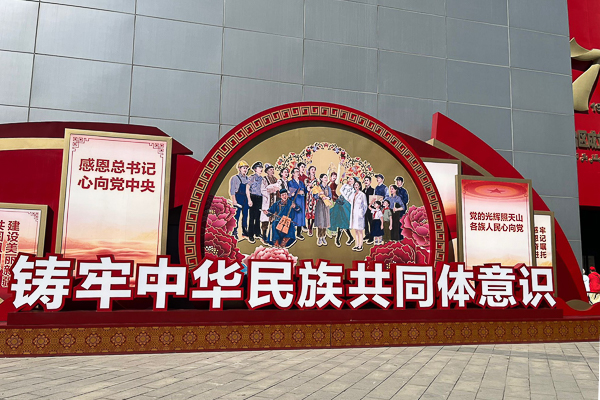
First stop off the bus today was at the Urumqi Cultural Center where we were given a guided tour of the exhibition marking the 70th anniversary of the founding of the Xinjiang Uyghur autonomous region (one of the five provinces within China) that happened in 1955. The specific characteristic of Xinjiang is its ethnic diversity, with the Uyghurs the majority and located mainly in the southern part.
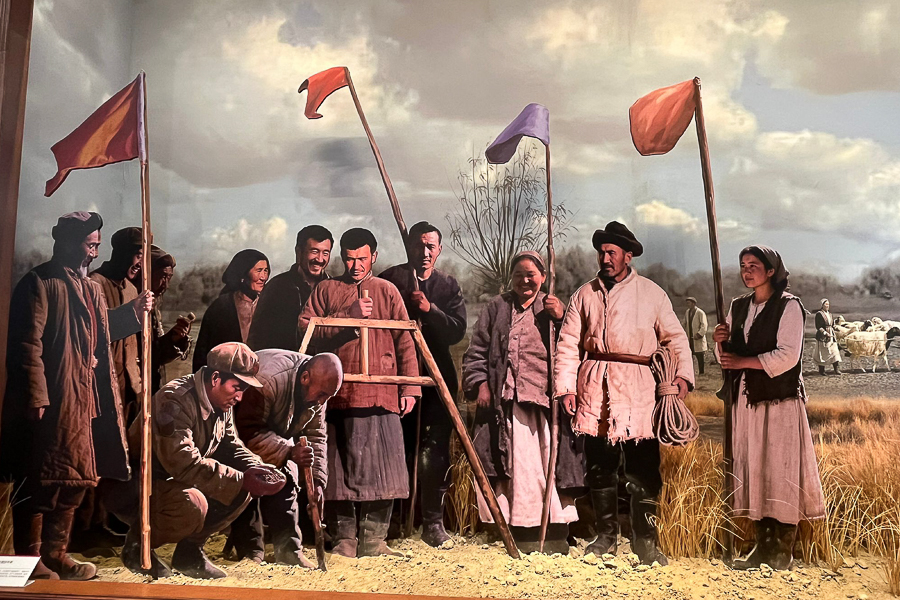
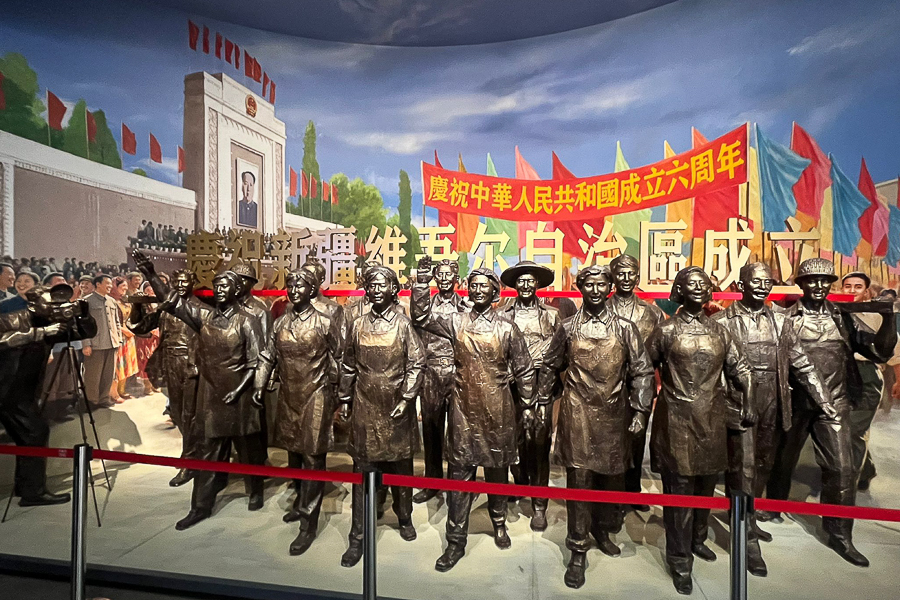
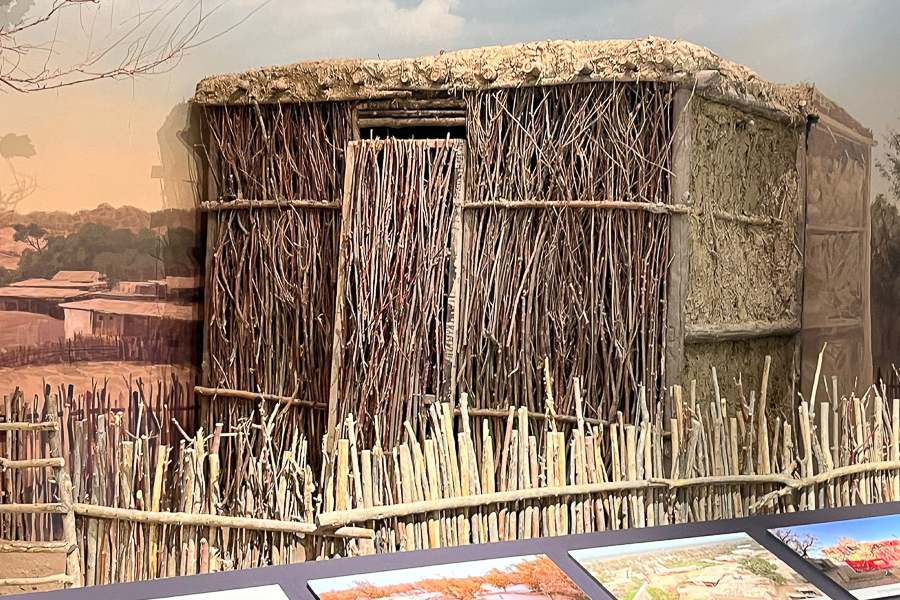
The two-storey exhibition is located beside the museum at the city’s Central Park and shows life back as it was 70 years ago, in 1955, including the challenges faced by the border region and its different ethnic groups who had converged when their ancestors had travelled the old Silk Road to reach China in the east.
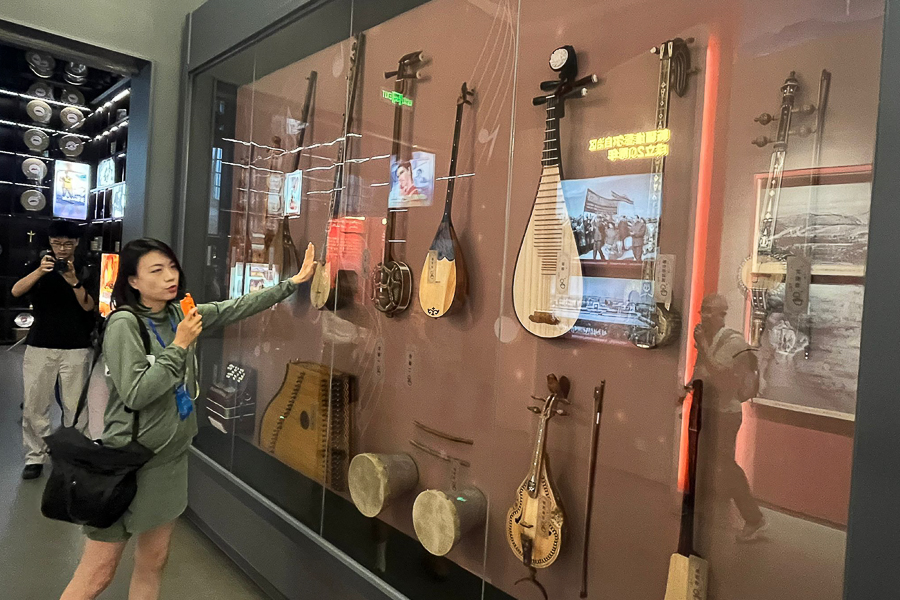
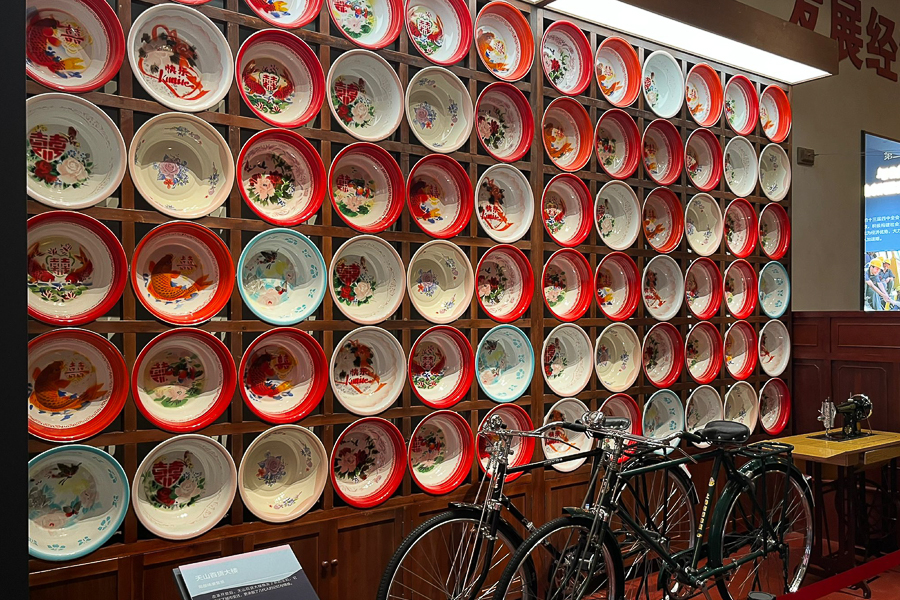
The exhibition comprises information panels (just in Chinese, unfortunately), old photographs and audio visual displays, as well as various artefacts from agricultural machinery to musical instruments.
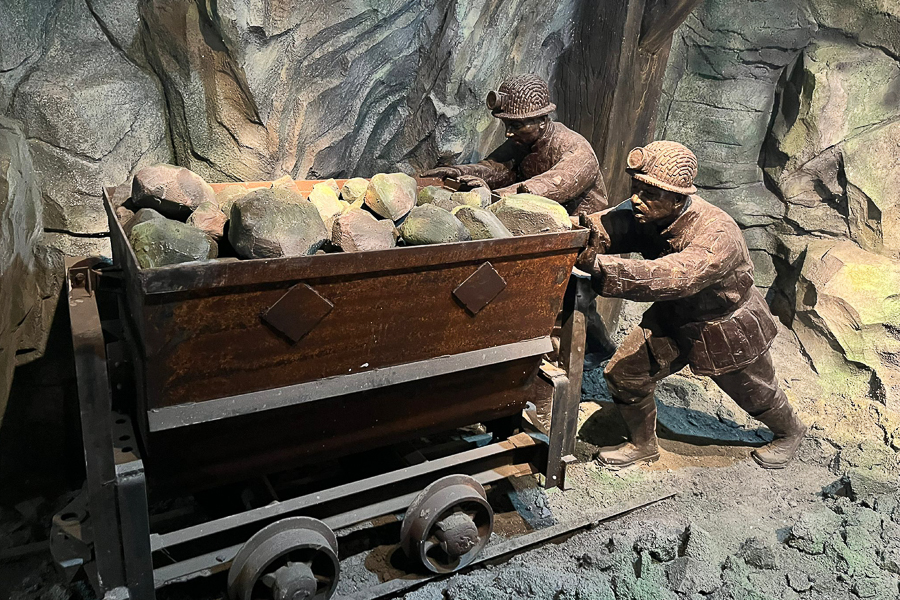
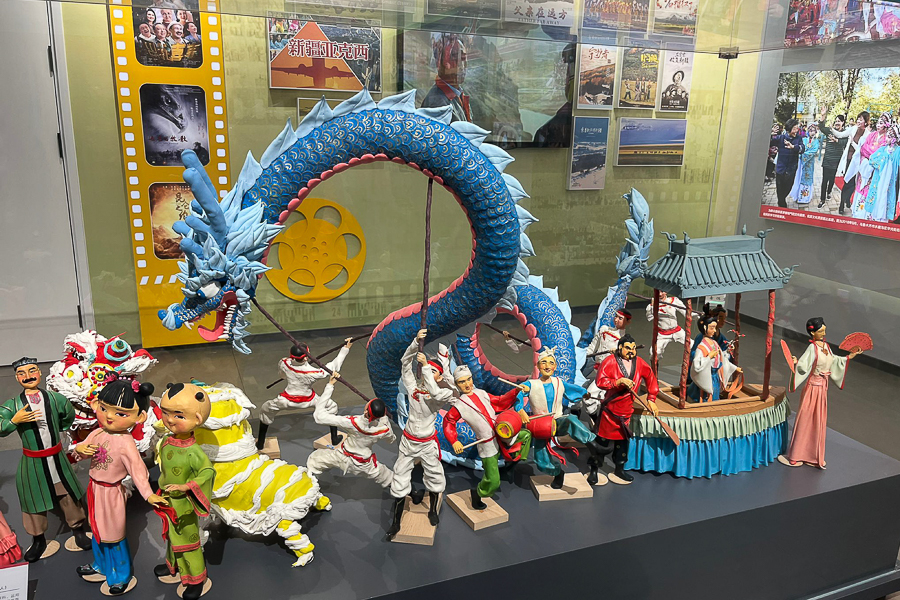
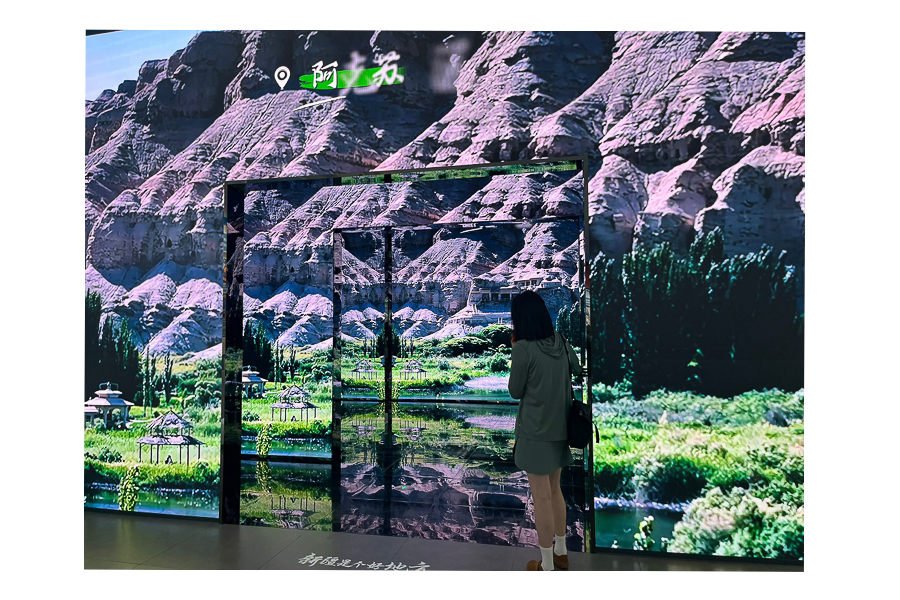
One part recreates an underground mine used to extract various mineral resources, as well as for coal. Another features films set in the region which have won awards, with another displaying pottery with regional designs. The creation of the land port is also featured, as is a model of the city of Ka Shi, presented with an impressive audiovisual presentation, one of many featured in the museum and frequently incorporating drone footage and projected onto multiple screens, either curved or at angles to each other.
It also recalled the loss of 168 lives during the construction of the main road through Xinjiang.
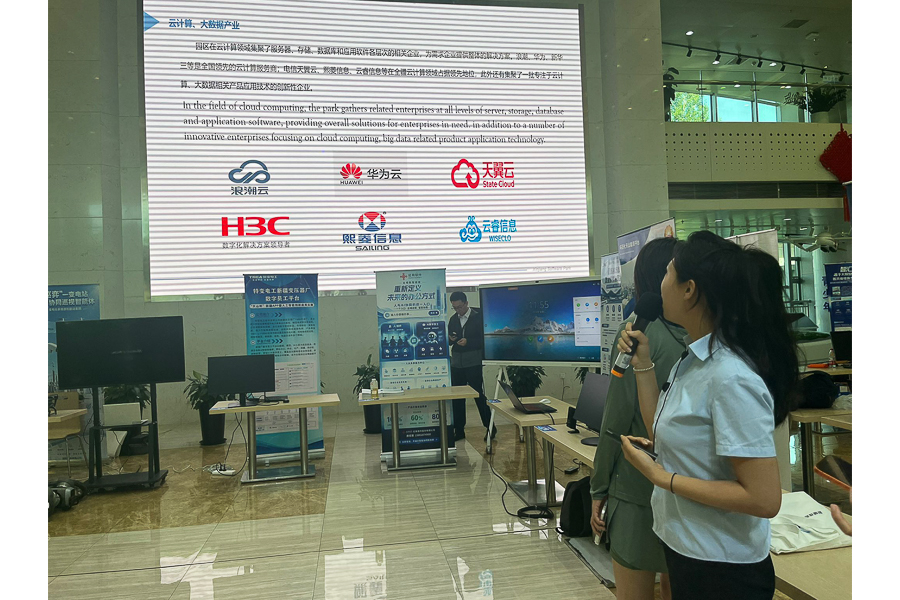
Xinjiang Software Park
This software park spans 50 hectares and houses almost a thousand digital economy enterprises, out of which around 320 are software development companies, focussing on cloud technology, AI, green computing power, etc., to support the Silk Road Economic Belt. The park supports innovation and is an incubator for entrepreneurs, promoting life cycle services, with tenants including Huawei and JD.com.
The software park supports six digital ecosystems, including information software, cloud computing big data, the Internet of Things, satellite application, AI and eCommerce. For example, its satellite technology supports agriculture, communication, transportation and emergency services. And it can provide expertise in multilingual software given the nature of its ethnic population; Xinjiang attracts various resources contributing to driving forward the digital economy.
On the 2nd floor, a video was presented promoting the prosperity of Xinjiang, highlighting the connection with the Silk Road’s heritage as well as the Belt and Road Initiative.
The software park showcase included demonstrations of various software developed, from translation software to small robots used for children’s education and entertainment, as well as using BEDO (China’s version of GPS) for keeping track of the location of animals (animal husbandry).
Other software is developed for the space sector as well as for drones to he used for agricultural crop protection and fire fighting, amongst other uses.
Asked about the challenges faced by Chinese software companies in face of the American software industry, an ensuing discussion concluded that the issues are primarily related to data protection, etc.
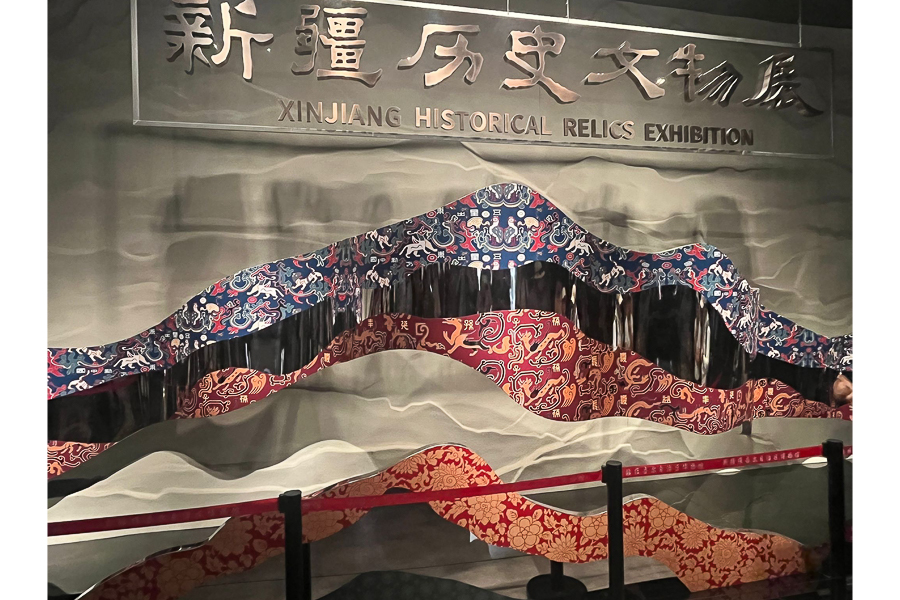
Xinjiang Museum
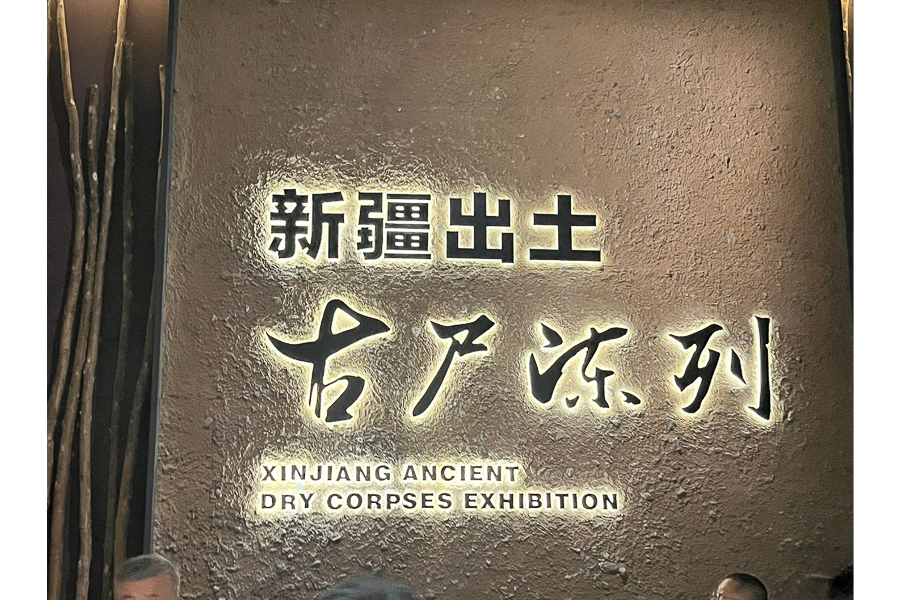
By far the best component of the trip to date, the visit to the Xinjiang Museum was fascinating and illuminating. The Chinese do museums extremely well, conveying a vast amount of information in an educational way; and this one had many information panels in English too.
It was crowded, possibly partly because access to museums in China is free of charge; nevertheless, there was a steady flow of people through all the exhibition rooms we visited, from early history through to viewing the mummified remains, preserved for almost 4,000 years due to the arid climate in the desert to the south of Xinjiang.
This large museum was founded in 2005 with 64,000 historical relics; it is spread over two floors and was crowed with visitors when we went. We also explored the second phase which was opened in 2022 and is spread over three floors.
Xinjiang was important historically as it linked east and west civilisations. Due to the dry climate in the south, many archaeological relics were discovered, dating back as far as 50,000 years ago, some in dry caves.
Stone age tools (dating back 40,000 years) are on display. Relics, including pottery, from the Bronze and Iron ages, are among the oldest on display. Gold relics were also discovered, some from cemeteries where horses were also buried along with their owners, showing that they came from high society.
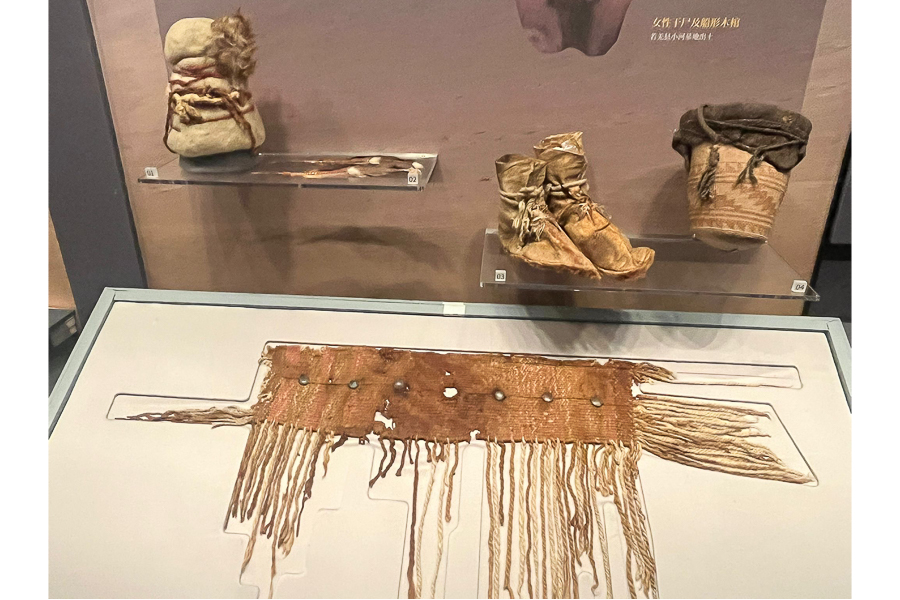
A number of mummified corpses dating back over 3,000 years with hollowed-out poplar trees used as coffins, wrapped in dried cattle skins, were in a separate section.
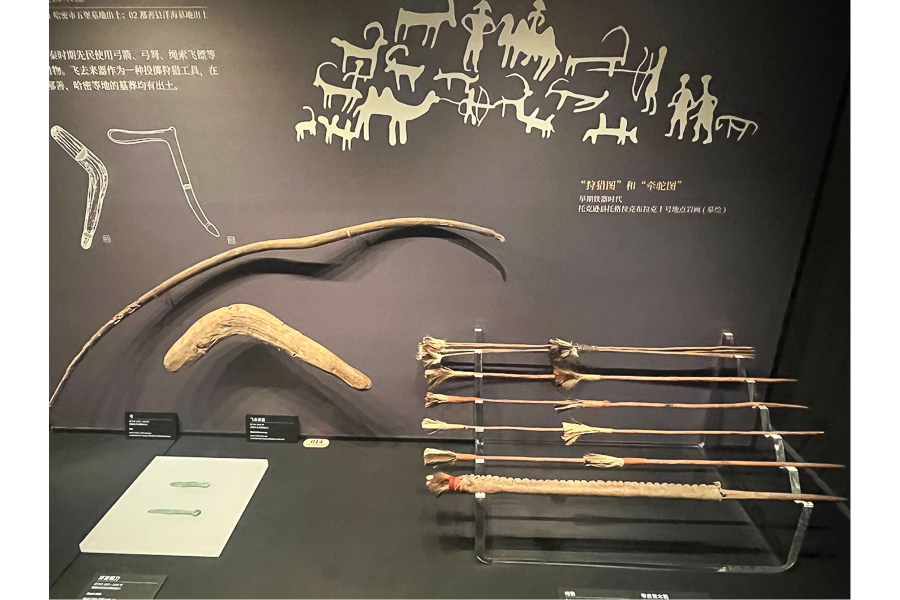
Garments and personal effects including combs have survived, as well as pottery fragments. Researchers have established that people made their living by hunting, with old boomerangs and bows and arrows unearthed. The first evidence of skiing was discovered here, as well as playing polo, in cave paintings.
Stone and wooden agricultural tools are also on display, as well as vases for wine, confirming people grew grapes here around 3,000 years ago.
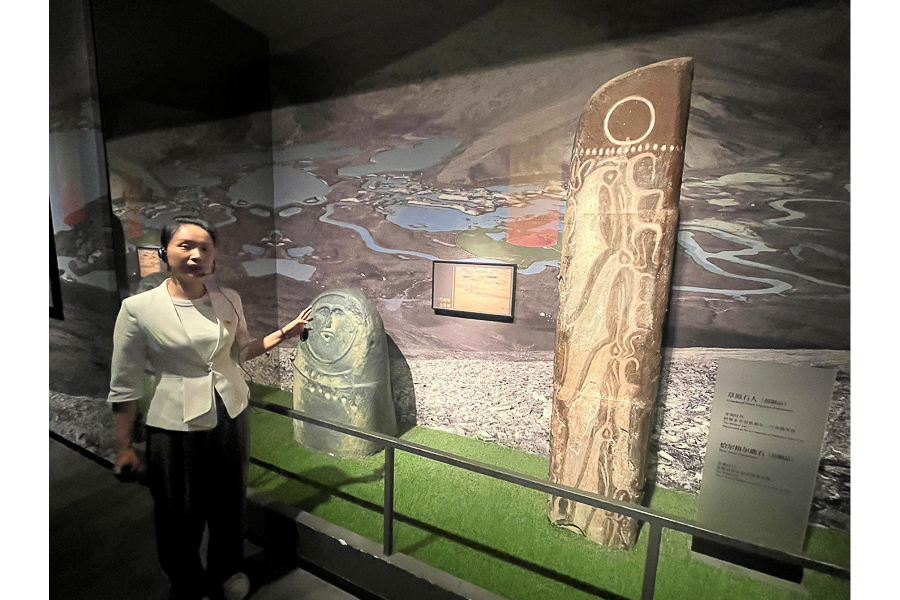
Evidence of early religion is also on display, by way of cave paintings and sculptures, including the worship of fire and of reproduction. Stone sculptures represent sun worship; others had representations of deer and birds decorated on them.
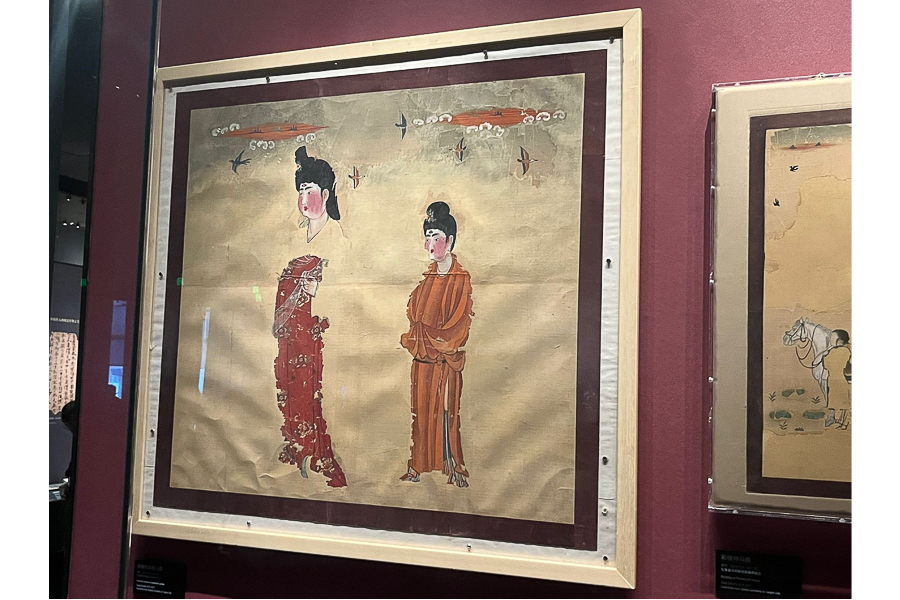
Evidence of silk was also discovered, as were old travel documents dating from around one thousand years ago. Evidence of food were recovered from cemeteries representing food culture having been brought across from the central plains.
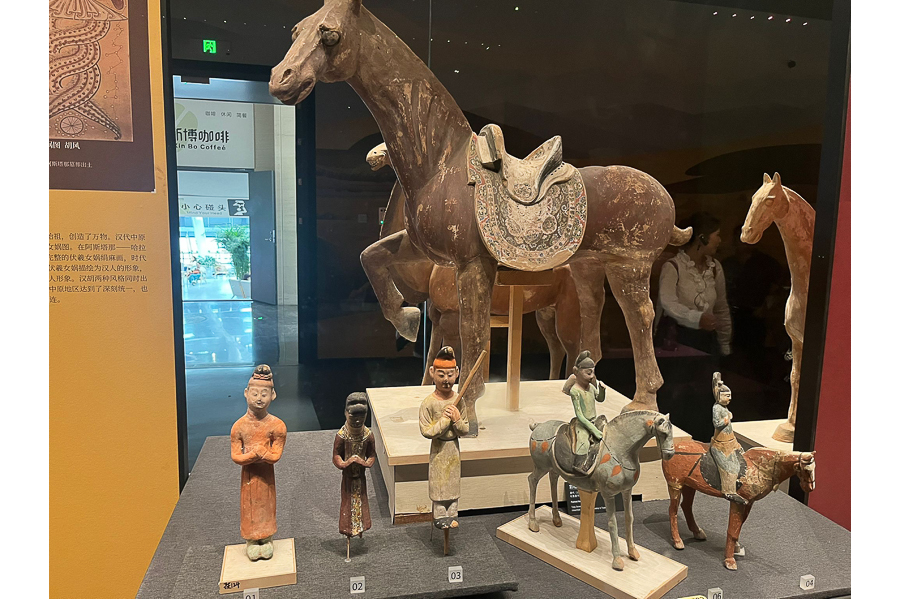
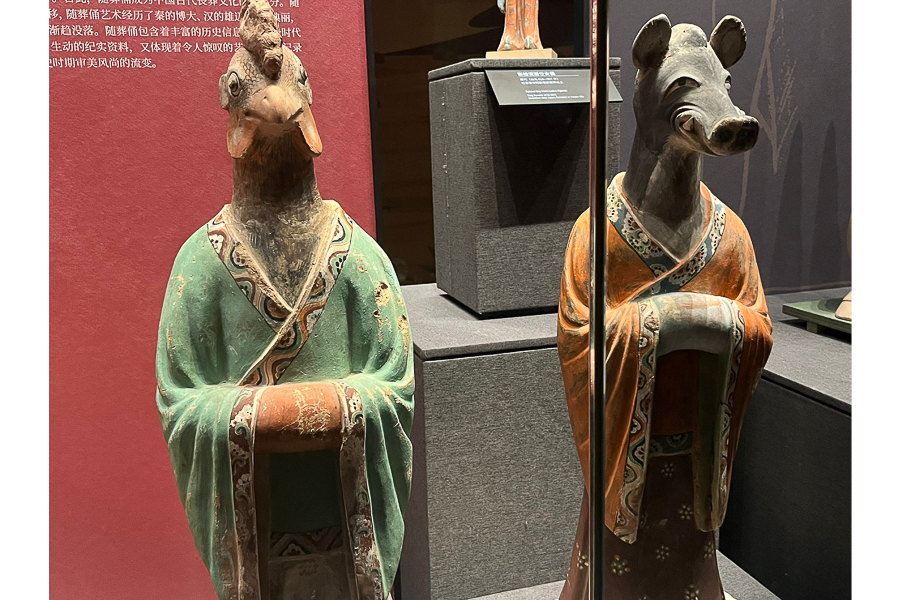
There is evidence too of burial customs, including carved animal figurines placed with corpses.
One-hump camels are found in central Asia, but two-humped camels are found in this region; evidence of one-hump camels was unearthed during excavations, showing that travellers came from that region.
A number of mummified corpses dating back as far back as 3,800 years ago were discovered around 1980, wrapped in woollen cloths and wearing leather shoes, in which internal organs had been preserved. One male corpse on display was 176cm tall and tattoos on his face can still be seen. Female corpses also had traces of pigment on their fingernails, sometimes with their hair braided. Some corpses were buried with sheepskin coats. Husband and wives were frequently buried together, even though they may have died years, or even decades, apart. Some were discovered to have died from lung diseases.
Lecture on Historical Issues concerning Xinjiang
The presenter, Mehemut Abuwaili, opened by talking about the earliest Chinese dynasties.
The issue of ethnic groups assimilating and integrating with others was stressed, with 56 ethnic groups in China, and 13 major such groups in Xinjiang which also includes various ethnic minorities.
Xinjiang is proud of its multi-culturalism and embraces it in different ways throughout the year with ethnic minorities celebrating various cultural traditions showcasing their cultural heritage and sharing it with others.
He talked about the Uygur ethnic group coming into being through a long process of migration and integration, stating "A unified multi-ethnic country, China came into being as a result of economic and social development. Historically, the East Asia continent that nurtured the ancestors of today’s Chinese nation had both farming and nomadic herding areas. Different ethnic groups with diverse livelihoods and lifestyles communicated with and complemented each other, and migrated and lived together. They experienced both conflict and integration, and pushed China to move forward and become a unified multi-ethnic country".
Xia, Shang and Zhou, the three earliest dynasties in Chinese history, emerged successively in the Central Plains, a vast area covering the middle and lower reaches of the Yellow River. In 221 BC, the First Emperor of Qin founded the first unified feudal dynasty. In 202 BC, Liu Bang, later known as Emperor Gaozu, set up another unified feudal dynasty – Han.
He explained that, in 1949, the People’s Republic of China (PRC) was founded, and Xinjiang was liberated peacefully. In 1955, the Xinjiang Uygur Autonomous Region was established. Under the leadership of the Communist Party of China, all ethnic groups in Xinjiang united and worked with other groups across the country, opening a period of unprecedented prosperity for the region
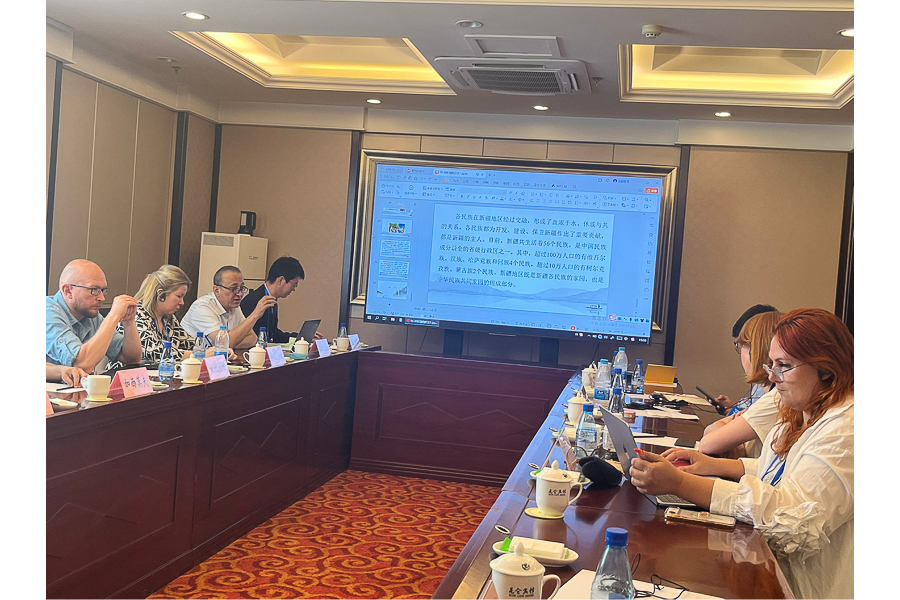
In the ensuing discussion, the lecturer was asked about is research and he acknowledged that in some areas there are dissenting voices and alternative opinions from other scholars, including internationally as well as domestically - he challenged others to provide evidence to the contrary. He talked about, in more recent times, "hostile forces in and outside China, especially separatists, religious extremists and terrorists, have tried to split China and break it apart by distorting history and facts". He claimed that they deny that Xinjiang has been a part of China’s territory where various ethnic groups have lived together, and call Xinjiang “East Turkistan” and claim that they clamour for independence.