 Urumqi an the Belt and Road Initiative;
Credit: Chronicle.lu
Urumqi an the Belt and Road Initiative;
Credit: Chronicle.lu
In continuing my series of articles on visiting Ürümqi, the capital of Xinjiang in north-western China, this is what we got up to on Day 1 - for the first article in the series, and links to all others, see here.
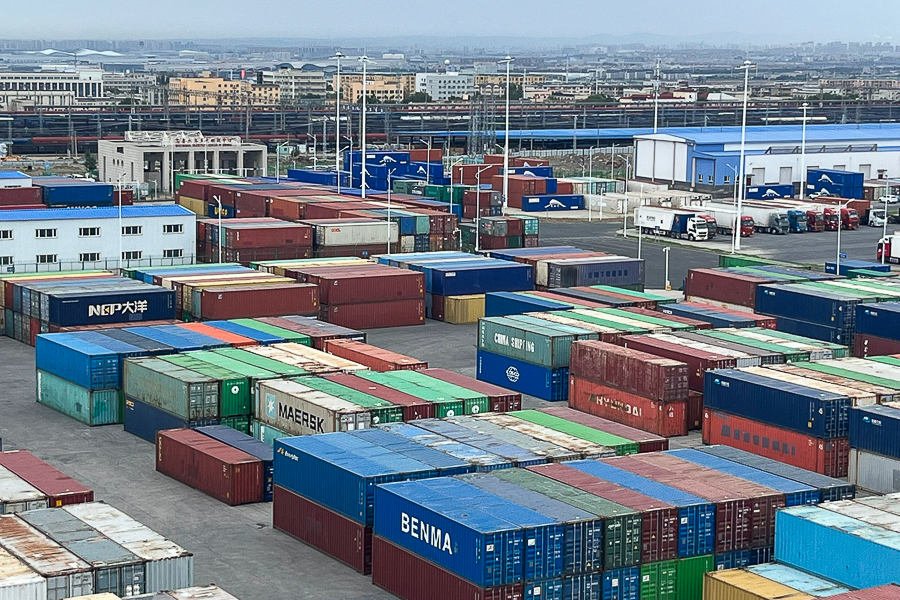
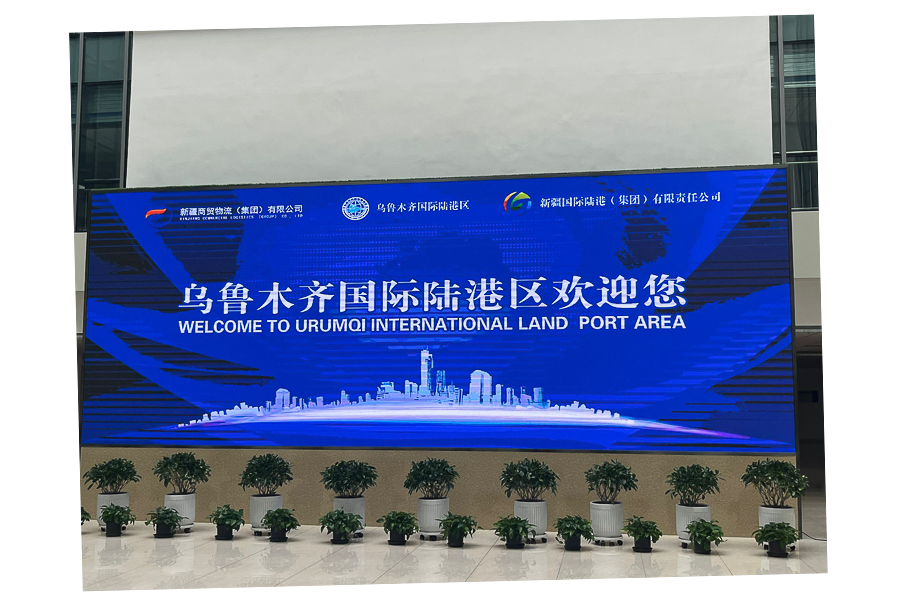
Urumqi International Land Port
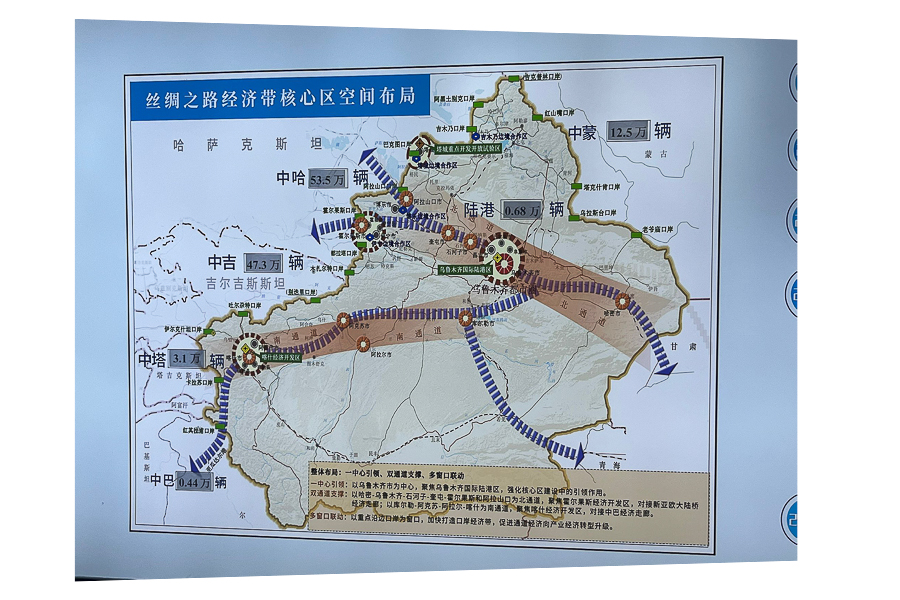
In the visitor centre, we were given a presentation on the land port which was conceived to be a central part of the Belt and Road Initiative, by way of a central infrastructure constructed to support its future growth and to attract investment.
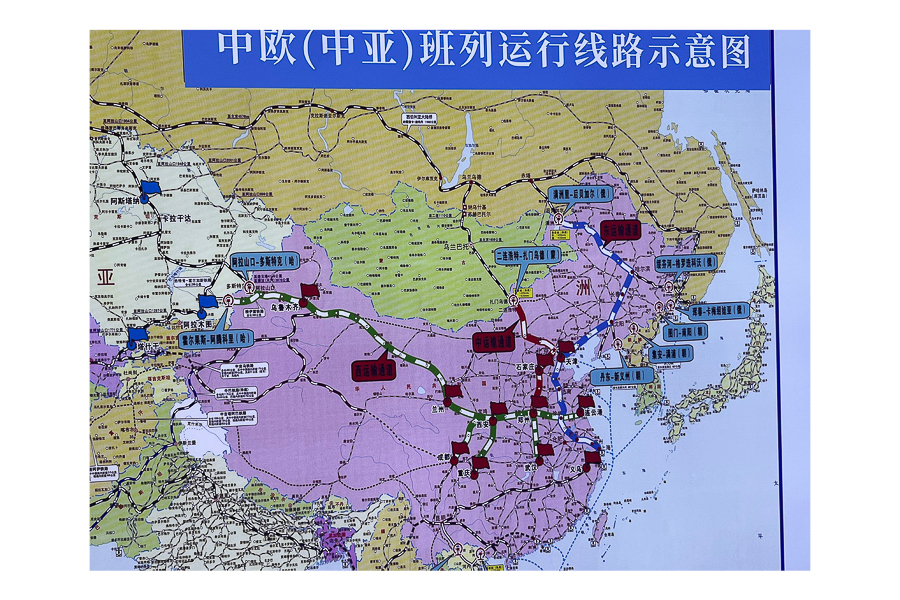
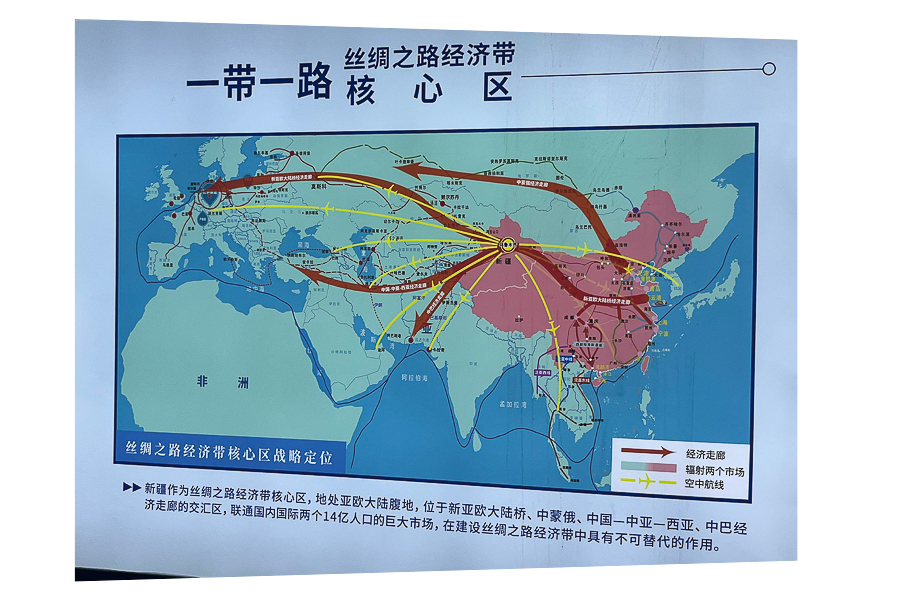
We were showed how Urumqi connects various economic corridors, and therefore consumer markets. In November 2023 a local regional inland port was inaugurated in Urumqui to link different regions, internally within China, and also internationally to Mongolia, Uzbekistan, Kazakhstan, Russia and more, connected by road, with reduced customs clearance times facilitated.
The rail routes were inaugurated in 2011, connecting China to primarily Kazakhstan in the west.
In Urumqi, the primary Logistics Centre is located close to the airport, rail network and roads, to act as a multimodal hub. We learned that, in 2011, 80% of cargo was transported by rail, including charcoal, wood, textiles, grain and petroleum products. Currently more than 150 freight trains go through Urumqi daily.
From a Luxembourg perspective, goods take two days to travel by rail to/from Henan - where Cargolux operates with the HNCA and a significant multimodal cargo hub - including transporting car parts and textiles, to then be transported via air cargo to the Grand Duchy and further European distribution.
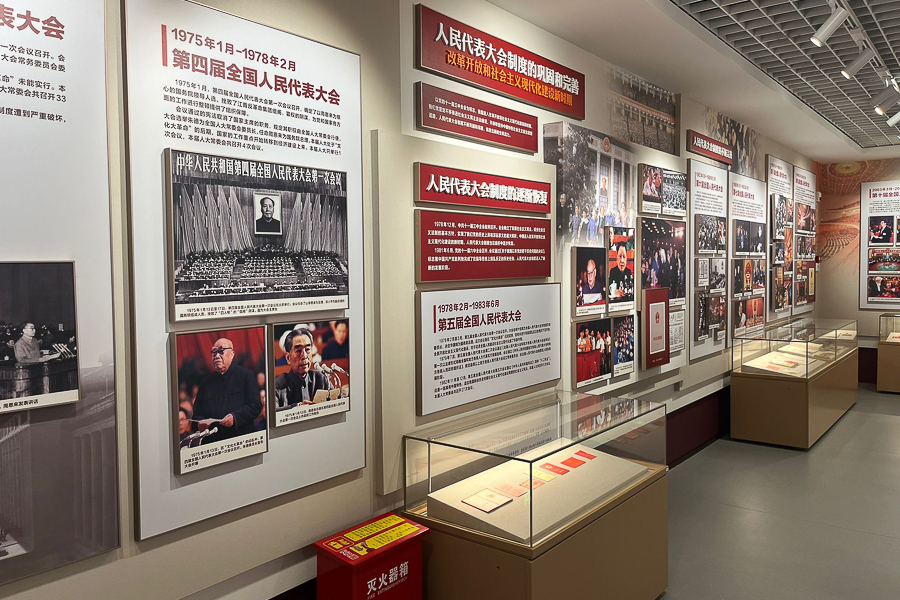
History Museum of the Standing Committee of the Regional People's Congress
In September 2025, President Xi Jinping visited what I would describe as a political history museum, on the 70th anniversary of the founding of the Xinjiang Uygur Autonomous Region.
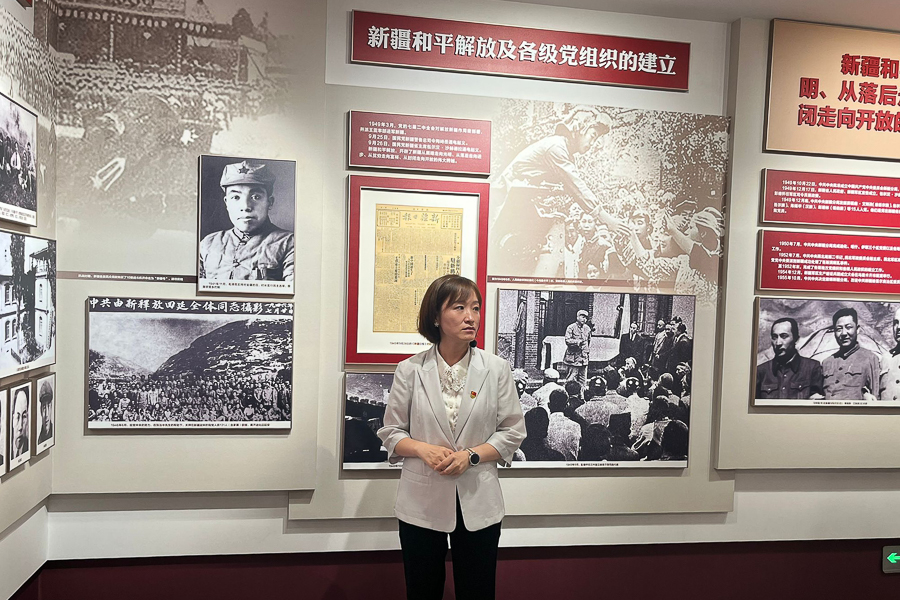
The museum consists primarily of photographs and information panels with writing just in Chinese (some other museums and tourist attractions also support other languages such as English and Japanese), including some on the adoption of the constitution back in 1954 at the first national party congress (NPC), with others showing ethnic minorities being included a decade later. Others show that, after 1978, China reformed and opened up. Ethnic unity felt like a central theme running through the exhibition.
The museum has few artefacts but charts the history of the people’s congress and the country practising socialism. Photographs on display show how people used to vote using soya beans.
CRCC Heavy Industry Xinjiang Co Ltd
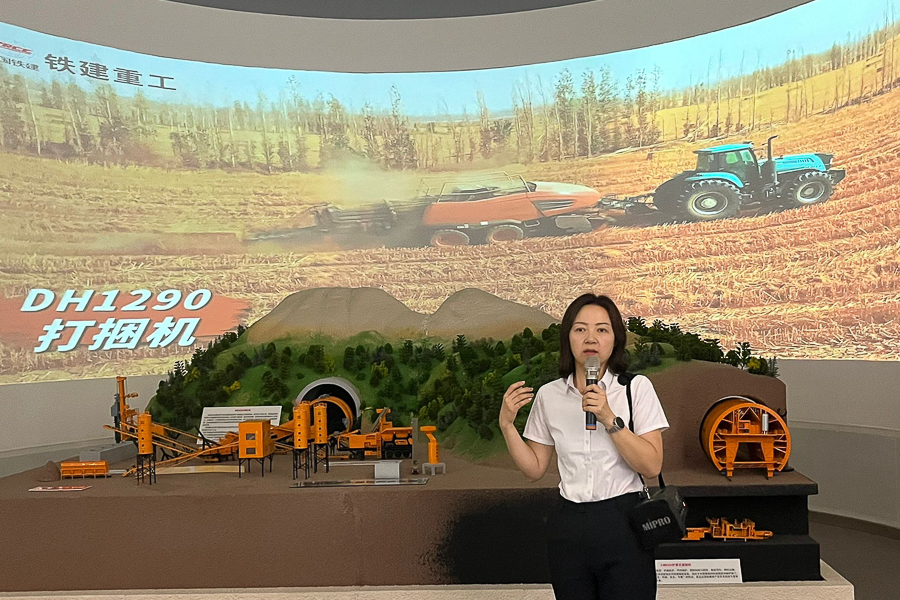
CRCC produces agricultural machinery; a tour of their visitor centre showed that they also produce tunnel boring machines (TBMs) such as used for boring tunnels underwater or through mountains. Of these, they produce tunnelling machines at their sister plan in Hunan and serve customers in the domestic market.
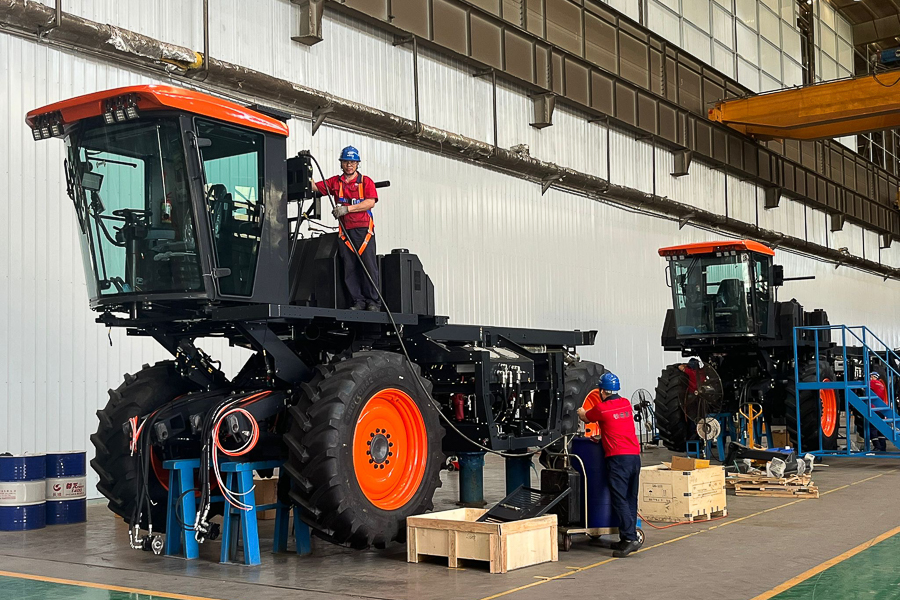
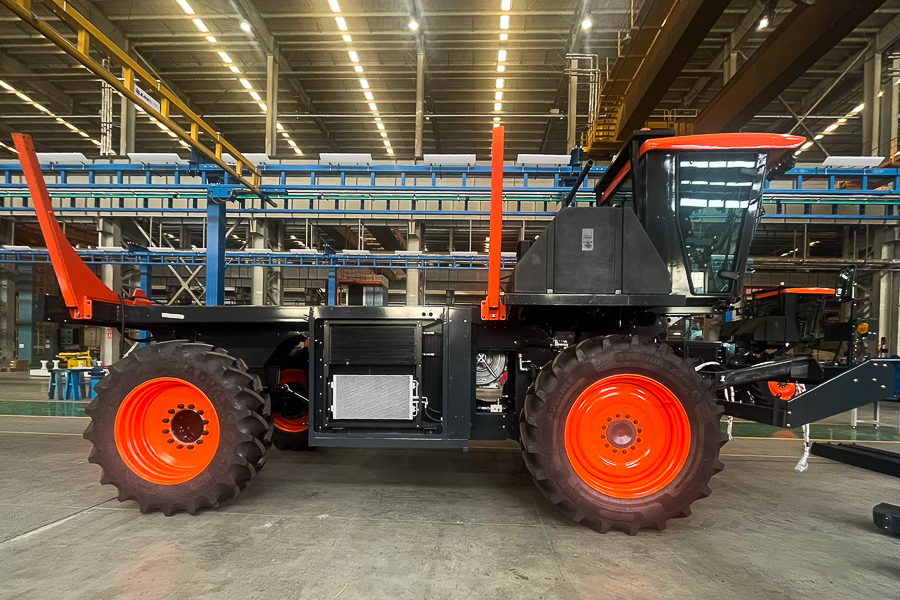
Their agricultural machines produce manually-operated harvesters for cotton, corn, tomatoes, etc., and produce around 500 units annually, with most destined for the domestic market in China. This year they are focussing on developing international markets, including Central Asia and South America.
The tour guide explained how the harvesting / baling machines worked, each with around 3,600 components.
In addition, the company is licensed to produce railway sleepers which have elastic properties which require precision technology as they support both standard and express trains.
The tour of their production line, assembly line and warehouse revealed that their assembly line is currently being upgraded to incorporate robotics; the production line currently uses robotics for tasks such as welding.
Xinjiang Islamic Institute
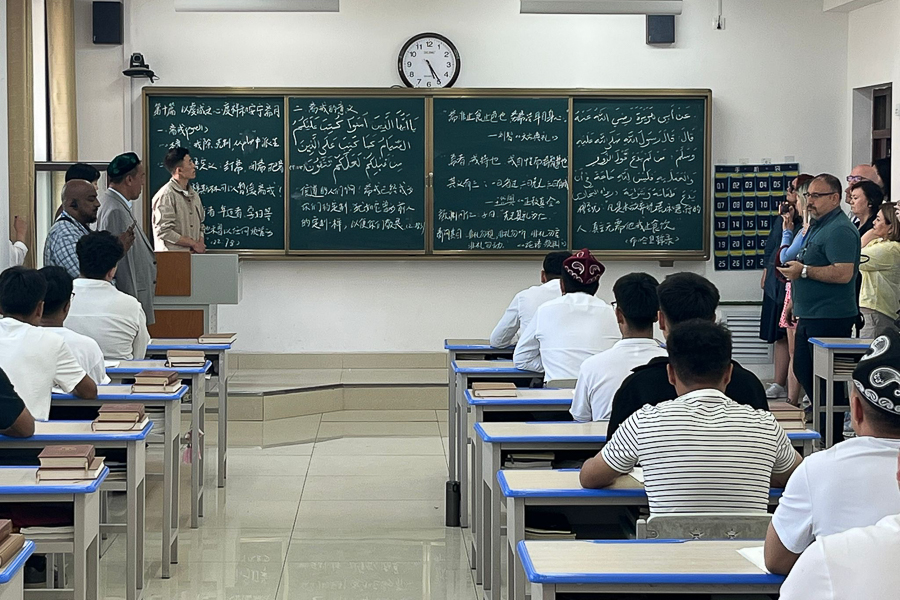
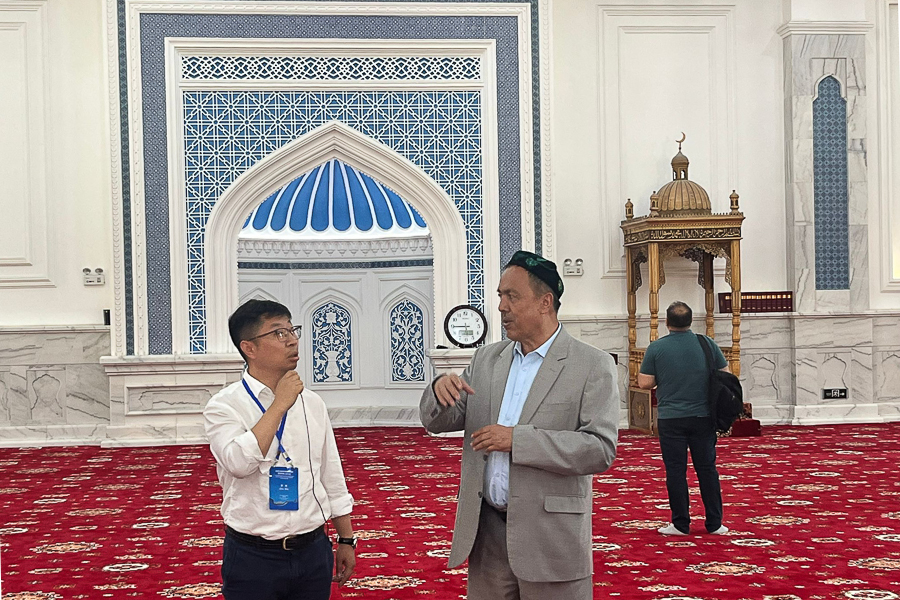
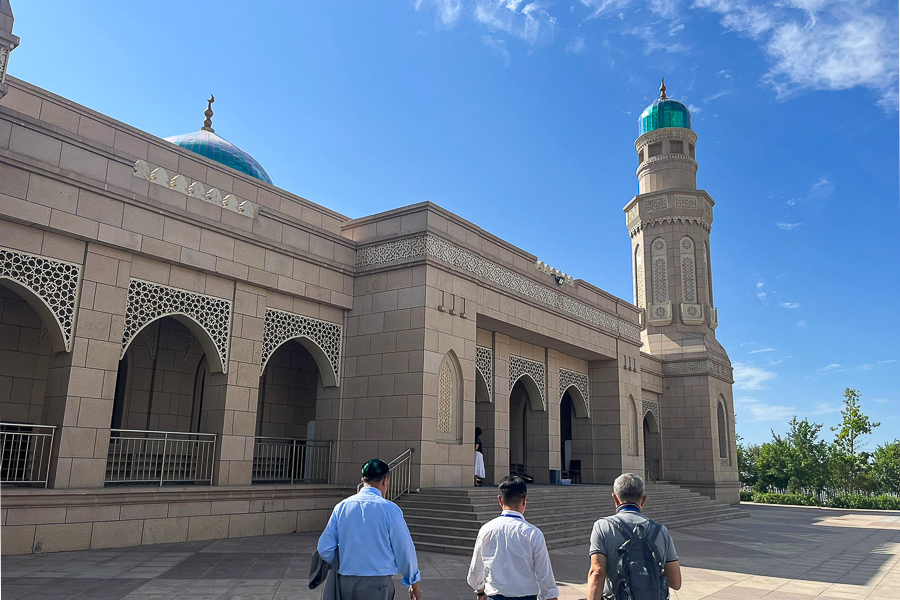
Upon arrival, we were greeted by the President and Vice-President of the institute, the former giving a guided tour of the facility whose buildings cover around 50,000 m2, comprising classrooms, a mosque and libraries; it also has sever other campuses, with 1,900 students in total. The Chinese government paid 270 million Yuan for the new 1000,000 m2 campus, half of which has buildings.
One of the teachers explained that the institute provides three-year degree courses. Later this year they are anticipating a new influx of 150 first-year students.
Study fees are free, paid for by the government, with grants and subsidies available for travel, accommodation and meals.
The curriculum comprises ideology and law, the constitution and civil code; religious knowledge, including reciting the Koran; society and culture. Graduates often end up working in mosques and Islamic associations.
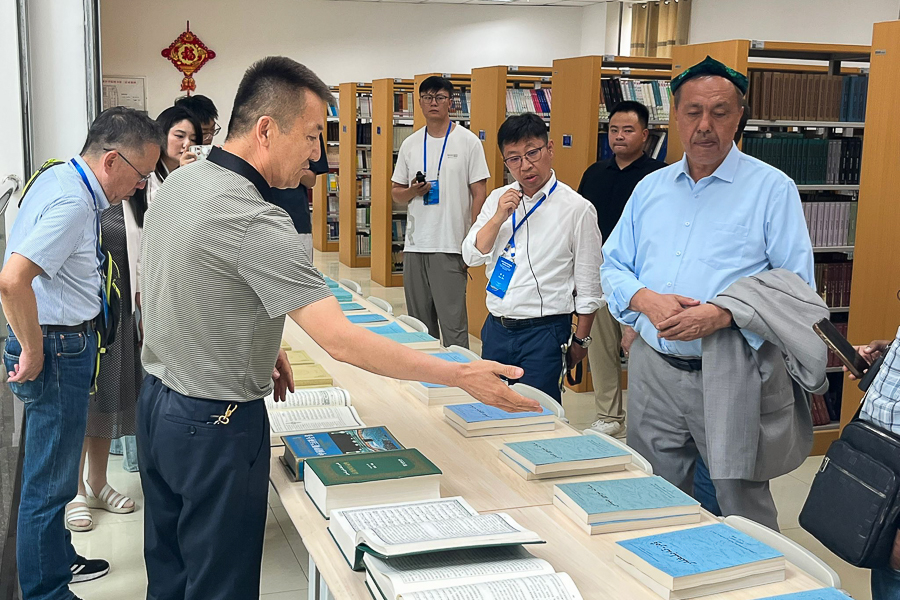
The main library covers three floors; an exhibition floor, around 1,500 paper books over twelve categories (and 32,000 copies of electronic books), as well as books covering the five major religions, including different linguistic versions of the Koran. It also subscribes to over 200 newspapers and magazines, spanning different categories and well as languages.
Lecture on China's Religious Policies
The speaker, Peng Wuqing, explained that he has spent many years researching religion and politics in China, and presented the past and the present in this context, addressing geography and other aspects to explain the range of religions in Xinjiang.
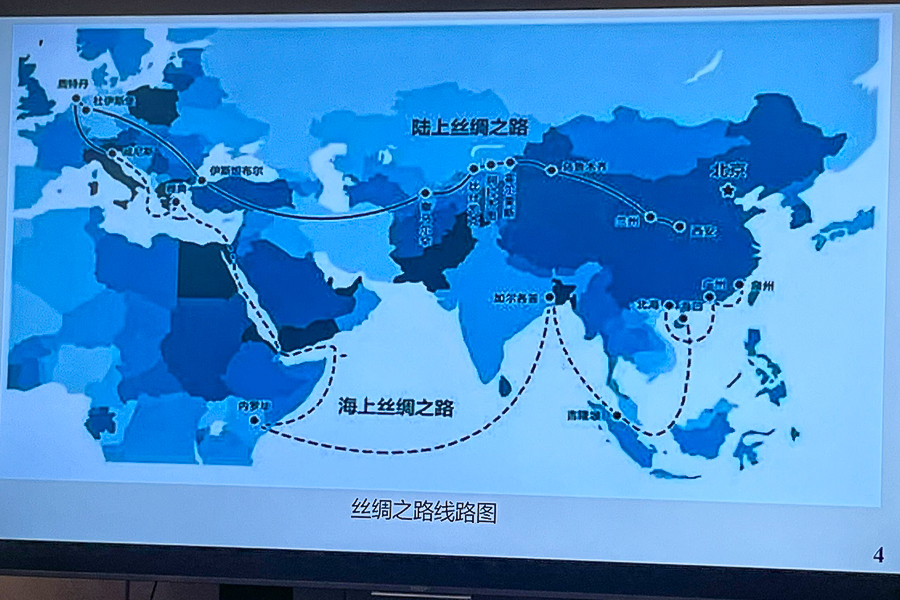
Xinjiang is situated along the old Silk Road, with a newer route being developed later than the one through Xinjiang. According to legend, around 3,500 years ago, the emperor of China met the King of the West in Xinjiang.
The earliest history of jade trade can be traced back to 4,000 years ago, with evidence found along the Silk Road and believed to originate from Xinjiang.
The Belt and Road Initiative refers to both the road and the sea route; the land road is both shorter and safer as it avoids passing through the Middle East which has been unsafe for trade.
Some artefacts show mice, and other show bear claws, with artefacts from minority cultures showing ancient religious customs. Besides Buddhism, there were other religious influence from Persia. There is other evidence too of fire worship, e.g. of wedding ceremonies whereby people had to jump over fires.
This confirms that Xinjiang has been a converging place of religions, illustrated best by the Valley of A Thousand Buddhas in Xinjiang (on the tour itinerary). In this and other place, there remains plenty of cave paintings and grottoes with statues carved into the rock, as well as the remains of Buddha temples, and also fragments of parchments with writing in different languages, including Uyghur, Mongolian and Arabic: some artefacts have found their way into European museums.
Such artefacts show evidence not only of religion but also daily life, and include decorated coffins. Archaeologists have also unearthed old buildings including churches with crosses and lotus flower motifs.
At the beginning of the 16th century, Islam replaced Buddhism as the dominant religions and culture, co-existing with many others, with evidence of Catholicism and Eastern Orthodox influences. Interestingly, images of lotus flowers (liked to Buddhism) have frequently been discovered in old mosques in the region: the Islam religion in this region incorporated influences from both east and west.
Different religions co-existed harmoniously, and this is also represented by architecture, including Christian Churches, Islamic mosques and various folk religions. Different cultures, civilisations and religions converged in Xinjiang. The cultural heritage of those living in the region have been passed down through generations.
He then talked a bit on China's religious policy in which the constitution protects the freedom of practising religion; nevertheless, religious activities must not disrupt public order or daily life, respecting both believers and non-believers and protecting ethnic minorities.