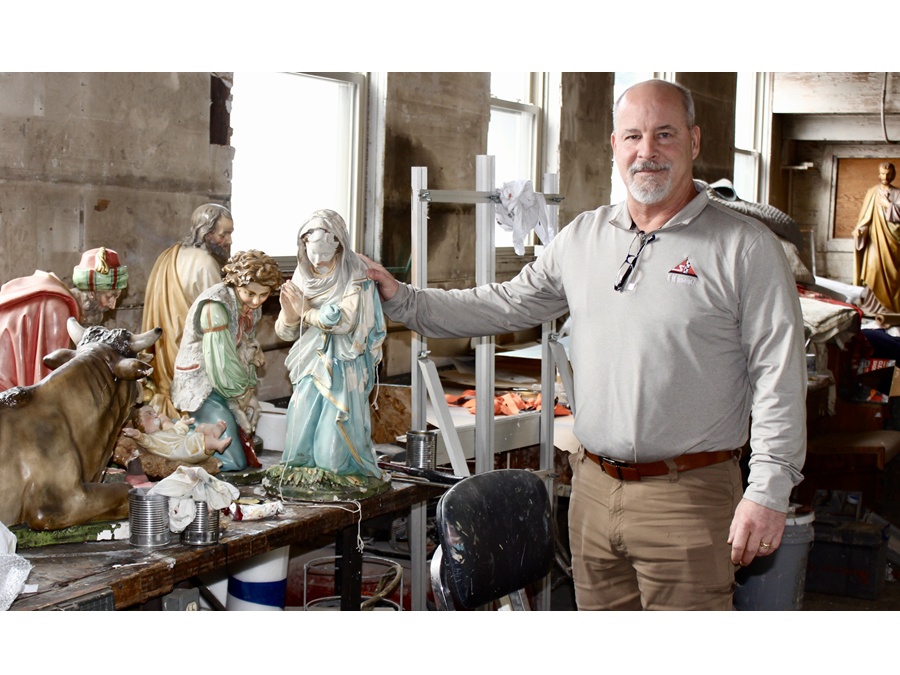
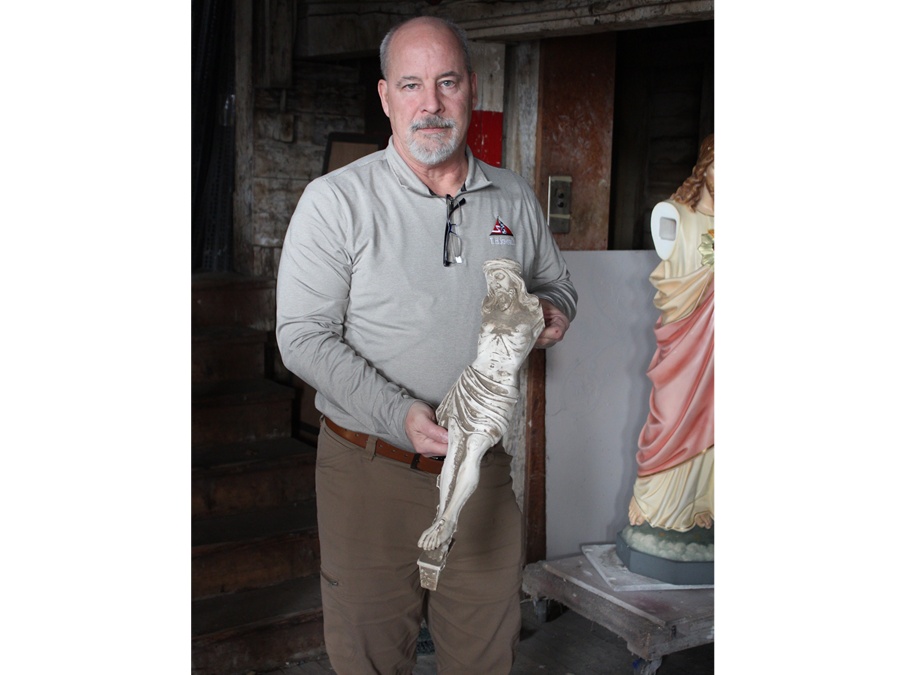
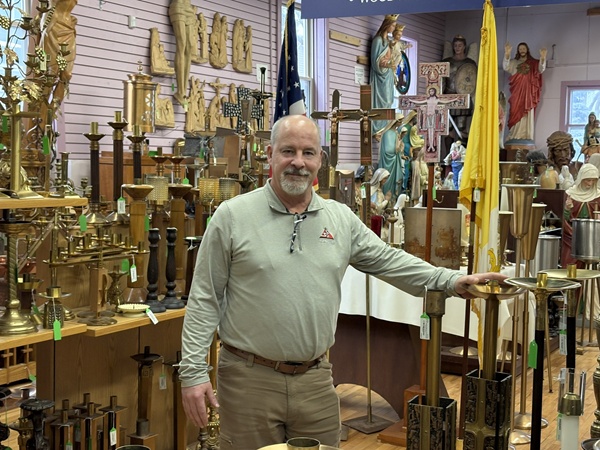
 Third-generation in the family business, Jim Stemper is President of T.H. Stemper Co. in Milwaukee, Wisconsin, which was established in 1911;
Credit: Luxembourg Legacy
Third-generation in the family business, Jim Stemper is President of T.H. Stemper Co. in Milwaukee, Wisconsin, which was established in 1911;
Credit: Luxembourg Legacy
Luxembourg's growing community of dual citizens in the United States continues to strengthen cultural ties between the two countries, with many embracing their heritage and sharing it through language, tradition and entrepreneurship.
This article is the fourth in a series on Luxembourg Americans who have gone through the process of reclaiming Luxembourg nationality to become Luxembourg citizens. These dual citizens, who were assisted in their citizenship journey by Luxembourg Legacy, reflect the passion that new Luxembourgers in the United States have for all things Luxembourg.
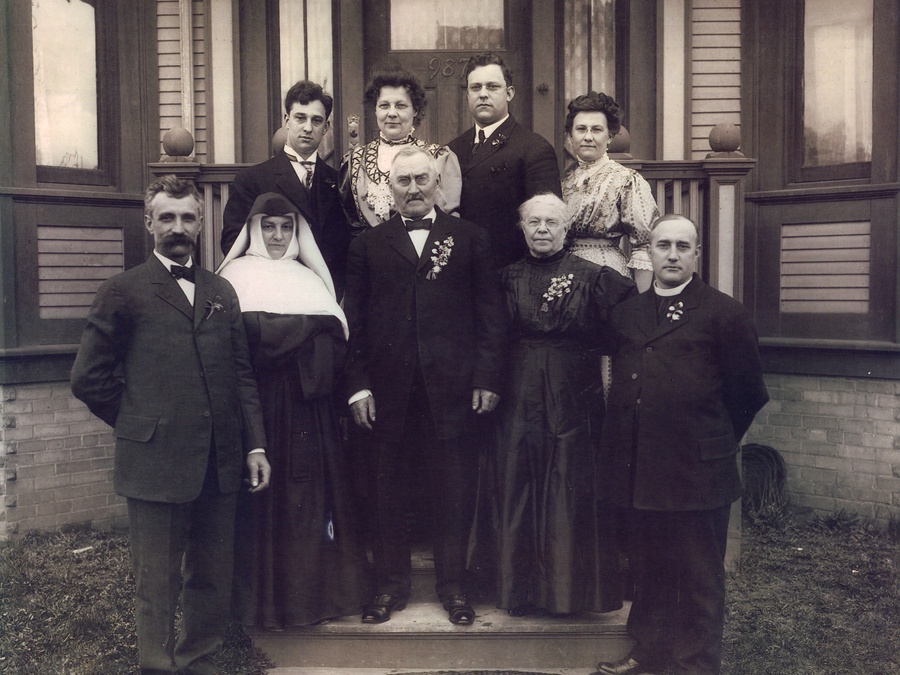
Jim Stemper's business card has a small #8 beneath his name signifying his placement - eighth and last - among his siblings. He is the third generation of a family-owned church supply business and the fifth Stemper to oversee the company as president. However, he was the first in the Stemper family to become a Luxembourg dual citizen.
Although Jim's Luxembourg heritage is rich and deep, his interest in his ancestry is fairly recent.
"When my dad, who was an extremely talented artist, was courting my mom, he drew a picture of St Patrick for her because she is Irish, but he gave it a Luxembourg twist. So, I was aware that he was Luxembourgish, but I didn't have any interest in exploring either side of my ancestry until Kevin [Wester] asked me when I was going to become a citizen," said Jim, whose two adult children also received their Luxembourg citizenship. His brother Dan and his four adult children and one grandchild later became dual citizens as well.
According to Jim Stemper, Kevin Wester's enthusiasm and extensive knowledge about the Stemper family inspired him to get in touch with his roots. Kevin took him on a little guided tour of Knellsville, just north of Port Washington, Wisconsin, where Jim's great-grandfather Matthias Stemper owned a blacksmith shop on old Green Bay Road, once the major thoroughfare between Green Bay and Chicago. While most of the Luxembourgers in the area were farmers, Matthias was an entrepreneur. His son Thomas Henry (T.H.), Jim's grandfather, was, too.
Building a Church Supply Legacy
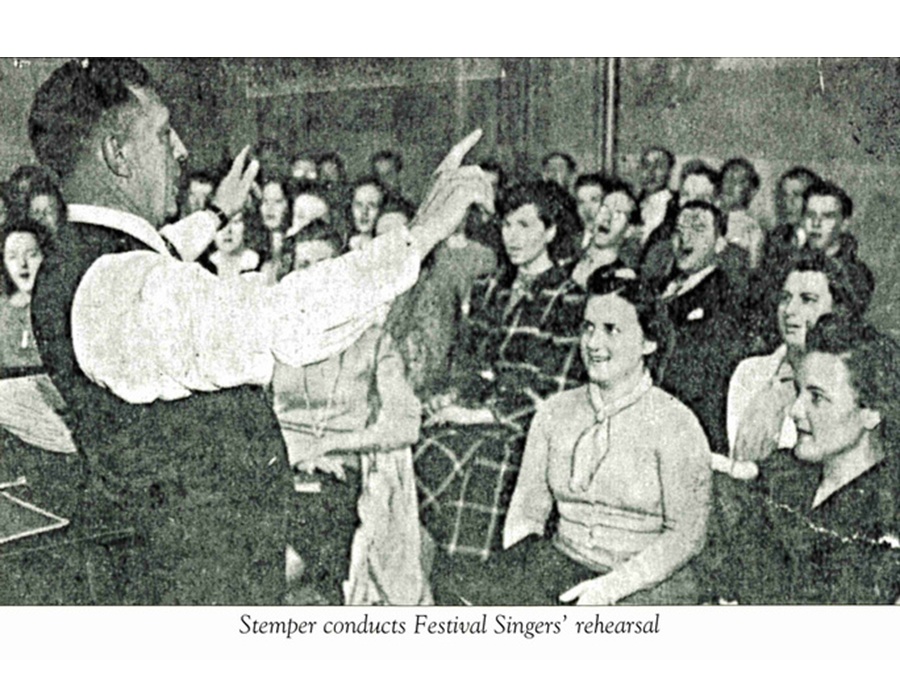
T.H., who lived in Milwaukee, Wisconsin, was a music teacher, organist and director of a small choral ensemble, which became the renowned Bel Canto Chorus. On Easter Sunday in 1931, this small ensemble, which included T.H.'s wife, Elsa (Van Asche) Stemper, and his nephew, William Hargarten, appeared at the chapel of St Mary's Hospital in Milwaukee and performed Hans Gruber's "Festival Mass", the work that inspired the group's original name, Festival Singers.
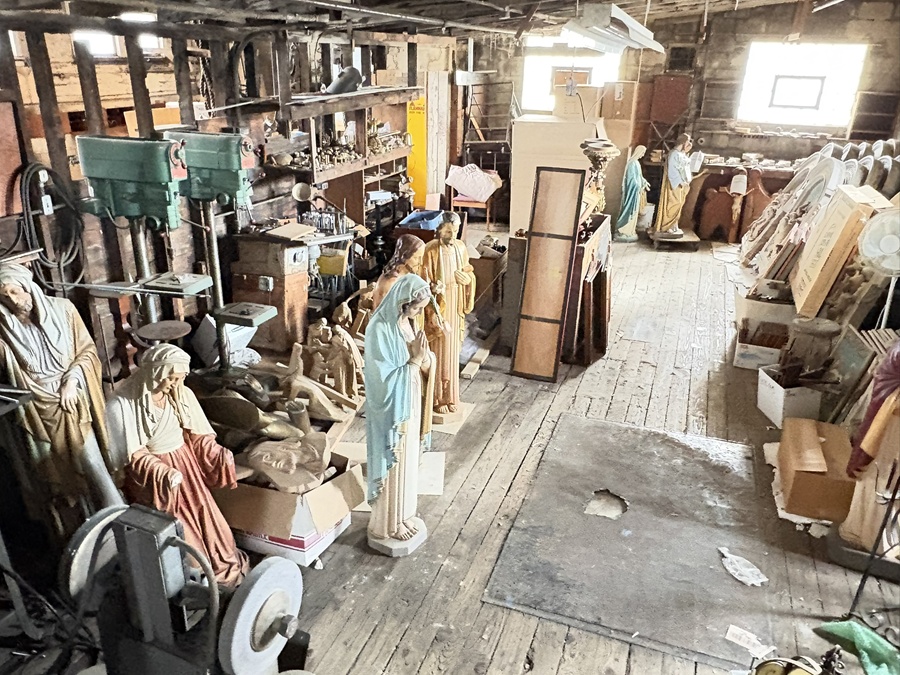
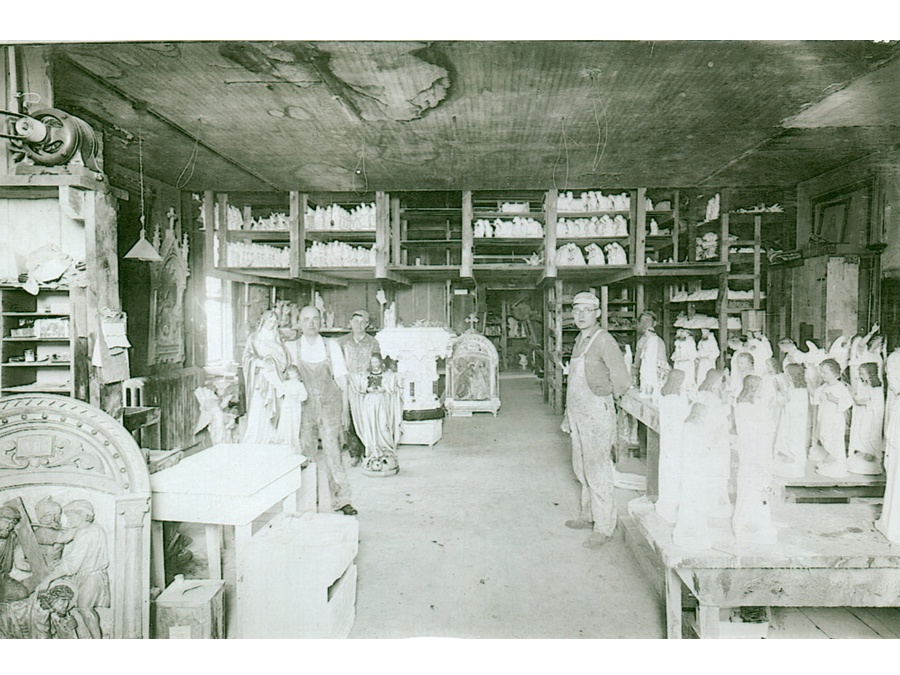
In 1911, T.H. purchased the bankrupt European Statuary & Art Company on Milwaukee's southeast side from Simon Rosenblatt, who founded the company in 1849 as a manufacturer of plaster statuary and altars. T.H. resurrected the failed business thanks to the design skills of the local immigrant population.
"There were quite a few immigrants living here in Bay View, predominantly Italian, German and a smattering of Irish. T.H. walked across the street and said, 'Who can paint? Who can plaster?' He hired those skilled immigrant workers, along with non-immigrant employees, and brought European statuary and art back to life," Jim Stemper said. T.H. also hired sales reps to travel the country selling rosaries and other religious goods.
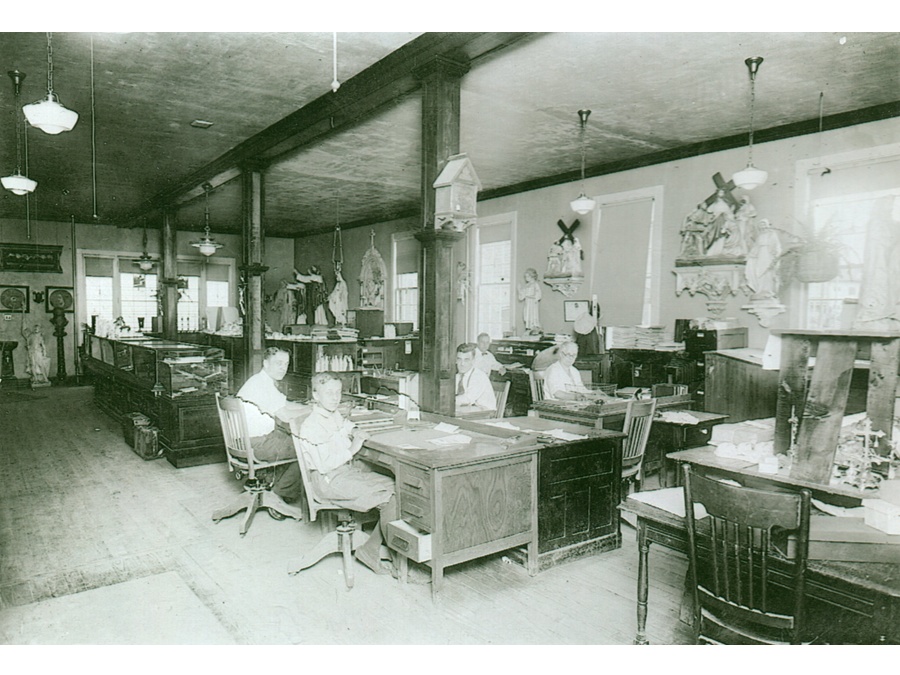
In 1913, T.H., who was described as "a very shrewd businessman", bought another bankrupt company, H.E. Schwartz Co, a religious goods store. He renamed it Milwaukee Church Supply and moved it to the Potter Street location. In 1946, he incorporated the two businesses under the T.H. Stemper Company, Inc. name. The company, which at one time employed more than 100 people, was flourishing, producing altars, stations of the cross, statuary and nativity sets.
Jim Stemper's father Daniel assumed ownership of the company in 1968 and successfully steered it through marketplace changes driven by shifts within Christian denominations. With Vatican II, Catholic churches - T.H. Stemper's largest customer - removed traditional furnishings (and did not purchase new ones) in a liturgical renewal to simplify and emphasise communal worship. Additionally, a fire at the Stemper building in 1970 destroyed the third-floor production plant and all the statuary molds. And in 1980, when Jim Stemper was eleven, his father died at age 52 of a massive heart attack.
Joining the Family Business
With no business experience, Jim's mother Jean, now the single parent of eight, took over and kept the unstable business going through some challenging times. Eventually, most of the Stemper boys joined the business. Their father's friends and associates in the industry helped the business get back on track. During this time, Jim was following his own path.
"I was a bricklayer and didn't want to join the company. I did construction for thirteen years, but I hurt my shoulder and was tired of it, so I came into the company in 2000 and began to work my way up," he said.
Jim started off working in the basement to become familiar with products and learn the shipping and receiving operations. Then, he hit the road as a candle salesman, a major segment of the business, eventually breaking his own territory in Chicago. He was a salesman for about 20 years, then gave that up to assist with day-to-day business operations. When his brother Peter retired in 2022, Dan Stemper nominated Jim to take over and he was voted in.
"It's been three and a half years and I'm still learning; I think I will be for quite a while, but I have great employees," he noted.
The fourth generation, Jim's nephew, has also joined the business.
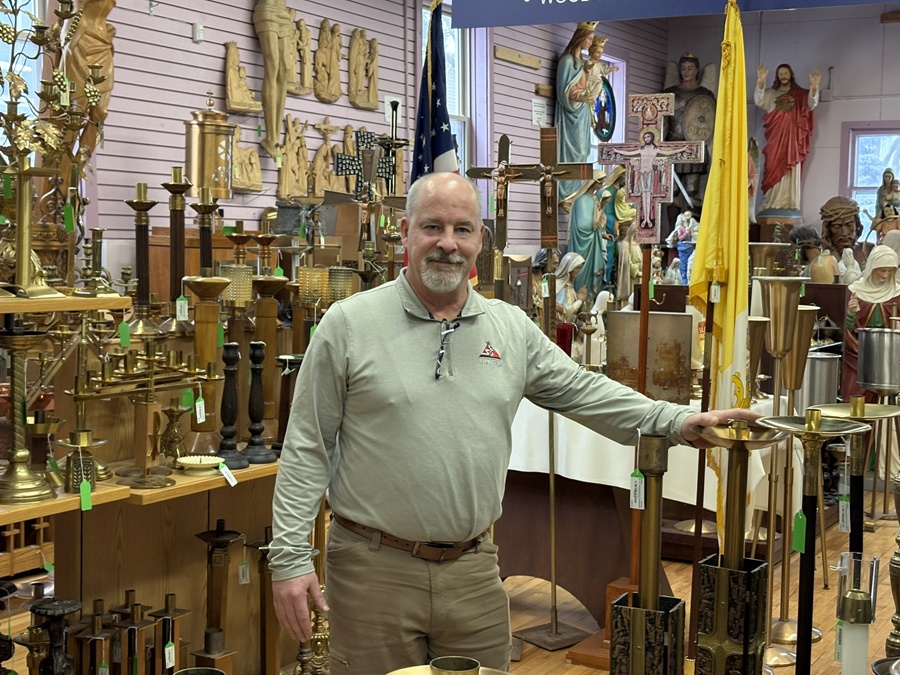
Today, the 115-year-old T.H. Stemper Co. is one of the largest religious goods store in the Midwest. The store in Bay View is brimming with liturgical vestments and accessories, chalices, candlesticks, tabernacles, greeting cards, rosaries, statuary, art, crosses, books, bibles and gifts. Candles and communion wafers comprise a large portion of sales. In addition, the company has a mail-order catalogue and offers restoration and engraving services, as well as consignment sales of used church furnishings.
"I'm trying to maintain the integrity of the business," Jim said. "What's going to help this company survive is the level of service we offer. It's the personal interaction with every customer - whether they are buying a $1 rosary or a $90,000 chalice, they're going to get treated the same way. We will always be a 'talk-to-a-human being' type of company. And if I can't help you, I'll find someone who can, even if it's a competitor. My mantra is service, service, service."
Jim's Luxembourg Ancestors
Matthias Stemper, who was born in 1834 in Wasserbillig, Luxembourg, immigrated to America in 1854 at age 20 and settled in Knellsville, Wisconsin. He married Magdalena Ries (born in Garnich, Luxembourg, in 1838) in Port Washington in 1858. Matthias, who died in Milwaukee in 1909, and Magdalena, who died in Milwaukee in 1927, are buried with other Luxembourgers in Sacred Heart Cemetery in St Francis, Wisconsin.
Eager to Explore Luxembourg
Jim Stemper is eager to travel to Luxembourg to explore his roots and learn more about the country and his roots there.
"I want to get to Luxembourg to learn more about my family and my ancestors - to have that tie to my family's heritage," he said. "I want to find where Matthias Stemper came from. And being a big history buff, I want to walk around and just take it all in."
To learn more about the T.H. Stemper Co., visit https://www.stempers.com/