 Credit: Strassen municipality website
As 2 February approaches, the Luxembourg municipalities of Strassen and Manternach have announced Liichte goen (lantern walk) celebrations, a tradition observed across the country each year on this date.
“Liichtmëssdag” (Candlemas) is known as one of the country’s oldest customs. The tradition dates back to the pre-Christian era and joined the national inventory of intangible cultural heritage in October 2025.
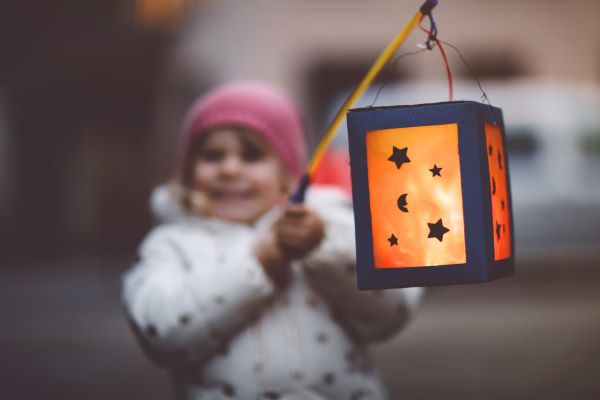
In the early evening, children gather in their local neighbourhoods carrying “liichtebengelcher” (colourful handmade lanterns), small light sticks and bags to collect sweets or coins. They form small groups and walk from house to house, singing traditional songs passed down through generations.
Children sing “Léiwer Härgottsblieschen” during the lantern walk. The song refers to Saint Blaise ("Herrgottsblieschen"), an early Christian bishop and martyr and one of the Fourteen Holy Helpers in Roman Catholicism. His feast day takes place on 3 February, one day after Liichtmëssdag. The lantern procession symbolises Christ as the light of the world, bringing light into darkness.
The tradition usually takes place informally at neighbourhood level, and schools, youth centres or local parent groups often coordinate the walks.
This year, however, two municipalities announced official time frames. Strassen will mark the celebration across various streets from 08:00 to 21:00, while Manternach will hold the event from 16:30 to 20:00. Neither municipality has scheduled a formal programme, as the announcements simply recognise the date and time of the lantern walk.
Those wishing to participate are invited to bring their lanterns and song lyrics and join the lantern walk.
The lyrics of Léiwer Härgottsblieschen appear in Luxemburger Kinderreime by Edmond de la Fontaine, published in 1884. Folk ethnology works from the early nineteenth century also describe this long-established custom.
Song lyrics:
“Léiwer Härgottsblieschen,” (Dear Little Lord’s Flowers,)
“Gitt ons Speck an Ierbessen” (Give us bacon and peas)
“Ee Pond, zwee Pond,” (One pound, two pounds,)
“Dat anert Joer da gitt der gesond,” (Next year you will be healthy,)
“Da gitt der gesond.” (You will be healthy.)
“Loosst déi jonk Leit liewen” (Let the young people live)
“Loosst déi al Leit stierwen,” (Let the old people die,)
“an déi al derniewent” (and the old ones beside them)
“Kommt der net bal,” (If you do not come soon,)
“D'Féiss ginn ons kal.” (Our feet will get cold.)
“Kommt Der net gläich,” (If you do not come right away,)
“Da gi mer op d'Schläich.” (We will sneak off.)
“Kommt der net geschwënn,” (If you do not come quickly,)
“D'Féiss ginn ons dënn.” (Our feet will grow thin.)
“Kommt Der net gewëss,” (If you do not come for sure,)
“Da kritt Der e Schouss voll Nëss.” (You will get a lap full of nuts.)