Water tower in Luxembourg-Gasperich;
Credit: © Jim Clemes Associates
Water tower in Luxembourg-Gasperich;
Credit: © Jim Clemes Associates
Jim Clemes Associates in Esch-sur-Alzette has announced that it is celebrating its 41st ("40+1") anniversary.
The architecture office has been active in Luxembourg for more than four decades. 40 years after its founding, the firm entered a new phase in 2024 when founder Jim Clemes retired and handed over leadership to the next generation, trained within the practice. Today, Caroline Thill, Mathieu Nicol, Lynn Ansay, Mélany Albert and Léopold Cart lead the firm, working with a team of around 70 employees.
According to the firm, this anniversary represents a transition to a new development phase, rather than marking a break. It said that the values of quality, responsibility and sustainability remain central to its work. In parallel, the firm is renewing its approach through increased digitalisation and by becoming more interdisciplinary. The new leadership views architecture as "a dynamic process" involving "constant dialogue between environment, society and technology".
Against the backdrop of growing ecological, resource and social challenges, the firm said it is focusing on "a conscious and resolutely future-oriented design". "For Jim Clemes Associates, architecture is much more than a static discipline. It is transforming, driven by the need to act sustainably and confronted with the reality of increasing densification," the firm said.
This philosophy is reflected in a range of projects, including the "Vëlodukt" cycle bridge linking Belval to the centre of Esch-sur-Alzette, the sports campus in Mersch and school complexes in Bourglinster and Junglinster. According to the firm, the aim is "to go beyond mere form or function", establishing "a dialogue between people, space and the environment".
"Our priority is the use of buildings," said Caroline Thill, architect and managing director. "We consider architecture as a space for communication - between users, buildings and the environment. In hospital architecture, for example, we rely on studies demonstrating that spatial design and materiality can have a measurable impact on recovery."
The firm emphasisd its interdisciplinary approach. "Architecture, interior design and urban planning are closely linked for us. This diversity allows us to develop projects holistically, always keeping in mind the people who will experience them," stated Mathieu Nicol, architect and financial director.
Jim Clemes Associates also highlighted its use of digital tools such as Building Information Modeling (BIM) and computer-aided design. According to Léopold Cart, architect, BIM Manager and director of digital strategy, these tools "go far beyond drawing. They allow us to understand a building as a system - with measurable carbon footprints, life cycle analyses and sustainable design."
Alongside technological developments, the firm said its management team has adopted a more horizontal structure that encourages exchange, creativity and collective thinking.
Urban planning remains another focus area. The firm noted that current challenges require approaches that are "responsible, visionary and grounded in everyday reality". With a multidisciplinary team, the firm develops "a sensitive approach, attentive to context and uses, while relying on a methodical and rigorous foundation".
"We shape towns and villages with sensitivity, ensuring harmonious integration inspired by the site. We combine green spaces, appropriate density, multimodal mobility, high-quality open spaces and integrated infrastructure. We develop special development plans (PAPs) that enhance the site's potential and promote community living and the well-being of every resident and user," explained Mélany Albert, architect and urban planner.
This approach is reflected in projects such as the Mathendahl PAP, a 10-hectare eco-district in Differdange, designed around soft mobility, biodiversity and quality of life.
Architectural heritage also forms part of the firm's portfolio. According to Jim Clemes Associates, "cultural heritage is not a static element of the past, but a living component of urban memory".
"In our restoration projects, we make sure to take into account not only the history of the building but also its original era and context," stated Lynn Ansay, interior architect and director of communications. "A current example is the restoration of Colpach Castle, where we are highlighting both the architecture and the cultural legacy of Émile and Aline Mayrisch. The revitalisation of existing buildings demonstrates that preservation, sustainability and contemporary architecture can go hand in hand."
Founded in 1984 in Esch-sur-Alzette, the firm has evolved from an architecture and interior design studio into a multidisciplinary practice.
Commenting on the leadership transition, Jim Clemes said: "I passed the torch with complete confidence, and I am proud to see how the new team, drawing on its experience and ideas, is shaping the future of the firm. I know that this generation will continue to broaden horizons and redefine what is possible and necessary for architecture in Luxembourg."
Today, Jim Clemes Associates employs around 70 people from diverse cultures and disciplines, working across sectors including health, education, housing, culture, infrastructure, services and heritage.
Notable projects by the firm include the Gasperich water tower, the renovation of the historic ARBED headquarters for Spuerkeess (BCEE), the energy-efficient renovation and extension of Lycée Michel-Rodange, the National Museum of the Resistance and Human Rights in Esch-sur-Alzette and the Belval-Université train station.
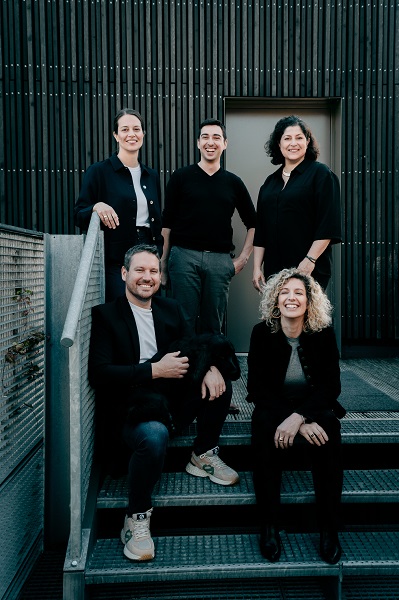
(Photo credit: © Jim Clemes Associates)