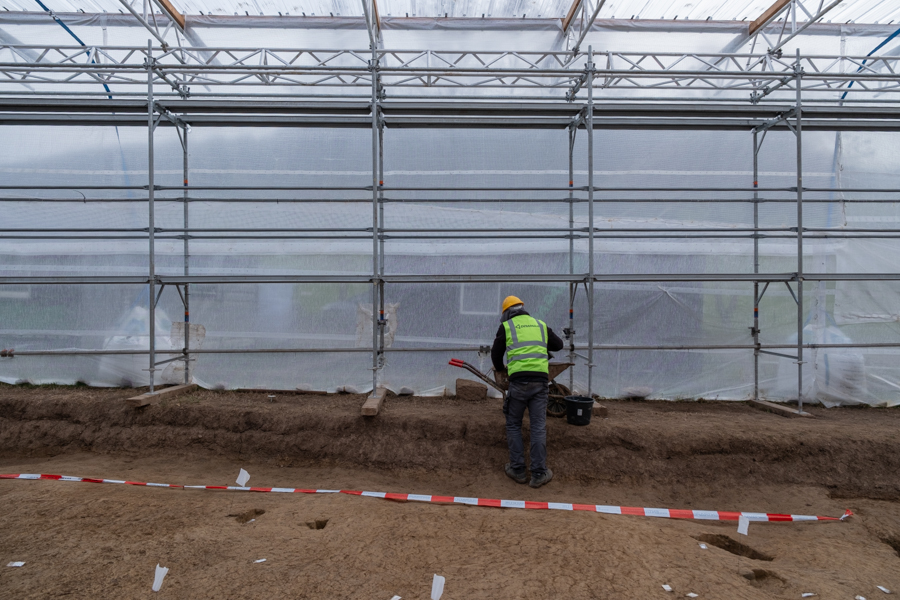
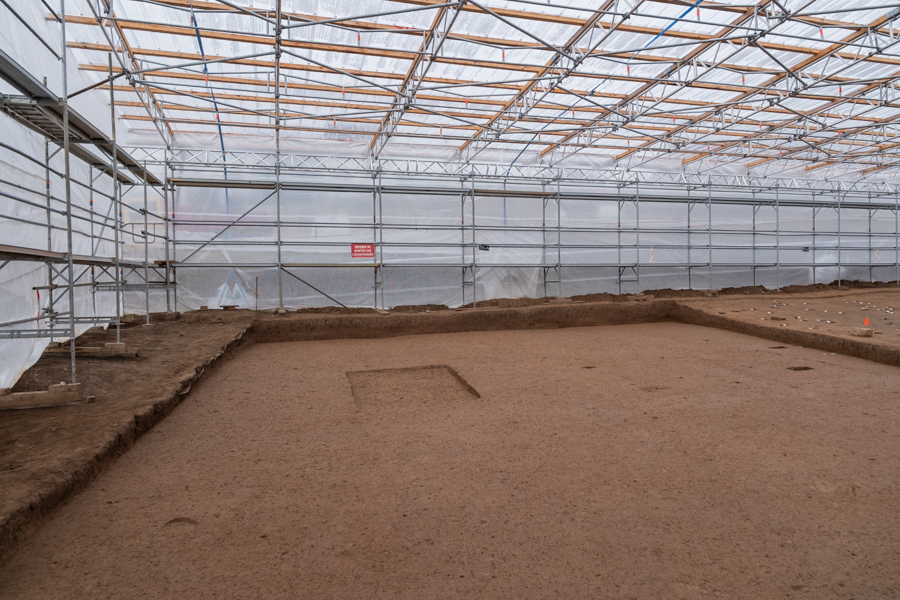
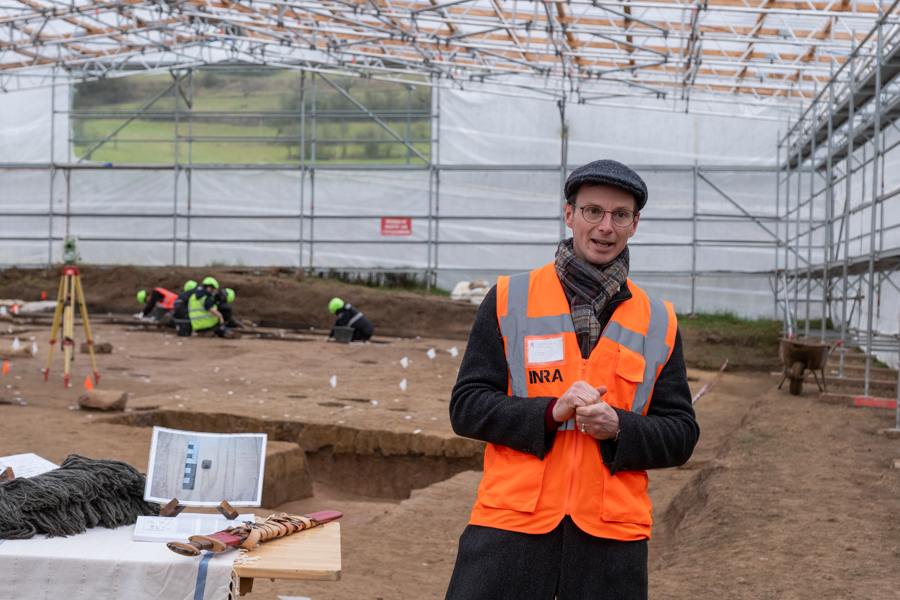
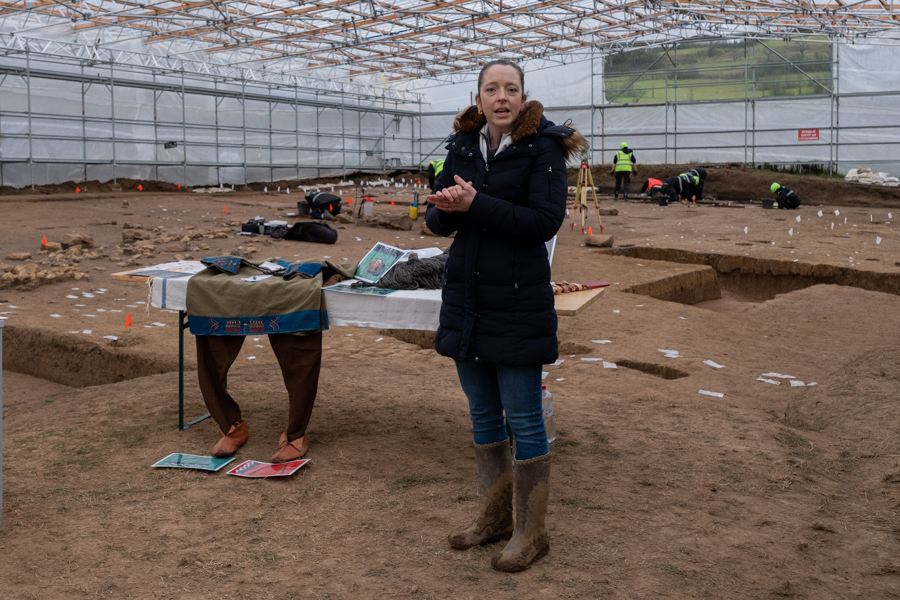
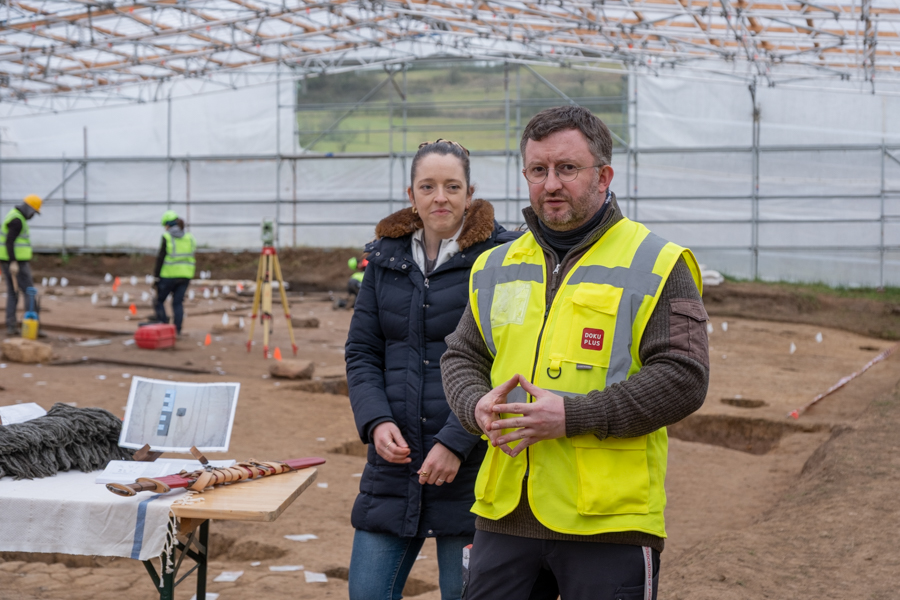
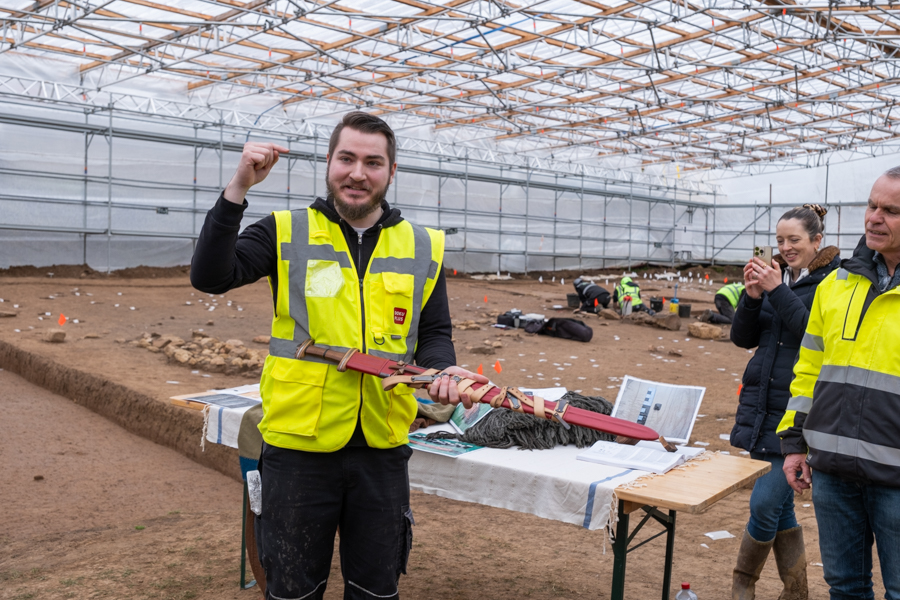
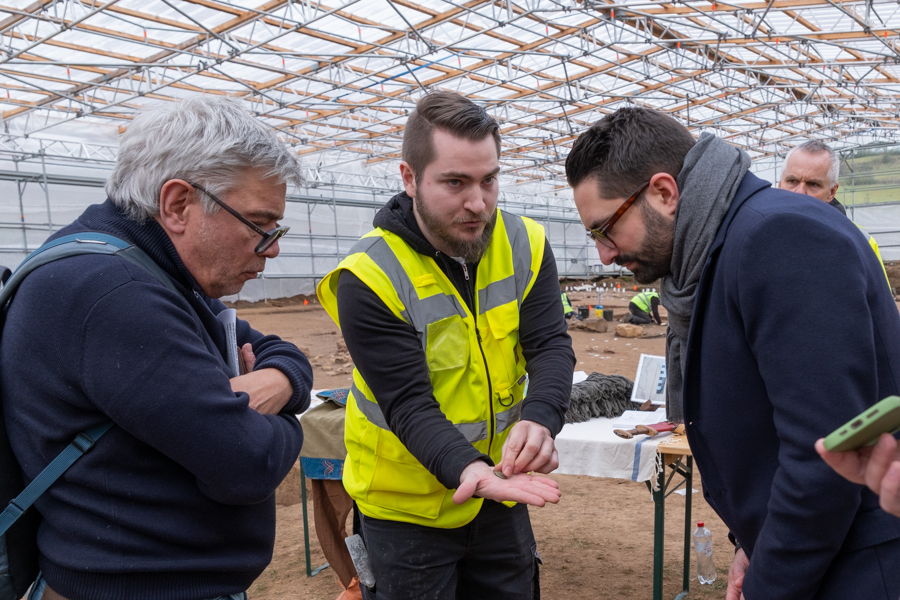
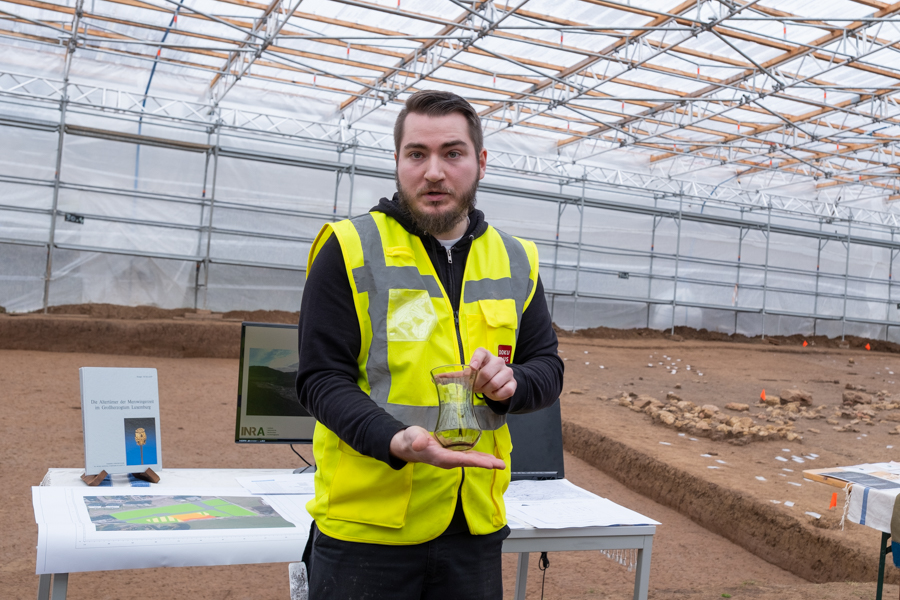
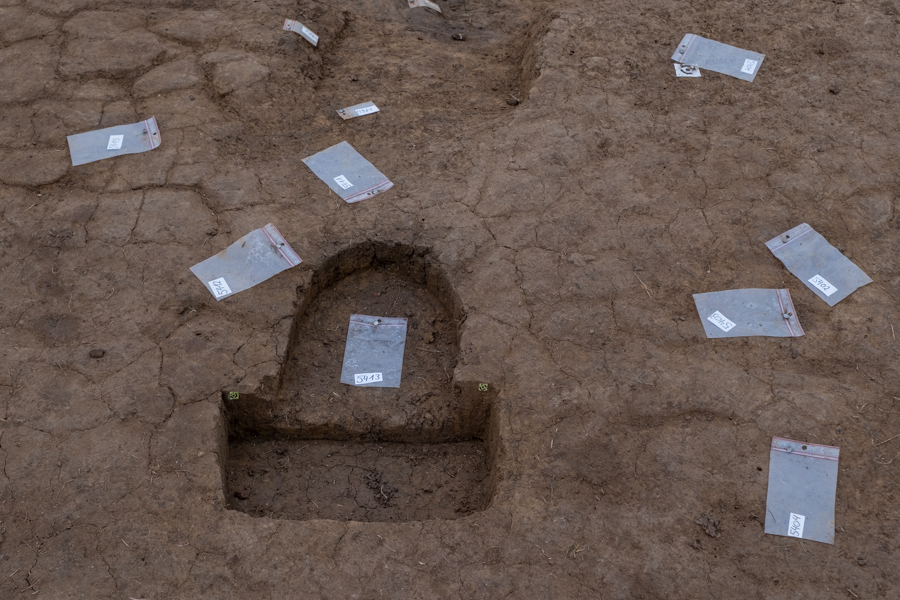
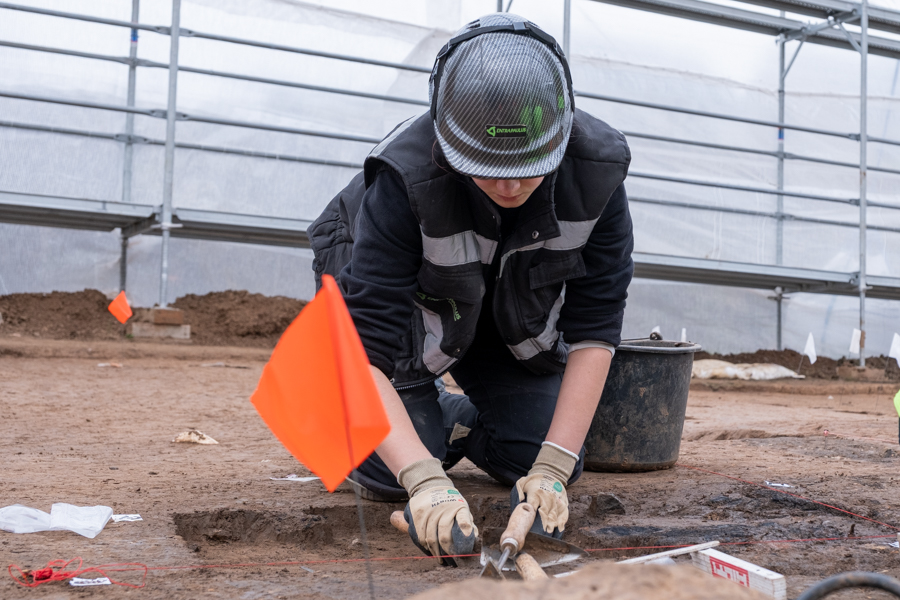
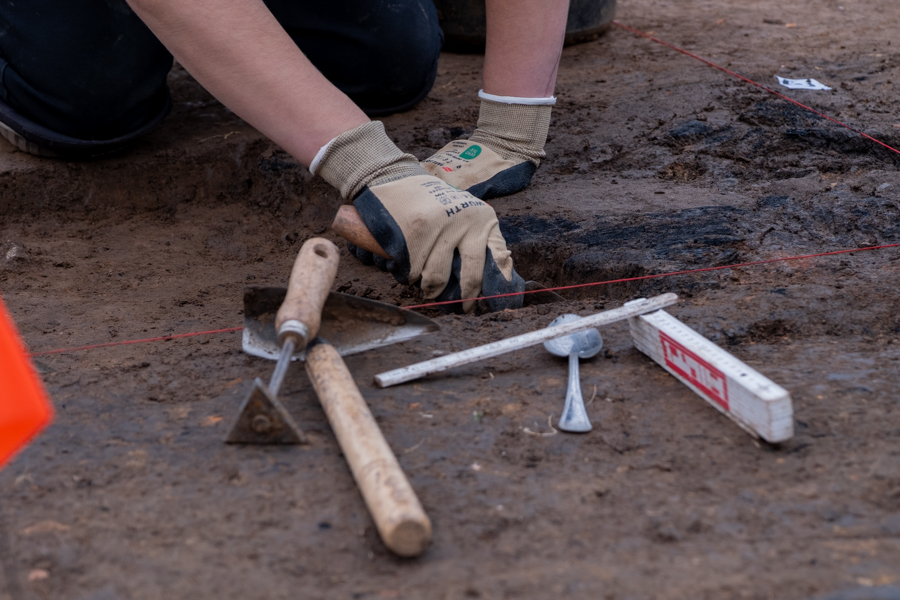
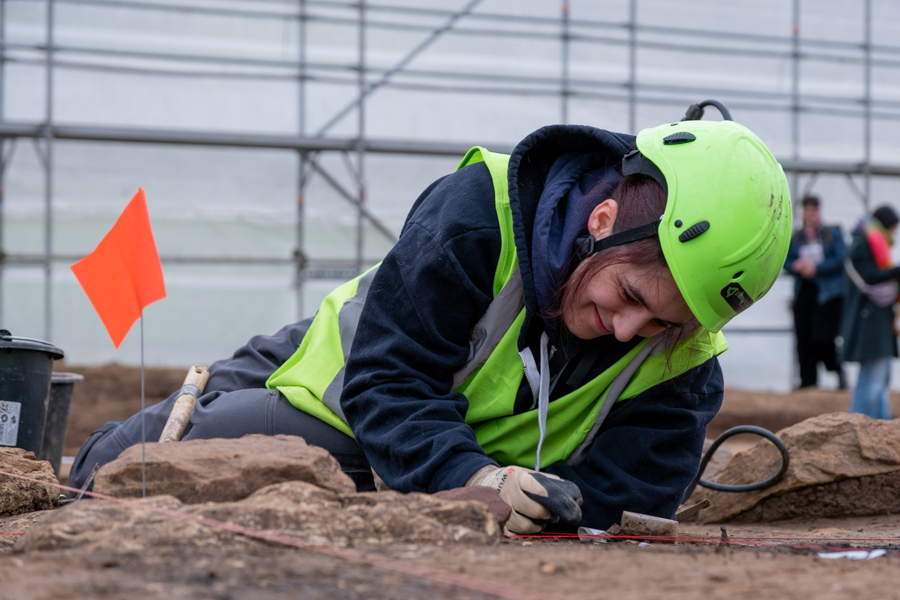
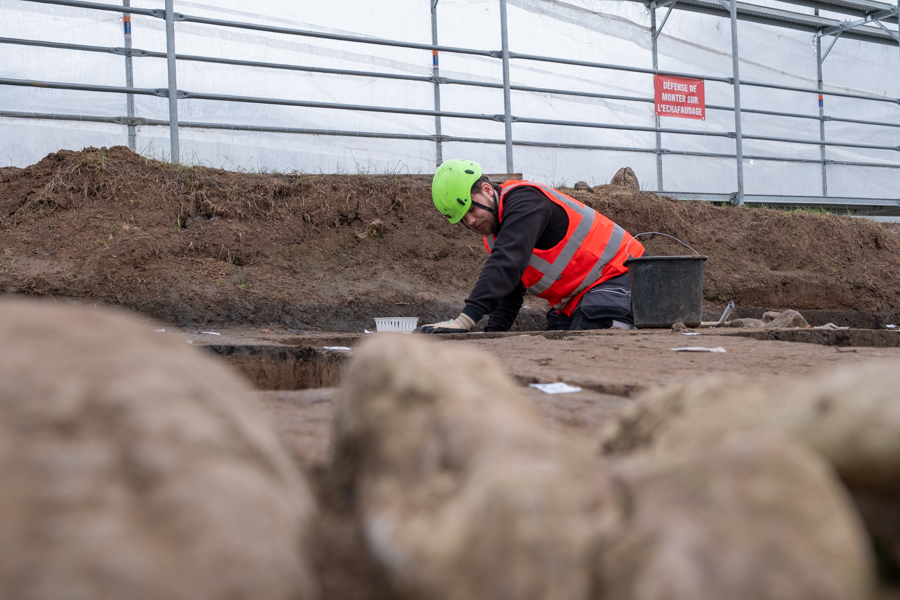
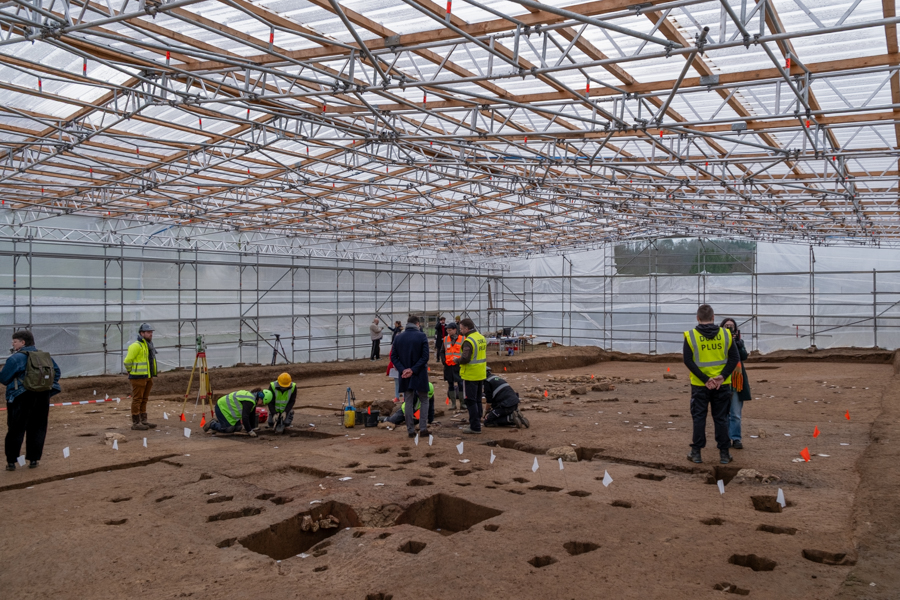
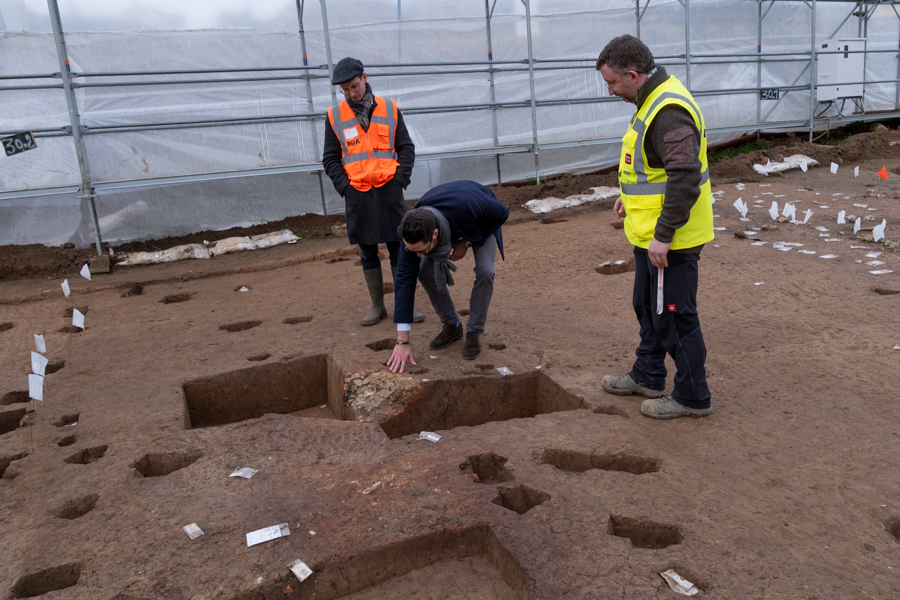
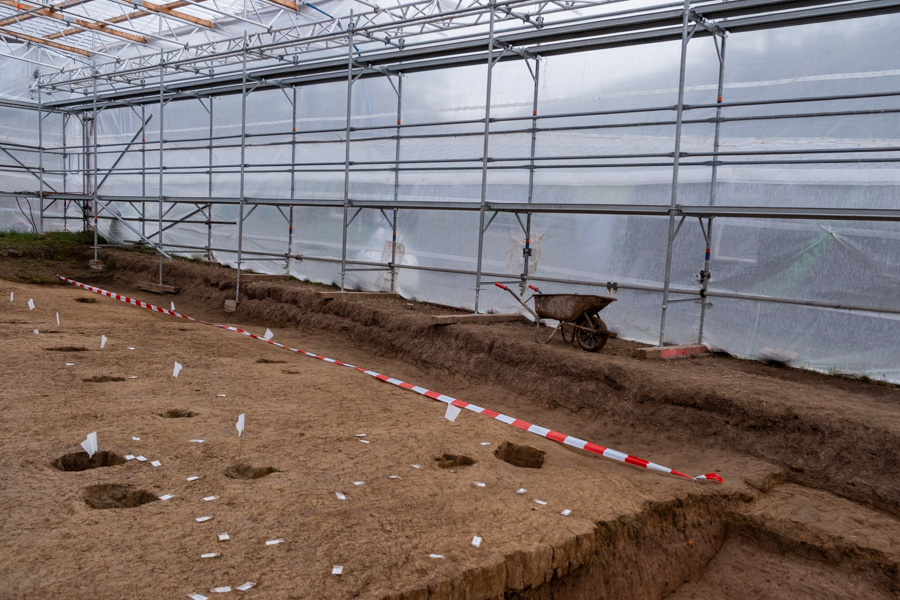
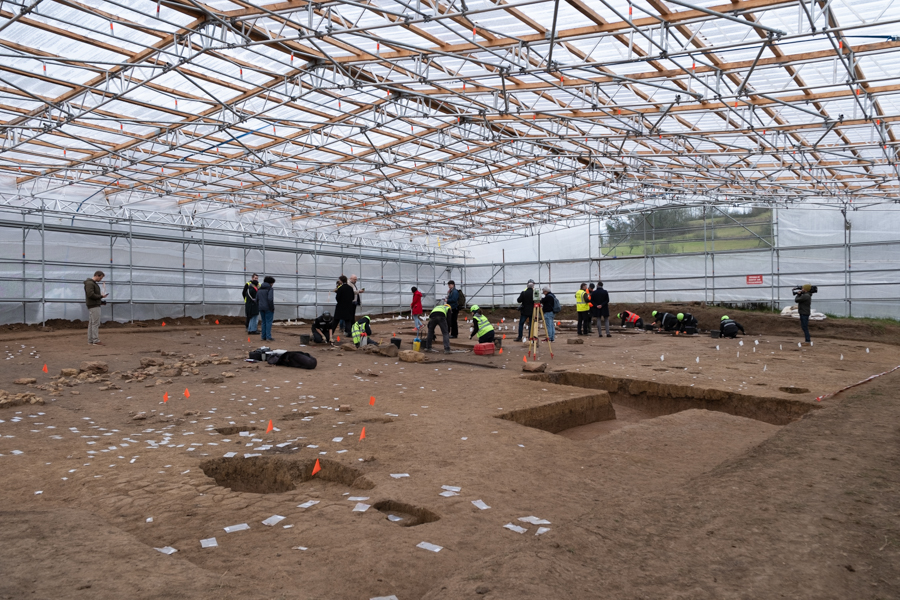
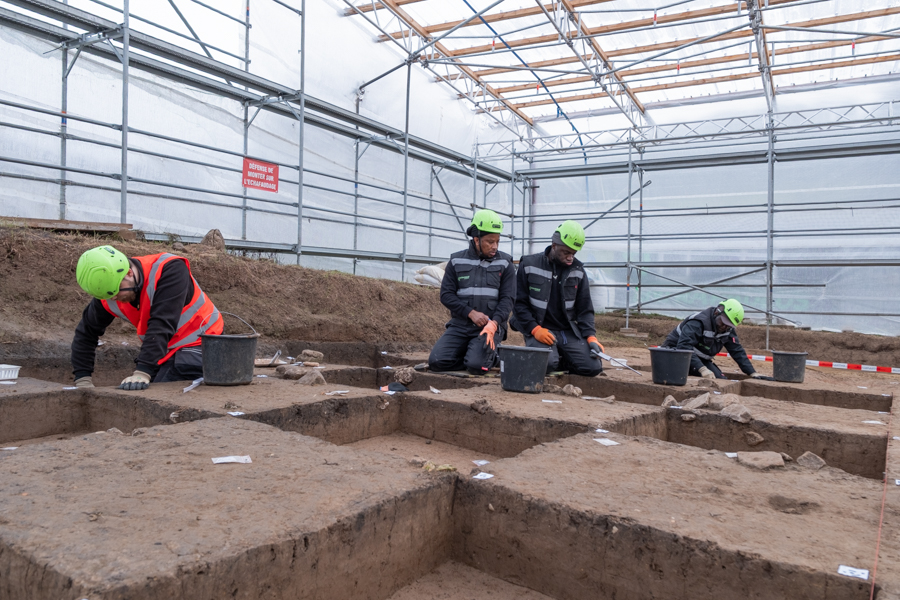
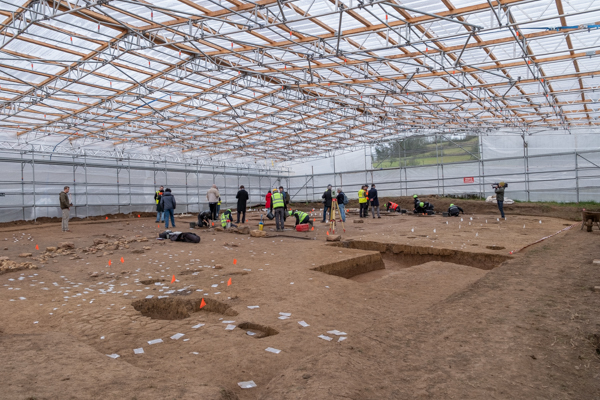
 Archaeological excavation of a Merovingian settlement on Rue Bildchen in Rollingen;
Credit: Ali Sahib, Chronicle.lu
Archaeological excavation of a Merovingian settlement on Rue Bildchen in Rollingen;
Credit: Ali Sahib, Chronicle.lu
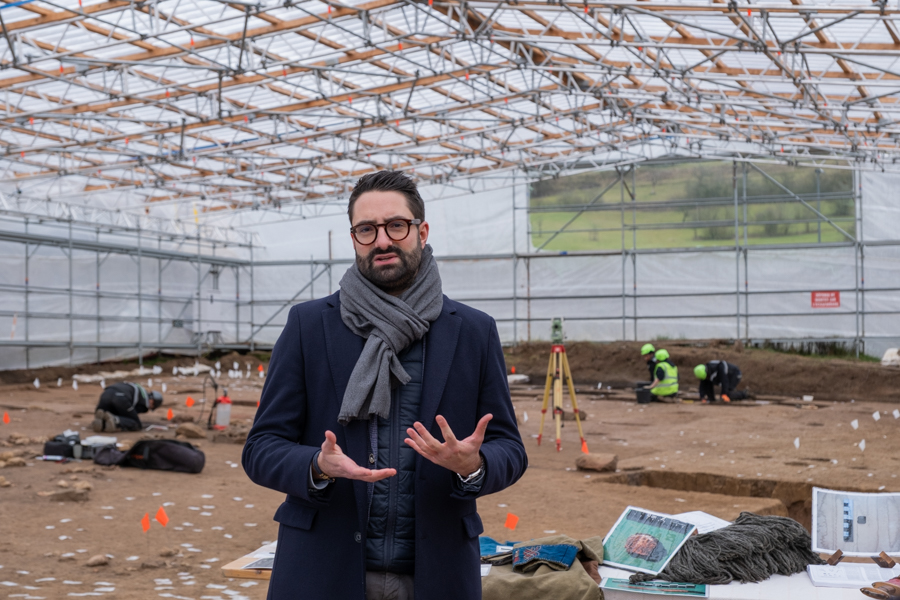
On Wednesday 4 February 2026, members of the press (including Chronicle.lu) joined Luxembourg's Minister for Culture, Eric Thill, and the team from the National Institute for Archaeological Research (INRA) for a visit to the excavation site on Rue Bildchen in Rollingen (Mersch).
According to the authorities, this ongoing archaeological excavation represents a unique scientific opportunity for Luxembourg. Since 2020, INRA has been progressively uncovering a Merovingian settlement of remarkable size and state of preservation - the first in the country to be fully and stratigraphically accessible and systematically documented. Such sites are very rare not only in Luxembourg but also across the Greater Region and Europe; knowledge of this period is most often based on partial remains, isolated structures or funerary contexts.
Addressing the press, Minister Thill and INRA Director David Weis explained that the site is a clear example of Luxembourg's 2022 cultural heritage law in action, particularly in the field of preventive archaeology (for more on this, see https://www.chronicle.lu/category/history-archaeology/56138-archaeology-in-luxembourg-legal-situation). Without this legal framework, this unique site would most likely have never been discovered. The excavation is the direct result of preventive archaeology carried out prior to a housing development project.
Cynthia Colling, Head of INRA's Merovingian Archaeology Department, elaborated on the importance of the Rollingen site, which allows, for the first time, observation of a Merovingian settlement in all its aspects, including the distribution of buildings, activity areas, occupation patterns and the site's long-term development. While Merovingian presence in Luxembourg has long been known, she stressed that this is the first time such a complete and well-preserved settlement has been identified in the country.
As Cynthia Colling noted, archaeological knowledge of the Merovingians has traditionally been shaped by funerary evidence rather than everyday life. "We know where the Merovingians died, but not where they lived," she said. The Rollingen site helps to correct this imbalance. Among the discoveries are areas linked to craft production and textile-related activities, as well as small objects such as glass beads.
About a dozen workers were present on-site during the press visit, roughly half of whom were actively excavating. According to Cynthia Colling, the team includes two INRA archaeologists responsible for scientific work, supported by two to three additional archaeologists and other qualified workers from external companies such as Doku Plus and Entrapaulus.
The team also presented a selection of finds to the minister and the press, including replicas and small original objects recovered from the site. These everyday items provide insight into daily life during the Merovingian period.
The Merovingians: A Foundational Period in European History
According to INRA, the Merovingians were the first Frankish dynasty to rule over large parts of Western Europe between the 5th and 8th centuries. This period marks a pivotal transition in Europe from Late Antiquity to the Middle Ages, characterised by political, social and economic change following the fall of the Western Roman Empire.
The period saw the emergence of new territorial powers, the permanent settlement of Frankish populations and the gradual transformation of the rural landscape. Villages, agricultural and artisanal production networks, as well as the forms of housing and social structures developed during this time, laid the foundations of medieval Europe.
In Luxembourg, the presence of the Merovingians is well documented, primarily through necropolises revealing particularly rich funerary practices unique to this era. These burial sites, often well preserved, contain graves arranged in structured groups, with the deceased sometimes accompanied by jewellery, weapons, ornaments and everyday objects. Such grave goods reflect social status, gender, age and belief systems, as well as high-quality craftsmanship, particularly in metalwork. From the 6th century onwards, a gradual reduction in grave goods can be observed, linked to the increasing Christianisation of communities.
While these necropolises have provided valuable insight into Merovingian rites, social hierarchies and value systems, they have long offered an unbalanced view of this society, centred on death rather than daily life. Settlement remains - villages, farms and production areas - have largely remained unknown until now.
The Rollingen Site: An Exceptional Discovery
The excavation on Rue Bildchen in Rollingen offers an unprecedented scientific opportunity to understand the spatial, economic and social organisation of a complete Merovingian village.
According to INRA, the excavation is currently in a crucial phase. Work focusing on the heart of the settlement area has revealed several successive phases of occupation, likely extending into the Carolingian period.
Recent radiocarbon (C14) dating of charcoal samples taken from different structures at the site has made it possible to precisely situate the site's occupation within a long and continuous chronology, spanning from Late Antiquity to the Early Middle Ages. The calibrated intervals cover a period between the second half of the 3rd century and the third quarter of the 7th century. Most dates are concentrated between the 4th and 6th centuries, corresponding to the Early Merovingian period, while more recent dating indicates continued use until the second half of the 7th century, during the Late Merovingian period that preceded the arrival of the Carolingians.
These results demonstrate continuity of the settlement up to the Carolingian era, challenging the notion of a sharp break between the Roman period and the early medieval world. As David Weis noted, the evidence points to gradual transformation rather than abrupt collapse (the "Fall of Rome"), even if practices and preferences changed over time. This gives the Rollingen site exceptional scientific importance, documenting the evolution of a rural settlement over nearly four centuries in a single location.
Preventive Archaeology
As is the case with most sites uncovered through preventive archaeology, preserving the remains in situ is not feasible. The structures unearthed consist largely of negative traces (pits, postholes and floor levels), which cannot be stabilised or displayed permanently without extensive and disproportionate intervention. In addition, the site lies within an active development zone, making any material preservation impossible.
Long-term preservation therefore relies on comprehensive scientific documentation, conservation of artefacts, publication of research results and public dissemination. Through reports, studies, scientific publications and public outreach, the Rollingen site is already establishing itself as a major reference for understanding Merovingian settlements in Western Europe, according to INRA.
The next steps include completing the precise documentation of all the structures uncovered and continuing scientific analyses to refine the chronological sequence, including in-depth studies of the artefacts and environmental analyses. The ultimate objective is to produce comprehensive documentation and a definitive interpretation for the Merovingian period in Luxembourg.
In his earlier remarks, Minister Thill reiterated that "archaeology is one of the essential keys to understanding our past and our identity." He emphasised that this discovery demonstrates the central role of preventive archaeology, which makes it possible to reconcile territorial development with the preservation of cultural heritage. The government has further strengthened its commitment by fully covering the costs associated with preventive excavations, in order to support municipalities, citizens and the research community. "Rollingen demonstrates that every construction site can become an opportunity for knowledge. By protecting, studying and sharing this heritage, we are investing in collective memory and the country's cultural future," the minister added.