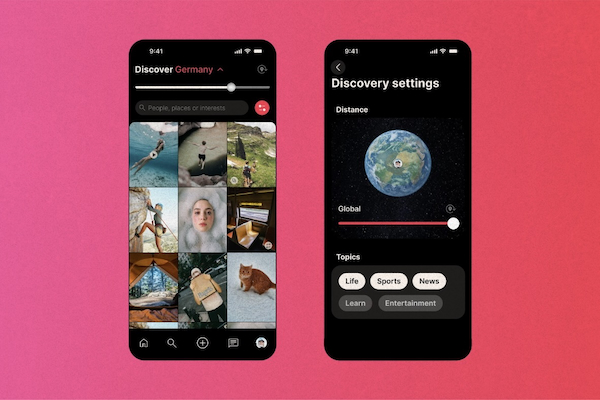
 Credit: Monnett
On Tuesday 1 September 2026, Luxembourg-built social media platform Monnett announced it had now passed 100,000 registered users for the beta version of its platform, which is designed to focus on “real relationships rather than endless content consumption”.
According to Monnett, during the summer it also recorded a new high of more than 43,000 weekly active users, while weekly activity averaged above 30,000 people. The company said these milestones come as it prepares to move beyond its initial beta implementation with the launch of the first full version of Monnett in October 2026. The company also announced it plans to introduce a subscription membership model of its services.
“Passing 100,000 registrations is an important milestone, but the number I care about even more is the number of people actually coming back,” said Christos Floros, founder of Monnett. “Seeing more than 30,000 people active in a normal week, and more than 43,000 at our peak, tells us there is a genuine appetite for a different kind of social network.”
Monnett reported that Germany is currently its largest market, with more than 35,000 registered users, while Luxembourg has become the platform’s strongest market in terms of penetration. The company plans to concentrate much of its rollout and community-building efforts on Luxembourg, Belgium and the Netherlands through the end of 2026, while continuing to grow its wider European community.
Monnett positions itself as an intentional social network, providing a platform designed primarily for people to share their lives, stay connected with friends and discover the people and world around them - rather than spend hours passively consuming an endless stream of recommended media. The company said it believes that changing the economics of social media is an essential part of changing the product itself.
From October 2026, Monnett plans to begin introducing paid memberships and subscriptions as its core business model, with the aim of reducing its dependence on the advertising economics that have traditionally rewarded social platforms for maximising attention and time spent on-screen.
“The fundamental problem with the attention economy is that the user and the platform ultimately want different things,” said Christos Floros. “If your revenue increases every time somebody watches another video, sees another advertisement or scrolls for another ten minutes, you have a financial incentive to keep them there.”
He added: “We want to build the opposite. Our ambition is not for people to spend their entire evening on Monnett. We want them to open it, see their friends, share something from their day, discover something or someone interesting, make a plan — and then go and live their life.”
Monnett said the October release will represent the most significant product milestone for the company so far and the beginning of its transition from an experimental beta into a commercial social platform. It plans to reveal further details about its memberships, new product features and Benelux rollout ahead of the launch.
Monnett also revealed plans to begin preparing its next fundraising round over the coming twelve months, with the objective of building its team, accelerating product development and competing for users with a rapidly emerging generation of social startups in both Europe and the United States.