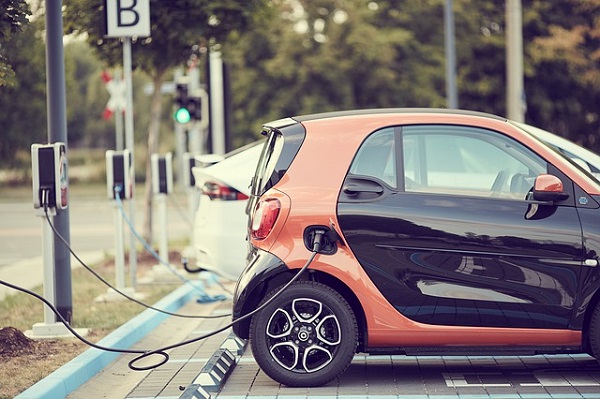
 Credit: Pixabay
The Fondation IDEA Asbl, the Luxembourg Chamber of Commerce’s think tank, has warned that Luxembourg is unlikely to meet its target of 49% electric and plug-in hybrid vehicles by 2030, as set out in the National Energy and Climate Plan.
At a recent conference-debate held at the Luxembourg Chamber of Commerce, IDEA economist Frédéric Meys, Member of Parliament François Bausch (déi Gréng) and Gerry Wagner, spokesperson for the House of Automobile (HOA), examined the current state of electromobility in Luxembourg. Based on current trends, electric and plug-in hybrid vehicles are projected to account for only 17% to 20% of the national fleet by 2030.
While Luxembourg ranks among the leading European countries in terms of electric vehicle uptake, reportedly holding the third-largest electric vehicle fleet in Europe after Denmark and Sweden, the pace of growth remains insufficient to meet national targets.
Commonly cited obstacles such as range concerns, higher purchase costs and uncertainty regarding resale value were addressed during the debate. François Bausch stated: “Talking about concerns about range is an excuse today. Those who drive electric cars no longer talk about it; it’s no longer an issue because their daily journeys are covered.” Gerry Wagner referred to a recent HOA study, noting that “97% of people who lease electric cars do not want to go back to combustion engines.”
Frédéric Meys also presented findings from IDEA working paper No. 34, which analysed fifteen comparable pairs of electric and combustion engine vehicles under both purchase and leasing scenarios. Taking into account purchase costs, energy, maintenance, insurance, taxation and subsidies, electric vehicles were found to be financially advantageous in most cases when subsidies are included. Meys said: “The gain remains small, around €1,255 over six years, but the price argument is no longer valid today. At least not with subsidies. Without subsidies, the same exercise reverses the situation.”
The study also examined the cost of public support measures. According to IDEA’s calculations, avoiding one tonne of CO₂ through current incentives costs the state between €533 and €1,252, compared to approximately €50 to €60 per tonne on the EU Emissions Trading System market.
Participants also discussed potential measures to accelerate electrification, including investment in charging infrastructure, the introduction of social leasing schemes, adjustments to taxation and the creation of low-emission zones. The foundation presented a series of recommendations aimed at closing the gap between current trends and the 2030 objective.