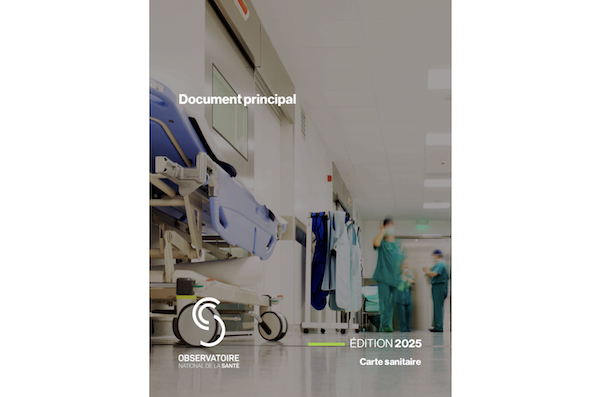
On Tuesday 30 June 2026, Luxembourg's National Health Observatory (ObSanté) reported that hospital capacity will increase from 2026, while waiting times for MRI scans and mammograms have shortened despite growing demand.
The figures are included in the 2025 edition of the Health Map (Carte sanitaire), which provides a detailed overview of Luxembourg's hospital sector, including infrastructure, staffing, hospital activity and medical imaging. According to ObSanté, the report is intended to support hospital planning, ensure transparency in healthcare provision and meet international reporting obligations.
The report indicated that Luxembourg had ten hospitals in 2025, including four hospital centres operating across eleven sites (including two outpatient sites) and six specialised hospitals, as well as a hospice, a thermal spa establishment and a diagnostic centre.
Hospital capacity totalled 2,686 beds, including 2,058 acute care beds, representing 96.6% of the authorised capacity in 2024. This corresponded to 3.9 hospital beds per 1,000 inhabitants, including 3.0 acute care beds per 1,000 inhabitants. Day hospitalisation continued to expand, with 631 day-care beds installed in 2025.
All nationally planned medical equipment required under the amended 2018 hospital law had been installed by 1 July 2025, with the exception of one bone densitometer. Luxembourg had thirteen CT scanners, thirteen MRI scanners, eight gamma cameras, eight mammography units and two PET scanners.
The report also noted that legislative amendments adopted in December 2025 increased authorised hospital capacity from 2026. The maximum number of authorised beds rose to 3,545, including 2,545 acute care beds. As of 1 January 2026, 2,813 hospital beds and 759 day hospitalisation beds were authorised.
Between 2014 and 2025, the number of hospital doctors increased by 43.7%, from 1,047 to 1,505, while the hospital workforce grew by 24.9%, from 8,438 to 10,413 employees.
In 2023, Luxembourg's hospital centres recorded 151,617 hospital stays, corresponding to 633,612 inpatient days and an average bed occupancy rate of 76.3%. Day hospitalisation accounted for 48.4% of all stays, while the ambulatory surgery rate for tracer procedures increased from 68.5% in 2019 to 75.8% in 2023. The average length of stay for overnight admissions remained stable at 7.2 days.
The report further noted Luxembourg's cross-border healthcare role. Non-resident insured patients accounted for 10.4% of all hospital stays in 2023 and 17.4% of maternity deliveries in 2024. In 2024, emergency departments recorded 268,683 visits, an average of 734 patients per day.
Medical imaging activity also increased. Between 2023 and 2025, the number of mammograms performed rose by 14.2%, while outpatient MRI examinations increased by 38.9%. Despite higher demand, waiting times for both examinations fell following the introduction of additional equipment and extended operating hours.
The full report (in French) is available on the National Health Observatory's website.