 Credit: Pixabay
On Tuesday 21 April 2026, Luxembourg’s Minister of Mobility and Public Works Yuriko Backes took part in an informal videoconference meeting of the European Union (EU) transport ministers, organised by the Cypriot presidency and the European Commission.
Luxembourg’s ministry of Mobility and Public Works stated that, in light of the situation in the Middle East and its impact on transport and energy, discussions focused on how the current crisis affects all modes of transport at national level, highlighting pressures on operations and costs across the EU.
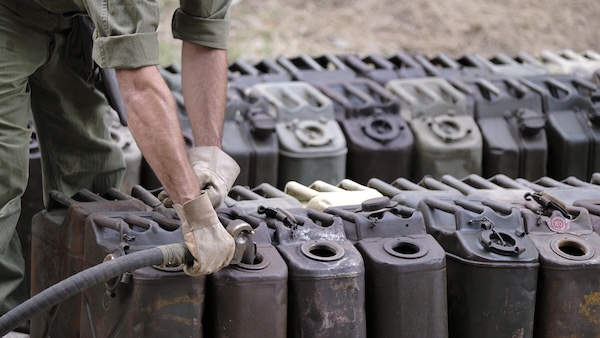
The exchanges also underlined the central role of strengthened coordination at EU level to ensure a coherent approach, avoid fragmented responses and guarantee effective and coordinated management of the effects of the crisis on the transport sector, said the ministry. Participants also identified priority measures to consider at European level to mitigate these impacts, in particular regarding fuel supply, and to strengthen the long-term resilience of the European transport system.
“Luxembourg fully supports the coordination and monitoring role of the European Union, which is essential to ensure a reliable and fair fuel supply across all Member States. This coordinated action aims, on the one hand, to ensure the continuity of transport and the resilience of the European aviation sector in a complex international context and, on the other hand, to strengthen energy security and reduce dependence on imported fossil fuels. Through this commitment, Luxembourg reaffirms its ambition to act in a responsible, supportive and constructive manner for the benefit of citizens and businesses,” said Minister Backes.
She also noted that the airport serves as a regional hub for passenger flights and as a major air freight centre in Europe, with its fuel supply largely dependent on the NATO pipeline system (CEPS - Central European Pipeline System), connected to the ARA ports of Antwerp, Rotterdam and Amsterdam. “At this stage, nothing indicates the existence of structural fuel shortages. However, we are closely monitoring developments, particularly regarding kerosene, given the European Union’s strong dependence on imports,” she stated.
According to the ministry, the supply of Luxembourg Airport is closely monitored by an interministerial coordination group, in consultation with national sector stakeholders and in close cooperation with European partners. This coordination aims to anticipate any developments and, if necessary, adopt targeted and proportionate measures.
Reportedly, Minister Backes also reiterated Luxembourg’s commitment to the energy transition, noting that Luxembourg and Germany organised a €2 billion bilateral auction for electronic sustainable aviation fuels (eSAF) under the eSAF Early Movers coalition, while highlighting that electrification and hydrogen remain key long-term solutions and that alternative sustainable fuels are encouraged in the short and medium term as practical options that can be deployed using existing infrastructure.