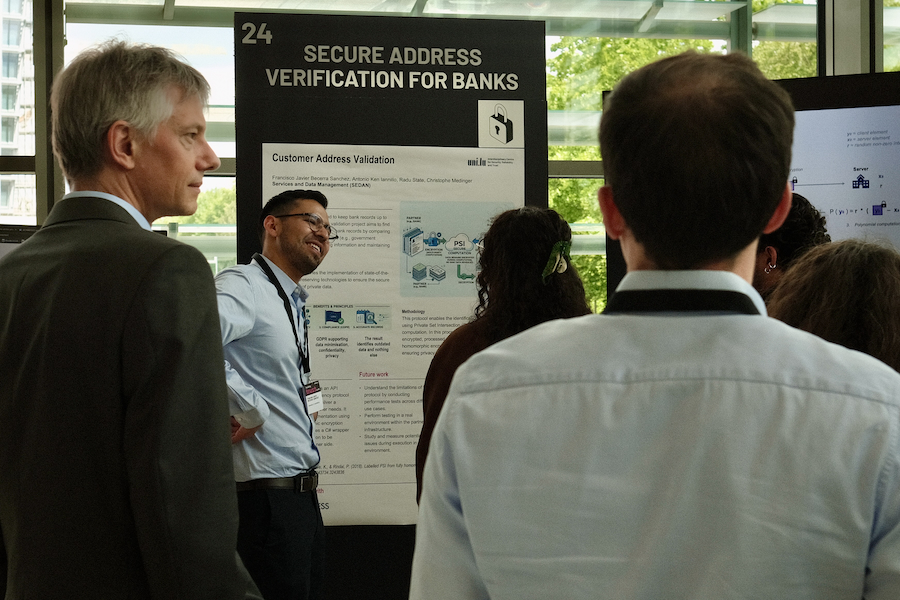
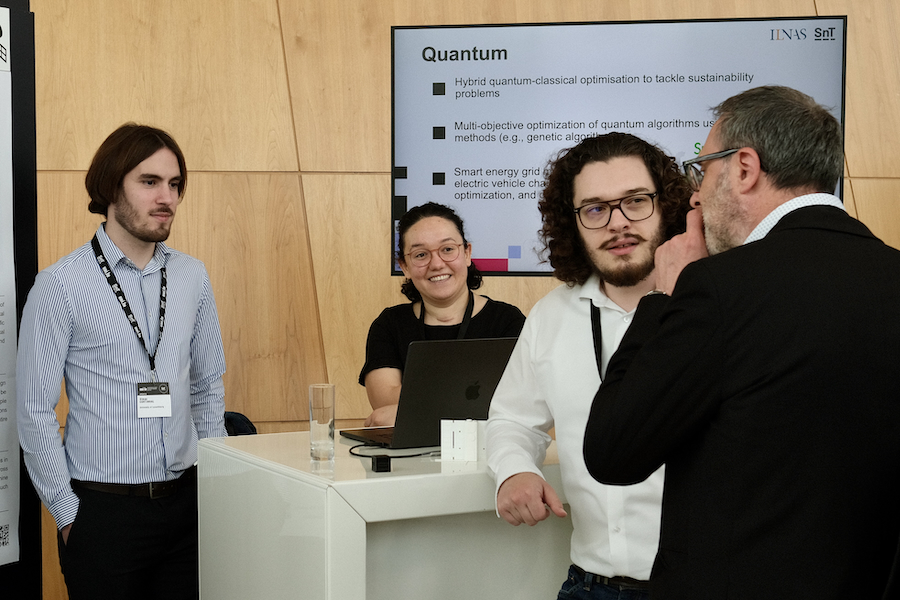
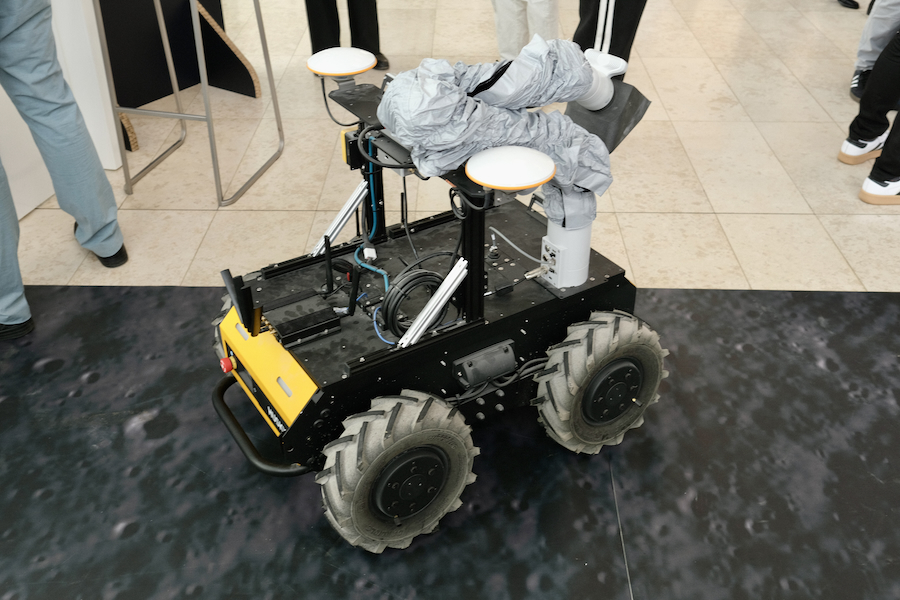
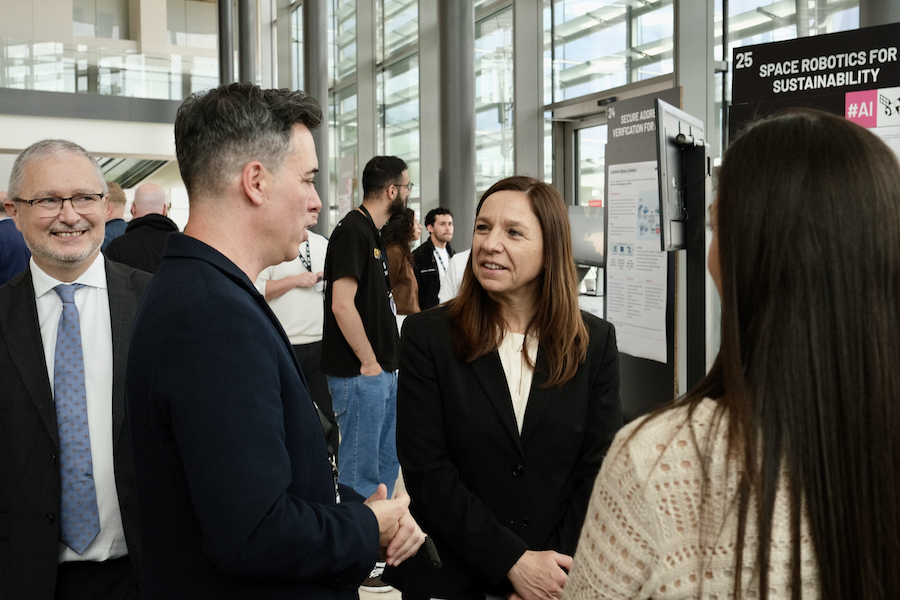
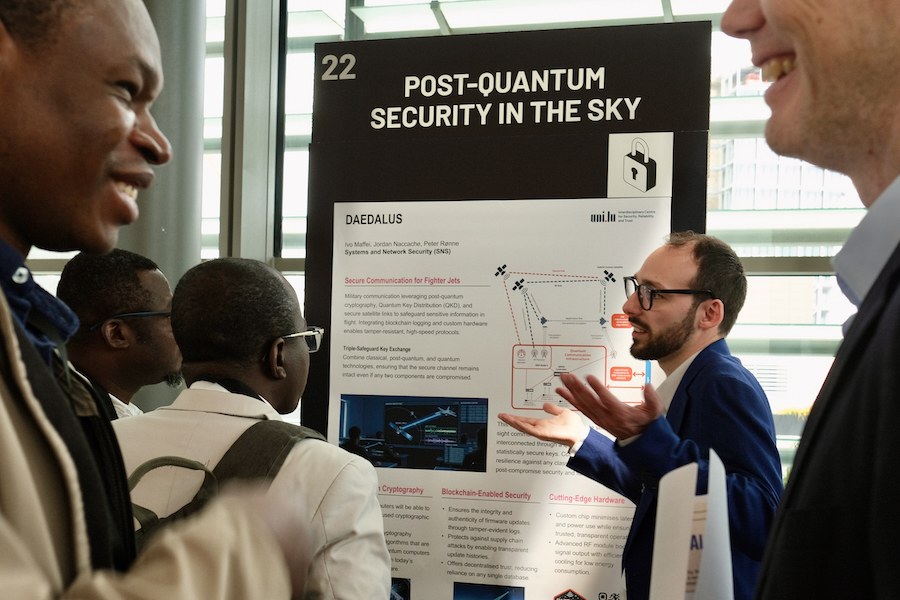
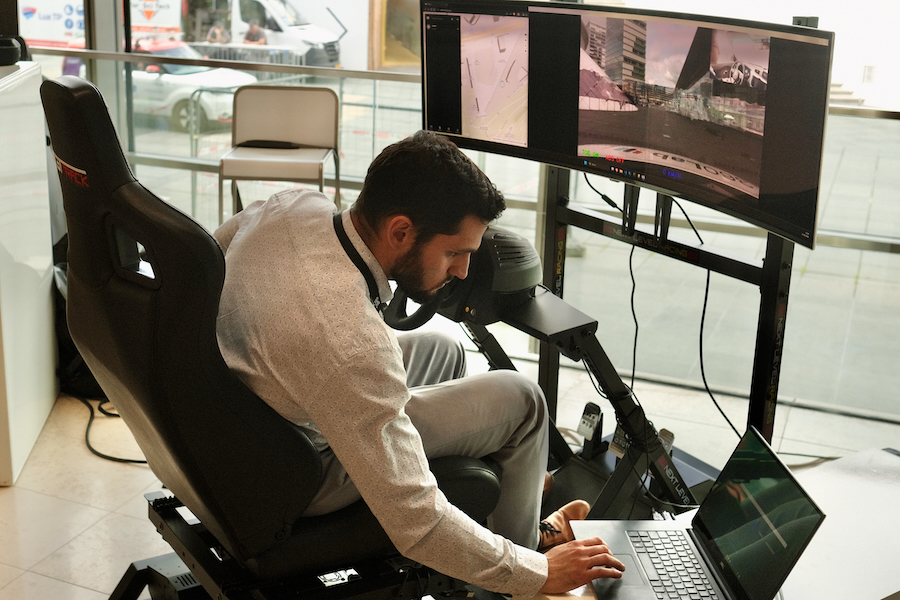
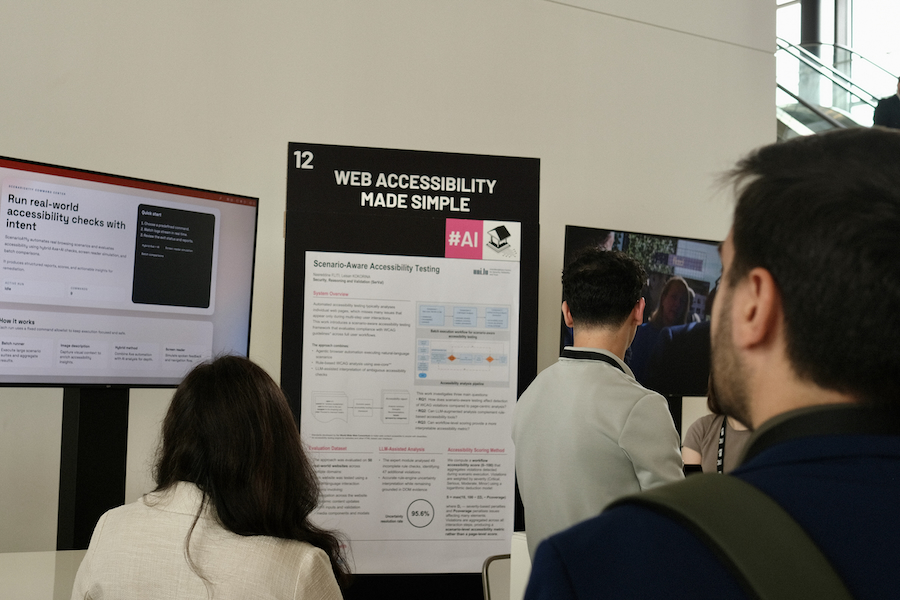
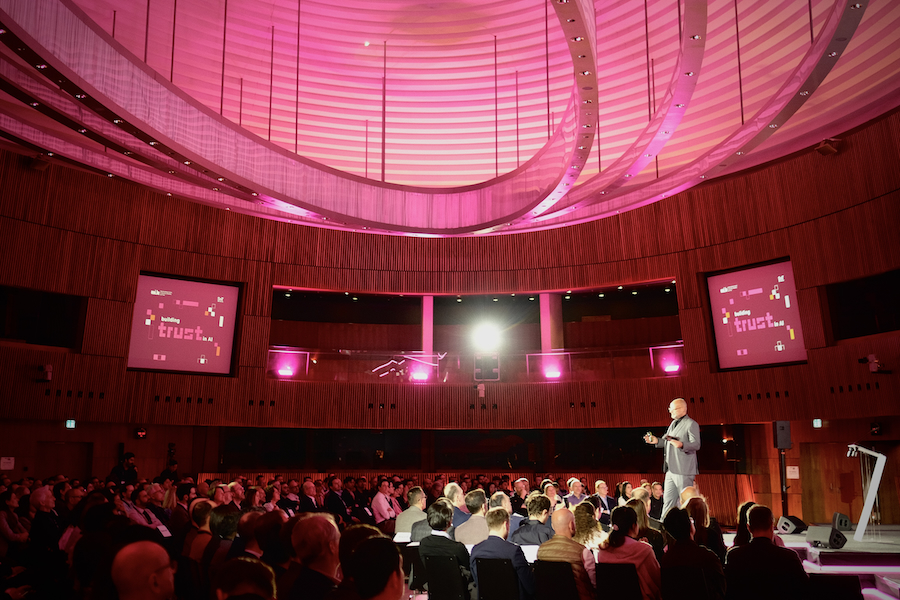
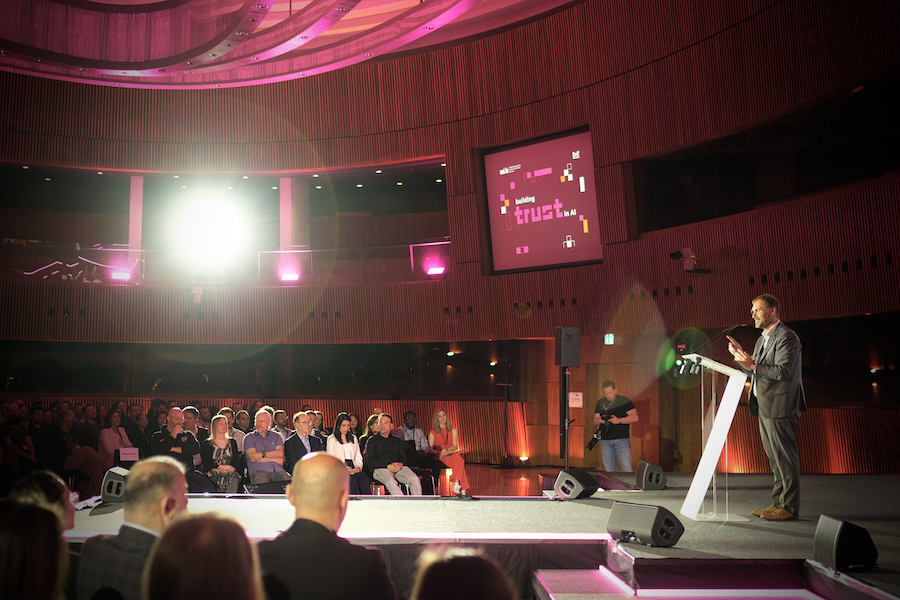
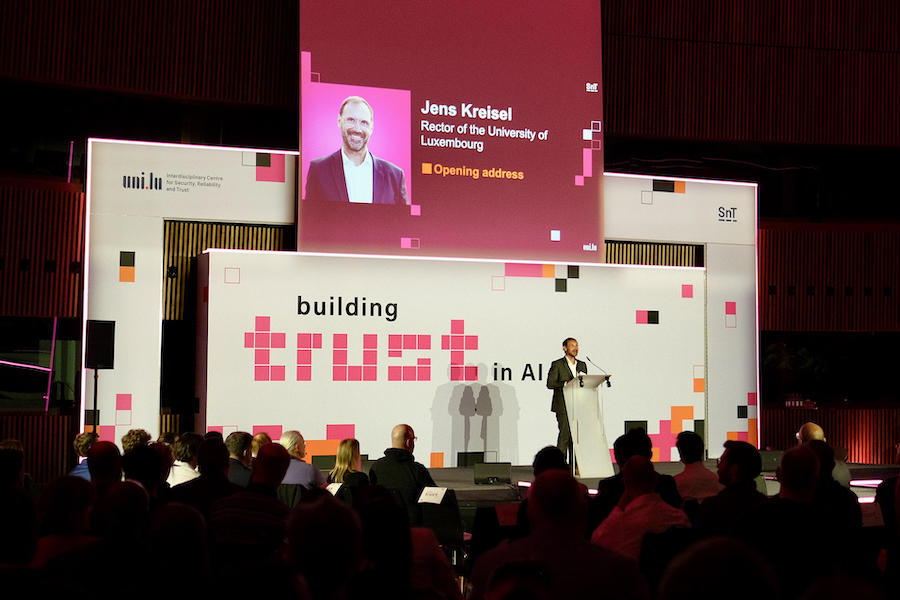
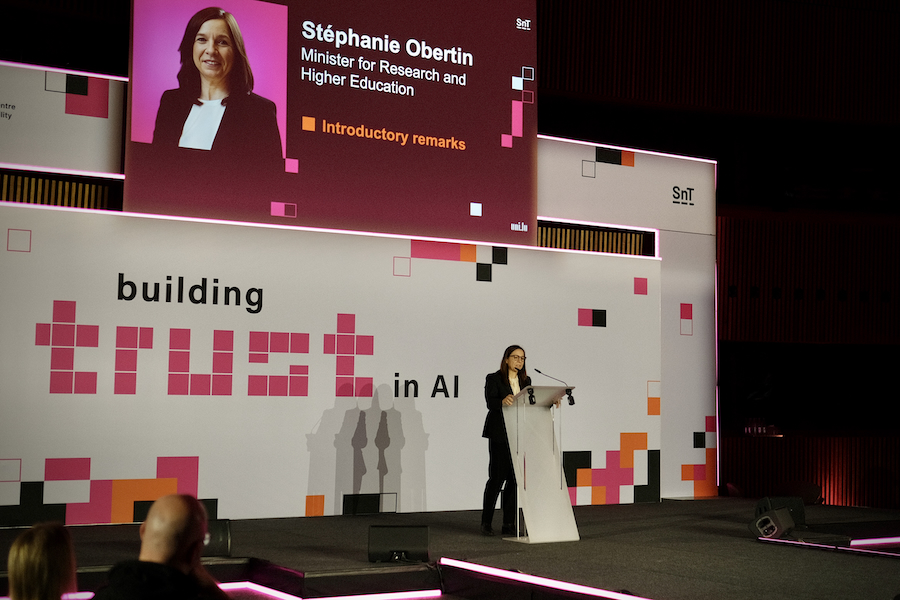
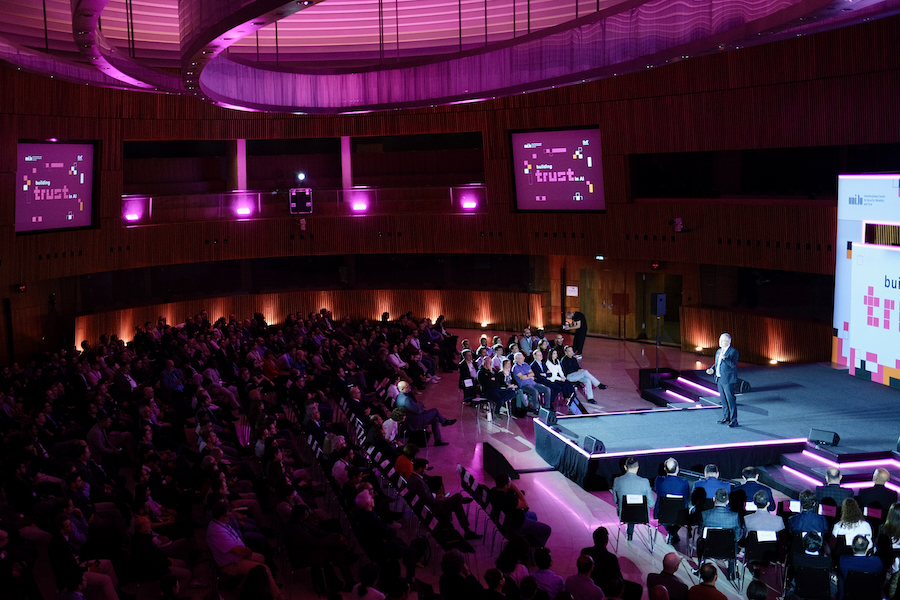
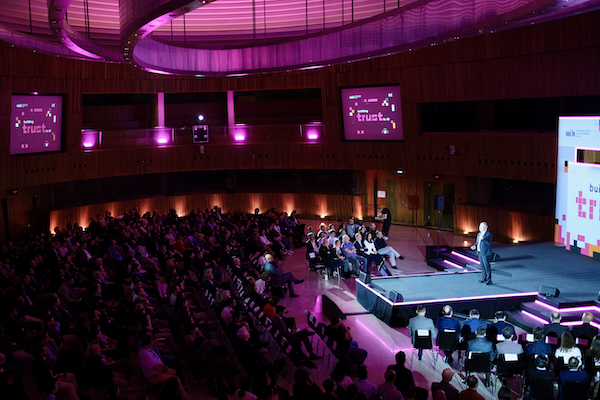
 SnT Partnership Day 2026 at the European Convention Centre in Luxembourg-Kirchberg;
Credit: Steven Miller, Chronicle.lu
SnT Partnership Day 2026 at the European Convention Centre in Luxembourg-Kirchberg;
Credit: Steven Miller, Chronicle.lu
On Thursday 21 May 2026, the University of Luxembourg’s Interdisciplinary Centre for Security, Reliability and Trust (SnT) hosted the SnT Partnership Day at the European Convention Centre in Luxembourg-Kirchberg.
SnT Partnership Day is an annual, invitation-only event that brings together researchers, industry partners and institutional stakeholders to explore collaboration in applied research, innovation and technology transfer. For the 2026 event the focus was on “Building trust in AI”.
Before the official opening of the conference, members of the press (including Chronicle.lu) were invited by the university for an exclusive press tour of seven technology demonstrations with Dr Carlo Duprel, Head of the Technology Transfer Office at SnT.
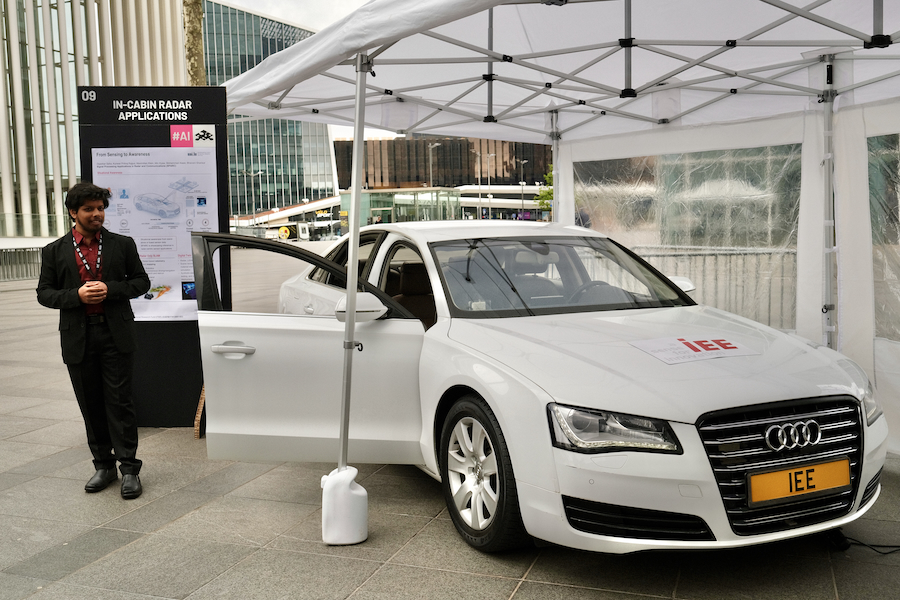
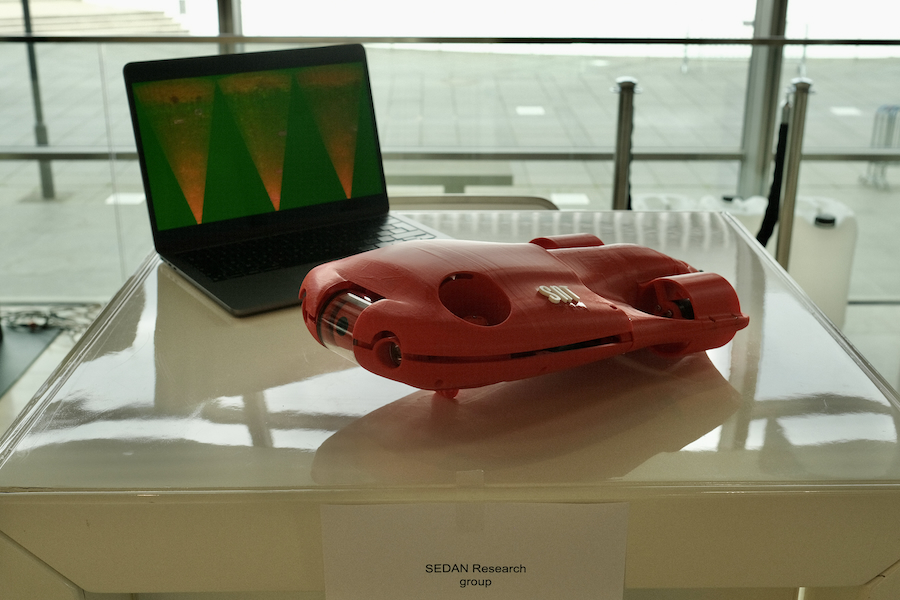
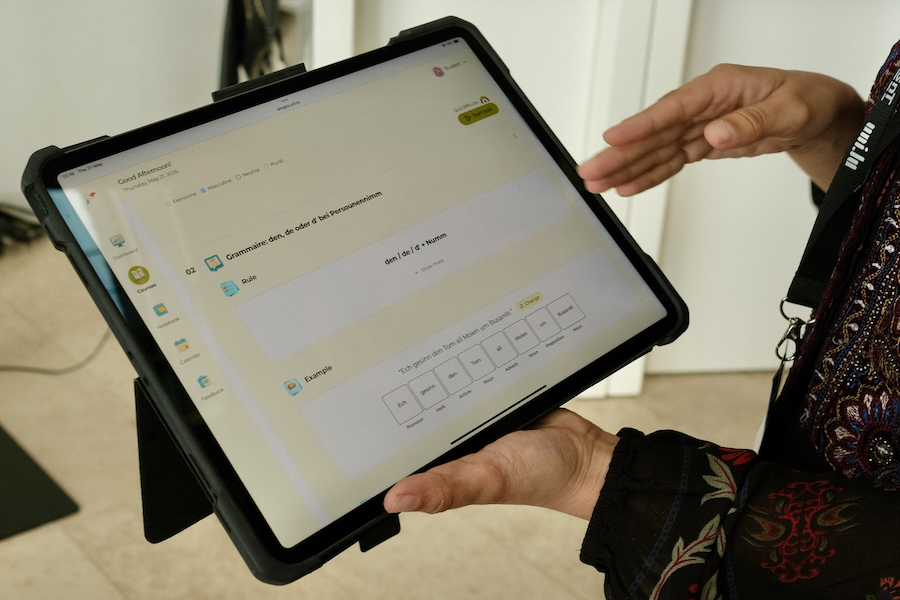
The tour visited a selection of the booths on display at the Partnership Day and showcased a variety of technologies, including in-cabin safety monitoring, AI-enhanced technology for underwater biodiversity monitoring, personalised AI tools for education practitioners, an AI-powered fake news/false information game, space robotics for sustainability, smart grid simulation to evaluate electricity use and network performance, and an open-source AI assessment configuration tool.
Along with the other booths showcasing AI-powered or AI-adjacent innovations, the technology on display and the knowledge base behind their development provided a significant overview of SnT’s place within Luxembourg’s ever-growing tech sector; which literally stretches from space to the seabed.
Carlo Duprel highlighted that since its beginnings in 2009, SnT has grown from 20 to 600 members of staff, a transformation he noted was driven by the Luxembourg government and the University of Luxembourg and an openness to work with industry and other stakeholders. He remarked: “This is part of our core philosophy, to work on relevant subjects, and not just, in parenthesis, the ivory tower of research. There is nothing bad about that but that is not our philosophy. Our philosophy is we want to do research that is relevant for industry.”
Throughout the tour, there was a strong and passionate emphasis on creating technologies which could build trust in artificial intelligence; none more so than the demonstration of the AI Assessment Sandbox Configurator, an open-source tool being developed by the University of Luxembourg and the Luxembourg Institute of Science and Technology (LIST), which allows organisations to create customised AI testing environments, which can be deployed on-site or on private or sovereign cloud systems, making it suitable for organisations which have to adhere to strict data-residency or security requirements.
Francesco Ferreri from LIST noted: “We cannot trust private companies to self-control and self-monitor themselves, because they have a very legitimate objective, which is to make money. We, as public organisations, we have a different objective, which is to protect the public interest. So this is also part of our work, to create these tools that can be used to have an independent assessment of artificial intelligence.”
He added: “We really believe that Europe can be the place in the world where you can build trust around the technology and that Europe is much better than the other competitors at providing a regulatory framework for AI…and Luxembourg has a special role in that.”
Following the press tour, the main conference began with Carlo Duprel delivering the opening speech, in which he welcomed the over 800 registered attendees and began by talking of Europe’s place in the world of innovation and development compared to China and the US. He remarked: “You have the USA, which is very much market-driven and disruptive…China, on the other hand, is very state-directed and scaled. They have a gigantic economy, so if they want to push and invest in a technology, they can do that at a scale where we in Europe struggle to compete. In Europe, it is more coordinated and incremental. For example, the policy of the European Commission is very much focused on establishing collaboration between member states. We have very many good universities, but maybe not enough globally leading universities…it is a little bit incremental…,in my opinion it is more difficult here to transfer public research into innovation.”
He added: “We have an inbuilt complexity and a difficulty to transfer research into innovation, which is not the case in our biggest competitive economies. So, we are really shooting ourselves in the foot there. So, what I am advocating here is a reform for state aid. There are many good aspects but it needs to be clearer and easier for universities and public research organisations to transfer research results into economy…and this is also what we try to do at SnT.”
Jens Kreisel, Rector of the University of Luxembourg then provided the opening address, in which he highlighted the speed of change in the field of technological development, particularly in relation to AI. He remarked: “I think we are all here today because we know that we are living in a time of absolutely tremendous change. We are living in a time where things are moving exceptionally fast,”
Addressing Luxembourg’s place within this change, he noted: “There is a saying, which is just looking at a tsunami is not a strategy. We need to get prepared when something dramatic has happened. Hence, we are here today, all together, to prepare, because we know that AI will have a deep impact on society and on companies. We know that AI will dramatically accelerate scientific discovery and innovation, and we all know that companies that use AI will grow faster and will be more competitive. And most importantly, we are here today because we all know that a successful region needs a successful ecosystem. We need to come together as players to pave the way to the future together.”
Luxembourg’s Minister for Research and Higher Education, Stéphanie Obertin, then provided the conference’s opening remarks, during which she said: “The SnT Partnership Programme, with its extensive network of partners and its strong engagement with industry, is a model that works. And in the current geopolitical and economic context, which is marked by uncertainty, competition and pressure on growth, such partnerships are not just useful. They are essential. They are essential to accelerate innovation, essential to share risks and knowledge, and essential to ensure that research translates into economic value.
She added: “Today, innovation is not only about competitiveness. It is also about resilience and sovereignty. We are facing the challenge of strengthening our capabilities in areas such as defence and security, and this means that we must be able to push innovation far enough to develop technologies that we can use ourselves and where it is suitable to share with our trusted partners. In this context, the work done here at S&T in cybersecurity, autonomous systems or secure communications is of strategic importance.”
Following the opening remarks and introductions, the event continued with a series of keynote speeches, Q&A sessions and talks on Ai-related technology, which featured contributions from Yves Le Traon, Director of SnT, and Guillaume Bour, Head EMEA Sales at Mistral AI.
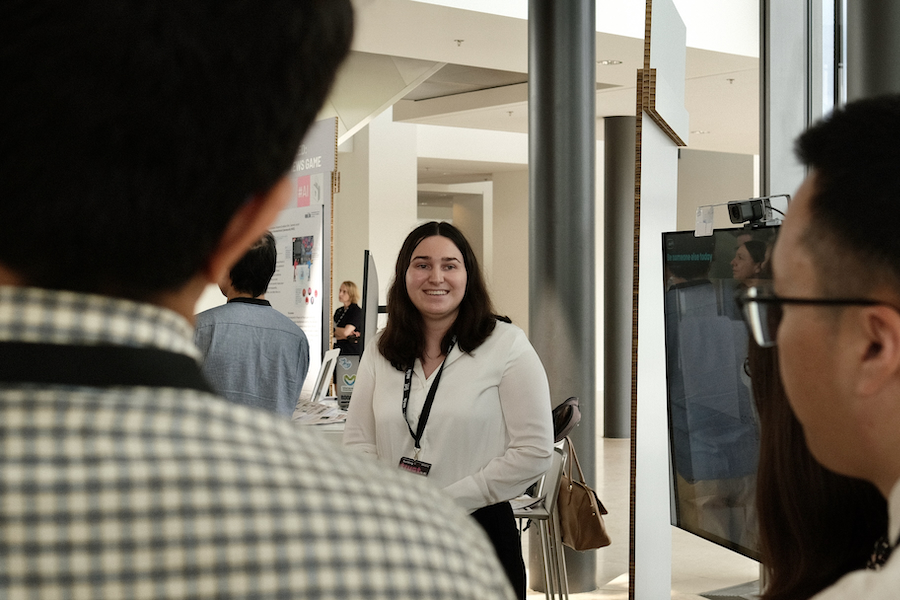
The event concluded with a series of guided tours of the booths in the venue’s foyer and a networking session.