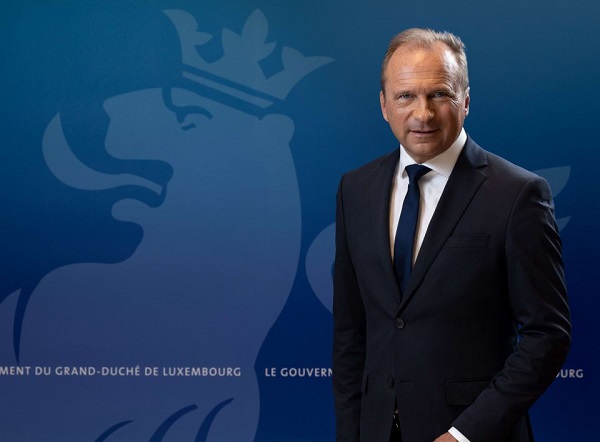
 Luxembourg’s Minister of Finance, Gilles Roth;
Credit: © SIP / Claude Piscitelli
Luxembourg’s Minister of Finance, Gilles Roth;
Credit: © SIP / Claude Piscitelli
On Tuesday 21 April 2026, Luxembourg’s Minister of Finance, Gilles Roth, presented the figures of the State’s financial situation as at 31 March 2026 to members of parliament sitting in the Finance Committee and the Budget Execution Committee.
According to Luxembourg’s Ministry of Finance, the data showed an “overall positive trend in revenue”, with total central government revenue standing at €7.92 billion at the end of the first quarter of 2026 under the European ESA accounting method, representing an increase of €341 million (+4.5%) compared with the previous year.
Luxembourg’s Direct Tax Administration (ACD) reported revenue of €4.3 billion, broadly stable compared with 31 March 2025, with a slight decrease of €5.8 million (-0.1%), while personal income tax receipts increased by around €169.2 million (+8.1%) and corporate income tax fell by a similar amount (-€161.5 million or -11.8%) year on year.
Revenue collected by the Registration Duties, Estates and VAT Authority rose by €294.2 million (+15.6%) compared with 31 March 2025, reaching €2.2 billion, driven mainly by value added tax (+€242.1 million or +17.0%) and, to a lesser extent, subscription tax (+€24.1 million or +7.1%).
The Customs and Excise Administration closed the first quarter with revenue of €526.3 million, a decrease of €42.8 million (-7.5%) year on year, largely due to developments in excise duties on manufactured tobacco.
Central government expenditure data showed a steady growth, reaching €7.86 billion (+€619 million or +8.6%) at 31 March 2026 compared with the same period a year earlier (ESA basis).
At the end of the first quarter of 2026, the central government balance stood at a surplus of €59 million, representing a deterioration of €278 million compared with 31 March 2025 but still an improvement compared with the same period in 2023.
Minister Roth said: “We must remain vigilant in an increasingly uncertain global environment and at a time when the medium-term consequences of the conflict in the Middle East are not yet fully foreseeable. Our public finances remain solid and we must do everything to maintain social cohesion, support economic activity and preserve citizens’ purchasing power.”