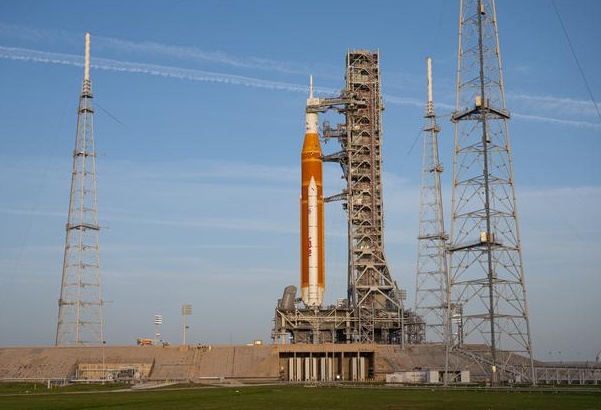
 Artemis II Preflight;
Credit: NASA/John Kraus
Artemis II Preflight;
Credit: NASA/John Kraus
On Wednesday 1 April 2026, NASA launched its Artemis II mission from the Kennedy Space Center in Florida, United States (US), sending astronauts around the Moon for the first time in 50 years.
NASA's Space Launch System (SLS) rocket lifted off from Launch Pad 39B at 18:35 EDT (00:35 CEST on Thursday), carrying four astronauts aboard the Orion spacecraft on a ten-day test mission around the Moon and back.
The crew - NASA astronauts Reid Wiseman, Victor Glover and Christina Koch, and Canadian Space Agency (CSA) astronaut Jeremy Hansen - will be the first humans to travel beyond low Earth orbit (LEO) since the Apollo era. Although they will not land on the Moon's surface, the mission is expected to offer a new understanding of the lunar environment and pave the way for future crewed lunar landings. The mission will also test life support systems with a crew on board for the first time.
US Ambassador to Luxembourg Stacey Feinberg described Artemis II as "an exciting milestone for space exploration and a historic moment for humanity". She added: "Building on the success of Artemis I, this mission, once safely launched, will take astronauts farther from Earth and closer to the Moon than anyone has travelled in over 50 years, while testing the tools and skills we’ll need for future missions to Mars".
The ambassador also highlighted international cooperation, stating: "This mission shows how the United States, working with international partners, continues to lead in space, driving innovation and creating opportunities that benefit people everywhere. I'm proud that Luxembourg, as one of the original signatories of the Artemis Accords, shares our ambitious vision for the future of space exploration. Artemis II is another step toward the incredible opportunities ahead, in space and in our partnership with Luxembourg."
NASA officials similarly emphasised the importance of the mission as a critical test flight. NASA Administrator Jared Isaacman said: "Artemis II is the start of something bigger than any one mission. It marks our return to the Moon, not just to visit, but to eventually stay on our Moon base, and lays the foundation for the next giant leaps ahead."
If successful, the lunar flyby will bring the astronauts around the far side of the Moon - offering rare views of its surface - before their return to Earth.