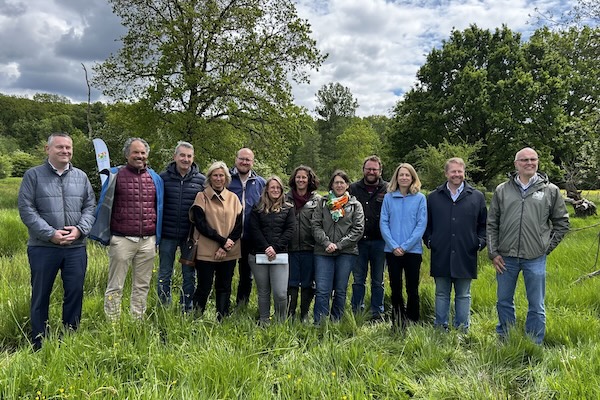
 Group photo, including: Liza Glesener; Simone Schneider; Nora Elvinger; Marc Bissen; Fernand Klopp;
Credit: Elza Osmane, Chronicle.lu
Group photo, including: Liza Glesener; Simone Schneider; Nora Elvinger; Marc Bissen; Fernand Klopp;
Credit: Elza Osmane, Chronicle.lu
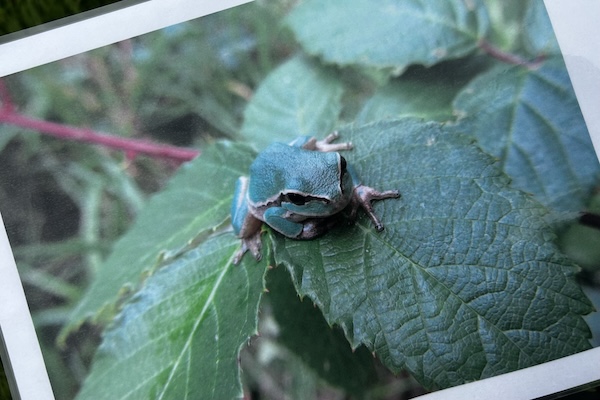
On Tuesday 12 May 2026, the Nature Conservation Syndicate SICONA together with Luxembourg’s Ministry of the Environment, Climate and Biodiversity and the municipality of Bertrange, held a field visit for press at the Zéiwelt wetland site in Bertrange to present efforts to protect the “Hyla arborea” (European tree frog) through the protection of wetlands.
Marc Bissen, President of SICONA Sud-Ouest, opened the event by highlighting the organisation’s long term commitment to nature restoration projects. He noted that SICONA has worked on wetland and biodiversity protection for more than 36 years and stressed “the importance of developing renaturation projects together with all actors involved, including municipalities, scientists and public institutions”.
The following speakers included Nora Elvinger from Luxembourg's Ministry of the Environment, Climate and Biodiversity, Liza Glesener, Ecologist at SICONA Nature Syndicate, Simone Schneider, Director of SICONA Sud-Ouest Fernand Klopp, who presented the ecological importance of wetlands and the results of the European tree frog reintroduction programme.
Speakers explained that wetlands play an important role in climate resilience as they retain water, reduce flood risks, absorb carbon dioxide and improve water quality. They also stressed that wetlands represent key habitats for amphibians, pollinators and other threatened species.
Although there are around 600 restored wetland sites and ponds across Luxembourg, this particular site in Bertrange was selected because of its favourable wetland conditions, protected Natura 2000 status and connected habitats, noted the speakers. The area is also fenced to help protect the species from predators and remains largely hidden from the nearby main road and hiking paths in order to limit disturbance.
The restoration projects form part of Luxembourg’s Third National Nature Protection Plan (PNPN3) and contribute to broader biodiversity restoration objectives, including targets linked to the EU Nature Restoration Law, said the representatives.
According to the SICONA 2024 study, the protection of European tree frogs and their natural habitats is important because the species has suffered a severe decline in Luxembourg during the last century and was close to extinction by 2011, when only a single population remained in the south-east of the country.
The study says that between 2012 and 2024, an estimated total of 7,859 eggs and tadpoles were collected and 7,146 animals were released across several reintroduction sites in western and south-western Luxembourg. More than 7,000 juveniles and tadpoles were released during the entire project period, which resulted in around 830 calling males recorded at 61 sites in 2024. The environmental organisation has created or restored more than 500 ponds over the past 30 years to improve habitat conditions for amphibians.
During the field visit SICONA highlighted that before reintroduction efforts began around ten years ago, the European tree frog population in Luxembourg had declined dramatically and survived in only one location. Scientific monitoring has since recorded around 70 calling male frogs at the site.
Speakers also underlined the wider environmental benefits of wetland restoration, such as soil protection, carbon storage and support for pollinators.
Photo Caption: European tree frog